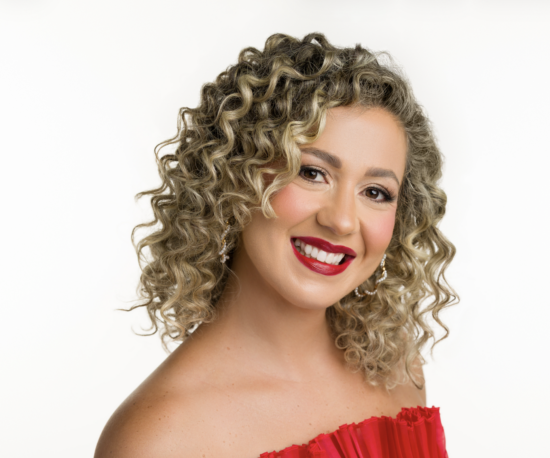
This piece was written by one of our dear readers—a woman with something real to say. Each month, we handpick the best submissions for Dear Reader because we’re after that PROVOKED bite: truth, intelligence, and heart. These stories come from women our age—women who’ve lived enough to know better and still care enough to tell it anyway. Because being seen and heard matters. Because storytelling is how we stitch ourselves to one another. And because when one woman speaks her truth, another finally recognizes her own. — Susan Dabbar, Editor-in-Chief
Three circles on an ultrasound screen. Then came the thing no mother is supposed to say: I loved them, and I grieved the life I’d planned.
For years, I gave other people my voice without judgment. Then motherhood forced me to say the one thing I was afraid to admit.
“All your years of schooling and you still don’t know how to do your job, your Honor.”
I was horrified to hear my own voice uttering such insults in the courtroom. It was my voice, but those weren’t my words. I would have known better than to risk being held in contempt, but I suppose my client had no idea what she was doing. Unfortunately, that was a common occurrence.
As a court interpreter, my role was to be the voice and not add to or subtract from any statement. The interpreter code of ethics is very specific about precision and accuracy: the law doesn’t care about my opinion.
Being a part of a stranger’s life in a vulnerable moment is humbling. On one hand, I could be tempted to judge their candidness and sometimes even foul language, but on the other hand, I understand it’s their life on the line. Why wouldn’t they speak their mind? In that setting, it doesn’t matter how uncomfortable the statements make me feel; it’s my responsibility to communicate them.
Being the Voice Wasn’t the Same Thing as Having One
I’d always considered myself a vocal person. I grew up singing and also loved languages. I fell in love with English as a little girl in Brazil and by 18, I was appointed as the official translator and interpreter in my mom’s ministry. It turns out being vocal didn’t necessarily mean I was expressing myself, and that became clear when I experienced the biggest transition in my life.
In 2016, I gave birth to triplets. Talk about your life being on the line and feeling the need to share exactly what was on my mind. Surprisingly, feeling the need to do it didn’t mean I had the courage to.
Trying to conceive and getting pregnant opened me up to the world of fertility and motherhood. I learned there was so much left unspoken—and at times, even forbidden—in that space. While many women dream of becoming a mother and struggle to do so, having mixed feelings after learning I was carrying triplets came with a tremendous amount of guilt. My situation didn’t feel so black and white; it wasn’t a matter of either wanting or not wanting to become a mother. Could I be happy and also grieve the plans I had for myself? Could I love my children and also feel overwhelmed that I had gone from zero to three at once? But most importantly, could I express those feelings out loud without being judged and resented by others?
The Invitation to Say It Out Loud
It took me about nine months of settling into my new reality as a triplet mom to accept I wanted to explore a different career path. At the time, I thought it was because I had been working with languages for nearly two decades and needed a change. Now I see it was because motherhood had finally given me something I desperately wanted to talk about: I could love my children and still grieve the life I had imagined for myself. Again, it didn’t mean I fully expressed it right away. I went as far as starting an online coaching business and launching a podcast called Mom Does It All before my toddlers turned three. And while I was getting bolder by the minute, it wasn’t until I was invited to present a TEDx talk that I felt the urgency to bare it all, for real this time.
I had dreamed of earning a place on that stage for a couple of years, and after a series of rejections, I got the yes. A part of me felt unworthy, like my message wasn’t that special to be granted the platform. Another part of me felt like the validation from a reputable organization was exactly the permission I needed to finally say the words that had been trapped in my chest. If I hadn’t had the courage before, now it was time to find it.
I opened my talk with the three circles I saw on the ultrasound screen; the three gestational sacs that didn’t mean anything to me until the doctor pointed them out: you’re pregnant with triplets. My heart sank as I had to face a new reality I hadn’t planned for myself. A natural delivery would be replaced by a scheduled C-section. Months of exclusively breastfeeding would be replaced by weeks in the NICU. And what about my dreams for myself? I had envisioned traveling and being on stages all over the world as a lecturer, a minister, a singer.
And then came the part in my presentation that brought tears to my eyes. I uttered the names of my children—Samuel, Benjamin, and Gloria—and admitted to the world that those three circles were more than my babies. They were invitations and opportunities for me to meet the strongest version of myself I could have ever imagined. I confessed my grief publicly and acknowledged I could still choose to pursue my dreams even if life hadn’t unfolded according to plan.
In the audience, I spotted a friend rocking her newborn baby in a stroller. She took me back to my own days with newborn triplets. Afterward, she approached me and thanked me for sharing my story so vulnerably. For so long, I had worried that what I felt—and wanted to say—wouldn’t be accepted.
Then there she was, a brand-new mom thanking me for speaking up.
When I returned home, I slipped off the glamorous white dress and high heels, picked up Samuel, Benjamin, and Gloria from school, and made dinner. I had these beautiful children. I was grateful. And I still wanted more.