
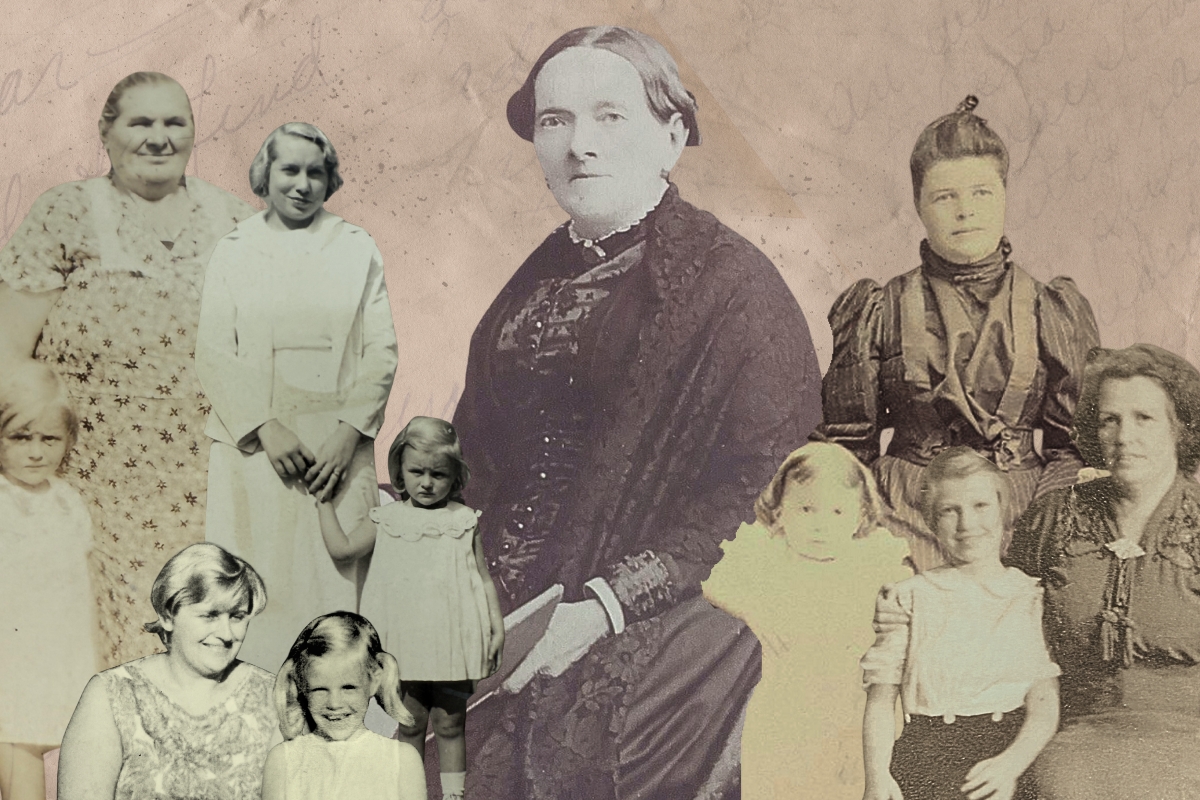
Twenty-eight daughters. One son. Late truths about the women who raised them.
Last year, we asked you to write notes to your mothers. The responses were tender and raw. They were beautiful. Devastating. Easy to recognize.
This year, we asked something harder.
What do you understand about your mother now that you didn’t when you were younger?
The answers didn’t come back sentimental. They came in older, sharper, less forgiving. The women writing in were further along—daughters in their 50s, 60s, 70s, 80s. Most of them sorting through what they’d carried for decades, finally able to see it for what it was. One son wrote in too. He’d been doing the same work.
Here’s what I noticed reading every one of them.
We couldn’t truly see our mothers until we’d lived long enough to recognize what their lives cost them. As children, we saw her as the one keeping us alive. As young women, we pushed against her. For some of us, as mothers ourselves, we stood beside her.
It took getting old enough to know what it feels like to be invisible, old enough to have our own dreams deferred, our own marriages tested, our own bodies betray us to finally see what they had been carrying the whole time.
My mother waited her whole life. She had opinions and brilliance and a fierce belief in what I could become, but for reasons of era and obligation, and something more complicated I’m still working out, she never claimed any of it for herself. I spent decades trying not to be her. It took me until my 60s to understand that the drive that made her hold on was the same drive that made me let go. She gave me her unused permission. I built a life with it.
Reading these submissions, I saw her everywhere. In Cheryl’s mother who wanted to be an actress and married at 17. In Terri’s mother who was a child bride, and told her daughter, decades later, that she was jealous of her. In Barbara’s mother who never learned to drive. In Alyssa’s mother who only played piano alone.
Some of these will hurt. Some will make you put the phone down and call her. Some will make you grateful you can’t.
A few of them aren’t gentle. We left them in.
These are the women who raised us. This is what their children see now.

The Dreams She Couldn’t Live
Born too early. Married too young. Asked too little.
My mother was born in 1917 and grew up in a very small town in Texas. She married at 17 and had four children, with me being the last. She was remarkably beautiful and very independent for the time. I know now how hard it was for her to put her dreams on hold and have a family. She wanted to be an actress and live a glamorous life but no opportunity existed at that time, only the life of a housewife and mother. She loved us beyond measure, but I always knew she wished for something different. I wish she could have had both.
— Cheryl, 71, on her mother LaNell

My mother was a child bride and had three children by the age of 22. She never got to go on a lot of dates, go to interesting places, or have any kind of real young adulthood. She once told me that she was jealous of me because I was living the young woman’s life that she never got to. I understand … and I miss you so much mama. 💔
— Terri, 70, on her mother Pat
My mother shielded us from just how selfish my father was. My mother never drove. So unless my dad wanted to go, they didn’t. I’m certain there are many times she wanted to go do SOMETHING. When I got divorced in 2009, she made the comment briefly that she wonders how different her life would have been if she had chosen that direction. It was a different time, and I really think she thought she could not do things on her own. Now that she’s gone and we’re all dealing with my dad, we’re all realizing her sacrifices.
— Barbara, 58, on her mother Rose
My mother taught me not to lose myself as life moves forward. She never said so directly. I learned it when she said, “I would have … if it wasn’t too late.” And when she would play piano, only when completely alone, jumping from the bench as she heard us coming in from school. And when she died, and I poured through items she chose to save for so long, sometimes feeling I was witnessing someone I barely knew. Perhaps she thought by holding those things in boxes for so long, she’d have the opportunity to remember herself. One thing is certain—I miss her with every piece of MYSELF, every single day.
— Alyssa Kimmel Bailkin, 54, on her mother Marsha
She was a product of what her own mother created. She learned from an unemotional mother and had little choice but to recreate the pattern. I blamed her for things she couldn’t escape.
— Teri, 70, on her mother Joan
What I didn’t understand when I was younger is that every pile in our house was a small act of hope. My mother waited silently for permission. To open and unpack all of it. I told myself I was nothing like her. I was wrong about that. The drive that made her hold on is the same drive that made me let go. All of that was hers. I just got to use it. She told me I could do anything. She gave me her unused permission. With it, I built the life she couldn’t.
— Susan, 65, on her mother Joan
What I Couldn’t See Then
She was doing more than I had the years to recognize.
— Gayle, 50, on her mother Eve
Where do I start? There’s so much! I’d have to go with unconditional love! It took me having children of my own as well as the mistakes I made in life. My mother loved me every step of the way with nothing but wisdom and encouragement while holding my hand through tough times. Some I brought on myself, but that never mattered to her. She helped me see the lessons in my choices so I made better ones next time, with nothing but unconditional LOVE! Happy Mother’s Day to my mother Susan and all you amazing mothers.
— Heather, 48, on her mother Susan
My mom’s grandchildren all thought they were her favorite. She made them all feel seen and special. I’m trying with my grandkids.
— Pat, 73, on her mother Alma
When I was born, my mother was 17. While girls her age were having sleepovers, talking about boys, and planning their future, my amazing mother was changing diapers and rocking a baby to sleep. Even in her youth, my mother was always gentle, faithful, selfless, loving, and fierce. She made having three children at 24 look effortless. We did not have much but my mother was resourceful and would make a meal with whatever we had in the pantry. What I learned as an adult, once I became a mother, is she kept all the hard things hidden inside. She wanted her children to live carefree and fearless. In the game of motherhood, she was the perfect strategist. She continues to amaze. When she got cancer a few years back she never complained and continued with her usual routine. My mother is 75 now and she has the energy and vigor of her youth. She cares for my father who now has cancer, and when she is not caring for my father, she is caring for her 94-year-old mother. For this and so many other reasons, my mother is a warrior queen. I want to be her when I grow up. I want to carry myself with the grace and strength of this most amazing woman. Mom, I love you more than words will ever convey.
— Debra, 58, on her mother Lidia
I didn’t understand until adulthood that my mother’s unhappiness throughout my childhood wasn’t because she didn’t love her four children, but because she missed having an identity of her own—one not defined by her role in the family. Her mood improved when she took a part-time job, then lifted further when she started volunteering at a therapeutic horseback-riding facility. But it wasn’t until she reached midlife that I saw her fully come into her own. She took up photography and began entering and winning competitions. Embracing her creativity transformed her; my dad, siblings and I her biggest champions.
— Abby, 59, on her mother Barbara
My late mother, Shirley, gave birth to five children within five years. I doubt she had much say in the matter. My father wanted a large family, and my mother complied. I grew up being fascinated by the novelty of it, and I announced this “feat” to friends and strangers, seemingly with pride. Nowadays, it doesn’t really matter to me how feminism influenced my choices in the 1970s and ‘80s. What sticks is that, when it came to having children, I received her blessing in having the power to choose.
— Deborah, 69, on her mother Shirley
What She Couldn’t Give, and Why
Some mothers were carrying things their daughters had no language for.
It wasn’t until my mid-40s—thanks to a perceptive therapist—that I began to understand my mother differently. The anger I experienced growing up wasn’t cruelty; it was anxiety. She often lashed out and said hurtful things, leaving me feeling like the worst daughter imaginable. For years, I took that pain personally. Reframing her behavior as fear and overwhelm helped me see how much she was suffering. It didn’t erase the hurt, but it gave me compassion—and a clearer, more humane understanding of who she was.
— Ellen, 59, on her mother Sally
Growing up, I just accepted that my mother wasn’t very open with her thoughts and feelings. But I knew when she told me she liked something about me, or was proud of me, she meant it. But in the last seven years of her life, and in the 24 years since her death, I came to understand she was trying to break a cycle of oppression that she’d been raised with without the language we have today. She showed me how to break my silence by breaking her own first with simple words of pride and love.
— Michele, 51, on her mother Kathleen
What I did not understand was why she decided that a chore had to be done “right now.” Now that I am older and realize that I am AuDHD, I am wondering if she was at least ADHD herself. If I do not do something when I first think of it, it does not get done because I get distracted and do something else, so I suspect she might have been the same. She would go on a cleaning spree at times that she said was almost “meditative,” much as I like to sort and rearrange things when I am upset. Just little things that I am remembering that make me go, “hmmm…,” even though I cannot ask her, since she passed 25 years ago this June. I still miss her and love her very much. Happy Mother’s Day, Mom!
— Maggie, 65, on her mother Ruth
My mother was an amazing artist that created art from the most natural things like woodpecker feathers. She saw the beauty in life and embraced it. However, my mom was not emotionally attached to us. She rarely hugged us or told us she loved us. I realized that she did not have a mother figure to model this behavior. Her mother died when she was 3 years old. I forgive you mom for not being present with me.
— Patti, 70, on her mother Rose
I didn’t understand, as a child, why my mom was always working and often tired or irritable. I wondered why she carried so much while my dad drank. Later, I learned she began working at nine in her parents’ restaurant, was raised in a chaotic home, and lost her mother young. She endured more than I knew, including abuse. It helps me understand how she may not have recognized or responded to my own abuse. While it doesn’t erase my pain, I now see the weight she carried—and hold her story with compassion alongside my own.
— Jo, 49, on her mother Mona
My Mother was a Golden Rule Christian, not a He-Died-On-The-Cross-In-Our-Place-So-That-We-Can-Sin-And-Not-Have-To-Atone-For-It Christian. She was not a Christian Nationalist. She was a Love-Your-Enemy-Bless-Those-Who-Curse-You-Reward-Those-Who-Steal-From-You Christian. A TRUE Christian indeed. My father had no use for any of that holy stuff or for God either. It was the holy D.N.A. that I got from my mother that enabled me to overcome the unholy D.N.A. that I got from my father and accept Jesus in 1991 and then Islam to the perfect will of God in 1997. Until I was 37 years old, the Evil Spirit fettered and dogged my life mercilessly which motivated me to seek something more satisfying than Earthly life. What I got from my mother enabled me to seek that Better-In-The-Sight-Of-God Way of Life. “Earthly life is not the True Life.” (Quran 29 : 64) Amen?
— Michael, 71, on his mother Joan
When She Couldn’t Love Me Back
Some daughters never got what they came for. They survived anyway.
Mom let me know loud and clear that I wasn’t good enough. Not smart enough, no accolades for any achievements. I realized through lots of therapy that she was putting on to me what she thought of herself. She hated herself. We made peace before she passed.
— Susan, 69, on her mother Patricia
I understand now that my mother did the best she could. She is strong, intelligent, and striking, but also deeply flawed—capable of manipulation and shaped by various addictions. She wants to be noticed but manages to alienate at the same time. As a child, I couldn’t see that complexity. Now I do, and I recognize that both her strengths and her struggles have shaped me into a better, more aware, even kinder person.
— Ali, 59, on her mother Elizabeth
As a child, I didn’t understand how my mother could be so loving in public and so critical in private. Whatever my sister and I did was wrong in her eyes. I moved away from my home town partly to distance myself from her once I had accepted that she was incapable of unconditional love. The fierce desire I had for her approval when young had been extinguished by continual emotional abuse. Now I understand that she was a covert narcissist, and have released my guilt over the relief I felt at her death.
— Beth, 71, on her mother Lillian
My mother, now deceased, was bipolar. She was extremely critical of me, often just outright mean. Looking back, I wish I had understood her illness better.
— Barbara, 84, on her mother Rose
“My mother will come for me,” I used to tell myself as a child. As a teen. And as a young adult, a young wife, and a young mother. When I was seven, she left me with my father, showing up every year or so like a ray of sunshine that I basked in for a few brief moments. Dad stayed and weathered every storm with me. Now he is gone, and she lives on somewhere, unrepentant. She’ll never come for me. I see her in the mirror every day, and try not to hate my own reflection.
— Stephanie, 52, on her mother Margaret
We are all wired to need a mother’s love. But not all mothers are wired to love. Knowing this sooner would’ve changed my life, lessened the carried trauma from a little girl longing to be valued and treated with soft affection. It is too difficult for a child to believe her mother can’t love her, too painful to accept that something is wrong with the person upon whom she depends for life itself. So, in order to survive, the child blames herself instead. I thought I was unlovable. I’m not. I never was. I matter, even if not to her.
— S., 52, on her mother M.
What Lives On
What we keep. What we carry. What we name after her.
Despite the pain and confusion that your emotional aperture often guaranteed, I’ve only realized in the last decade the strength you’ve displayed by simply persevering. Rather than focusing on the shortfalls, I appreciate your persistent effort. Reaching out to connect whenever the clouds clear. Trying in earnest to be the storyteller of our family’s generations. Now in the sunset of your life, your joy in simple things: pictures of your great-grand-babies, music, and gardening still brings a sparkle. Peonies and Mommy will forever be joined in my mind. And I know everytime I answer your call with “hello green eyes” it’s a gift that you’re on the other end.
— Kim, 61, on her mother Isabella
Mom had her first of nine strokes when I was young. I mourned for the mom I knew before. I got to know my new mom, with trepidation through my lens of curiosity and sadness. She was made of lipstick, beautiful legs with a side of Sinatra. She taught me that communication is key, even with blindness in one eye, and deaf in both ears. When I was younger, I saw her through my lens of sadness and fear. As I got older my lens transformed into pride, gratitude, and seeing her come through the veil of her disabilities.
— Jacqueline, 65, on her mother Madeleine
When I was younger, I didn’t understand why my mother always cried on Mother’s Day. I thought it should be a happy day for her, because she was getting lots of presents, flowers, and we took her out to dinner. She used to tell me that I would understand when she was gone. She was right. She died in 1992 and I still cry every day for her, not just on Mother’s Day.
— Bobbi, 75, on her mother Evelyn
She was of course a bit overweight and always conscious of her gait: “Do I look too big in the back?” she’d say. And we’d all say she was not fat, just wide the way some women are. She had a face like a cherub no matter how old she got. She could laugh good and hearty and liked cold beer a lot. Loved swimming until her “damn legs” declared war on her body. Now whenever someone says, “It’s for my mother,” I get a pang like no Christmas presents under the tree and no memory of you in our files.
— Susan, 60s, on her mother Claire
Ten years without you, Mom, and I finally understand. Your quiet courage. The throughline of your life. Arriving at Ellis Island at age nine, escaping the Nazis, never seeing your beloved grandmother again. Losing your mother several years later, then your oldest daughter at age 21. Soul crushing. Somehow, you pushed forward. Embraced life. For Dad, for me. For your grandkids. With unlimited, unconditional love. I carry your strength as a mother and new nana. So do your amazing grown grandchildren. Your great granddaughter, Ella Arlette, embodies your joy and fearlessness—your legacy lives on through her, through us all.
— Andrea, 66, on her mother Arlette
Thank you to everyone who wrote in. Some of you wrote for the first time. Some of you wrote what you’ve never said out loud. Happy Mother’s Day to those who got what they needed, and to the women who didn’t, and to the daughters who are still working it out.
We see all of you.


7 Responses
Thank you for a wonderful magazine. Truthful insights that are seen nowhere else about women.
Please see the film, Omaha. It impacted me so much — the children are overwhelming for me, the 10 yr old girl is outstanding and the Dad’s performance is crushing.
Happy Mother’s Day to you all ❤️🙏
Thank you so much for this. “Truthful insights” may be one of the greatest compliments we could receive, because that is exactly what we are trying to build here — a place where women can speak honestly about the complicated parts of life.
And thank you for the recommendation. Omaha sounds devastating in the best and most human way. I’m adding it to my list.
Happy Mother’s Day to you too. I hope the day held something wonderful for you.
With each generation, women must compete for, time,money, respect and yes love. Sexual abuse was accepted in the 1800s and early 1900s. Then came my generation we fought tooth and nail to destroy the sins of our forefathers only to have it spit back in our face. My mother was raised in wealth for a time, but was put to bed before her father came home. Later, after his death she was abandoned at a bording school, while her alcoholic silent screen actress ran from country to country, finally stable ied by her teens and one if the most beautiful women in the world , she married an arrogant, narcissistic man, my father who abused her physically and emotionally. I fought with him at 4 and 5 to protect her ,which continued until he got another woman pregnant, I was 17 and pregnant with my first child. My mother married many times looking for love from men, as did I, all along we should have been learning to love ourselves. At 76, I love and understand my momma and try to not make as many mistakes as I did as a young woman. Alas, Women are still ruled by men and that is one of the biggest problems we have. Loving unconditionally is my commitment to my children and grandchildren and greatgrandchildren, because men can’t control who we love.
Pam. There is so much generational pain and survival packed into this comment. Women carrying wounded mothers. Daughters trying to interrupt patterns they did not create.
But what moved me most was your final thought: that unconditional love may be one of the few things women can still fully claim and pass forward on our own terms. There’s hard-earned wisdom in that.Thank you for sharing. —susan
I fully understand some of these comments. My mother was a hard working woman, she was smart and wanted more. However, my father came home from WW2 with ideas of the GI bill. He never followed through. He became a self-taught businessman,and was very good at it. When my mother wanted more, he bought a small farm and although she had 4 little girls he bought 5 thousand chickens for her to tend when he was working as a salesman in Carlisle, PA. A white shirt every day, she had so much laundry, no dryer hanging them outside in nice weather, starching the shirts, and ironing them on Tuesday. Never a complaint, but she never showed love to anyone, because in her childhood there was none. Never a complaint, but I don’t ever remember her saying “I love you” to anyone. No hugs or affection. As a result, I have 2 grown sons, and I hug them and kiss them and tell them how much they’re loved. 2 grandchildren that know that I love them to the ends of time. You give what you never got.
Jeanne, “You give what you never got” is such a powerful line because I think so many women of our generation recognize themselves in it. I do.
Your mother’s life sounds filled with duty, labor, and endurance — the kind so many women carried quietly without language for their own loneliness.
Thank you for being here and for sharing. —susan
These are all gorgeous, whether in their lobe and understanding of a mother’s humanity, or in simply acknowledging that our very human mothers missed the mark. I am grateful to every single person who shared their story, as I miss my own complicated, unremarkable yet unremarkable mother this weekend.