
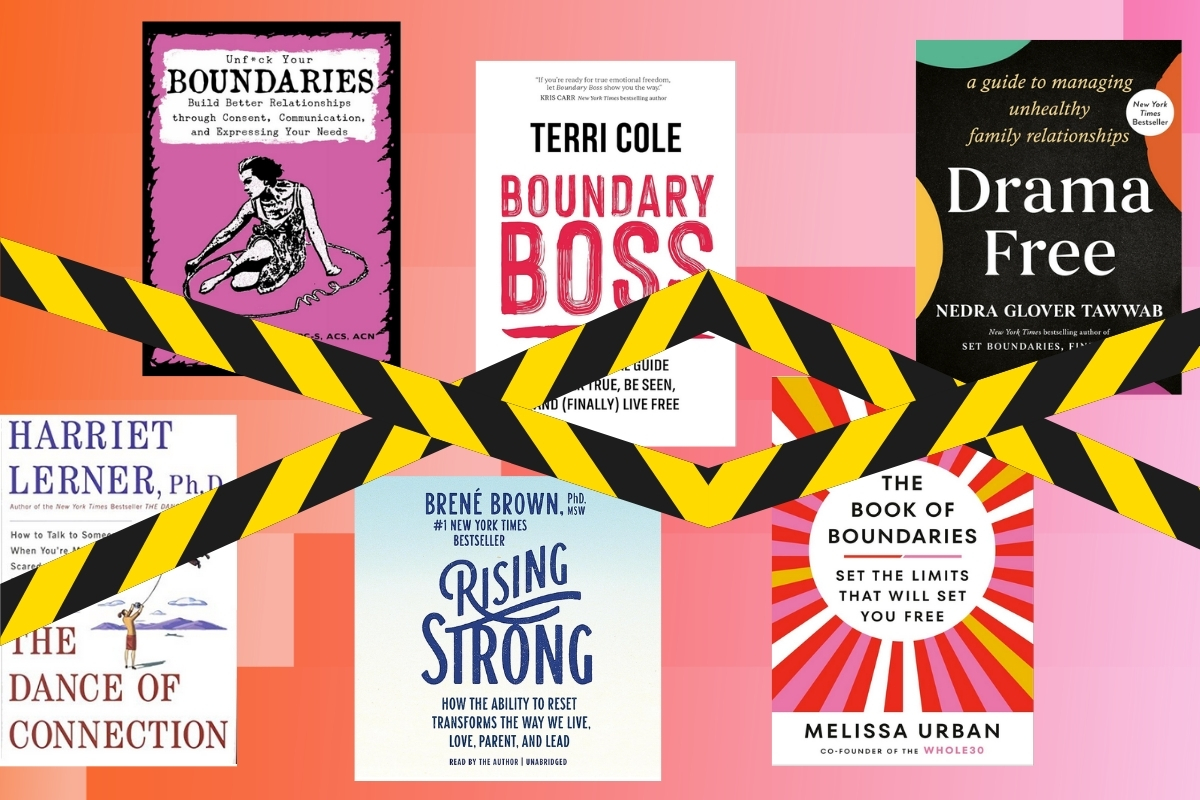
Boundaries sound empowering until it’s your grown child, your aging parent, or the guilt that follows.
Boundaries aren’t about becoming colder. They’re about becoming clearer. Which sounds lovely in theory and much less lovely when you’re the one disappointing a parent, redirecting a child, or realizing that being “the reliable one” has become a full-time, unpaid job.
In the Boundaries series, we’ve looked at the way healthy limits can still feel like rejection, the tension between loving deeply and being endlessly available, and the challenge of staying connected without disappearing. Different setup, same problem. In real life, boundaries get tangled up with guilt, loyalty, fear, family roles, and the fact that people liked us better when we didn’t have them.
The best books on boundaries help you understand what you’re protecting, why it feels so hard, and how to stop dismissing chronic over-accommodation as “just who I am.”
Here’s my list of books that can actually help.

By Faith Harper
If the whole boundary conversation makes you want to fake your own disappearance, start here. Harper has the credentials to make this topic intimidating, but that’s not the road she takes. Her voice is blunt, irreverent, and doesn’t bother with jargon. Her spot-on advice is wrapped up in phrases like “I write stuff” and “for reals.” She gets to the heart of the topic right away—communication, consent, and limits.
One of the hardest things about boundary work is that you can get too comfortable focusing on how others have crossed your boundaries. Harper wants you to look at when you’ve been fuzzy, presumptuous, or ignoring someone else’s limits because you meant well. It’s one thing to care about boundaries; it’s another to hide behind a lack of clarity.
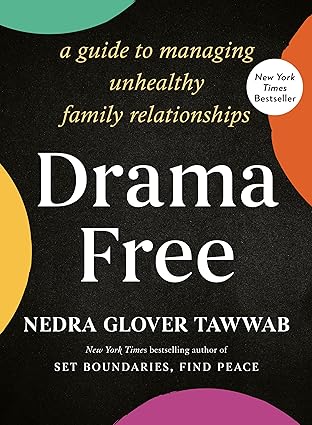
By Nedra Glover Tawwab
Families have a way of rebranding overreach as closeness and calling chronic role confusion love. In my practice, I often see that child who became the fixer, and they feel responsible for everyone else’s reactions. Tawwab goes straight at these patterns, the ones built around emotional neglect, addiction, absence, and the expectation that one person will continue to clean up the mess while everyone else gets to pretend there isn’t one.
So many people who come for family boundary work are looking for a single magical sentence, the one perfect thing to say that finally gets the difficult relative to understand. Tawwab offers us the thing that’s harder but far more useful: She asks the hard questions. What you have been carrying, and was that ever really yours in the first place? If you stopped managing the dysfunction every time it flared, what would your family have to face without you?

By Melissa Urban
There’s a certain kind of boundary trouble I frequently see; not one dramatic villain, but the slow wear and tear of a thousand small intrusions adding up over time. This is about the pushy parent. The lazy coworker. The friend who always needs “just one quick favor.” None of it feels big enough to justify a confrontation, so you keep saying yes. You tell yourself it’s easier, but later wonder, “Why did I do it?”
Urban addresses the conversations that I often have with clients, reminding us that resentment doesn’t arrive all at once. It builds with one reluctant yes at a time. She gives language for these low-grade, high-frequency moments, when we’re tired, annoyed, and tempted to let it slide again. Because the issue isn’t other people’s audacity; it’s how often you’ve been willing to absorb it.

By Terri Cole
This is for the woman who runs the meeting, remembers the birthday, and soothes the feelings, but still insists she’s “fine.” It pulls back the curtain on the pattern under the performance: overgiving, over-functioning, and socially acceptable codependency that looks like competence but is costing you your peace.
In my world, resentment and exhaustion are rarely random. They’re the first signs that someone’s been overriding themselves for a long time and calling it maturity, generosity, or capability. Cole isn’t going to romanticize that woman who’s running on fumes. She asks what that competency is costing, and once you start answering honestly, it gets hard to call the depletion normal.

By Brené Brown
This isn’t the book you reach for when you need a script for your mother-in-law. It’s the book that’s there after the boundary has been crossed, or wasn’t set in the first place. Now you’re feeling raw, guilty, and totally exposed. The conversation might be over, but the internal argument is just getting started. You replay the moment, question motives, and start wondering if you’re being too much.
This is where Brown earns her place. I use her language a lot because integrity is often the question underneath the shame spiral, even if you don’t yet know that’s what it’s called. Her work interrupts the old story that discomfort automatically means you did something wrong. Sometimes it means you finally stopped doing what wasn’t working in the first place.

By Harriet Lerner
Lerner’s been writing about women, family, and relationships long before boundaries became a buzzword. She understands that defining yourself can be messy work, and it often happens in the middle of love, conflict, and need. Now what? Every feeling in the room has a place and wants a turn at the mic. Lerner brings a depth to the question under the boundary: How do I stay connected without losing myself?
She doesn’t flatter you with the fantasy of a perfect conversation. She writes about the times when you’re hurt, flooded, tempted to overexplain, and being pulled by every role in the room. In my experience, this is the moment when people stop telling the truth and start to manage their reaction. Notice that reflex? Don’t let it run the whole conversation.
Why This Conversation Is Ours
One thing I’ve noticed is that so much of the visible contemporary discussion around boundaries is being carried by women. This isn’t an accident. We keep returning to this topic because we’re rejecting generations of teachings that being “good” means self-erasure.
In that context, boundary work is a pushback on old expectations, and these books help you understand what you’re protecting, what you’re responsible for, and what becomes possible when you stop. Women are writing these because we’ve been living the problem.
Read the one that makes you uncomfortable. That’s the one you need.



2 Responses
Loose boundaries have been my way of getting and keeping friends. This has never worked in the long run. people’s needs change, and mine don’t. My issue is how to find, create, maintain friendships if I’m not the one who is always giving? At age 68, I feel lonely and longing for adult friendships.
Hi Johanna, This is such an honest comment, and I suspect many women reading it will quietly recognize themselves in it. At 65, I fell this.
I think a lot of us were taught that being needed was the same thing as being loved. So we over-give, over-accommodate, over-listen, and become indispensable. But eventually the relationship starts to feel less like friendship and more like work. And loneliness at this stage of life is very real. Many women are grieving old identities, old structures, old social circles, even while still appearing “busy” from the outside. You are not alone in that longing for real adult friendship. I am glad that your found our community. As we grow we hope to have nurture community in deeper and meaningful ways. I hope that PROVOKED can fill some of that emptiness for you. Thank you for being here. —susan