For a quarter century, women have been scared away from hormone replacement therapy (HRT) that could’ve protected their bones, their sleep, their minds, and their sense of themselves.
My 40s and early 50s were a blur of exhaustion and self-doubt. I found myself searching for words that vanished mid-sentence, toggling between brain fog and bitch mode. We were taught that was the normal price to pay for being a woman. It wasn’t.
But I got lucky in one way, though I didn’t know it at the time. Years earlier, near the end of perimenopause, I walked into my doctor’s office close to tears. I had relentless bleeding and I was always exhausted. I told him I couldn’t go on like this. He looked at me and asked, almost lightly, what if he had a cream I could rub on my arm that would make the worst of it go away. I thought it was a cruel joke. It turned out it wasn’t, and I got my life back.
July 9, 2002: Impact Day
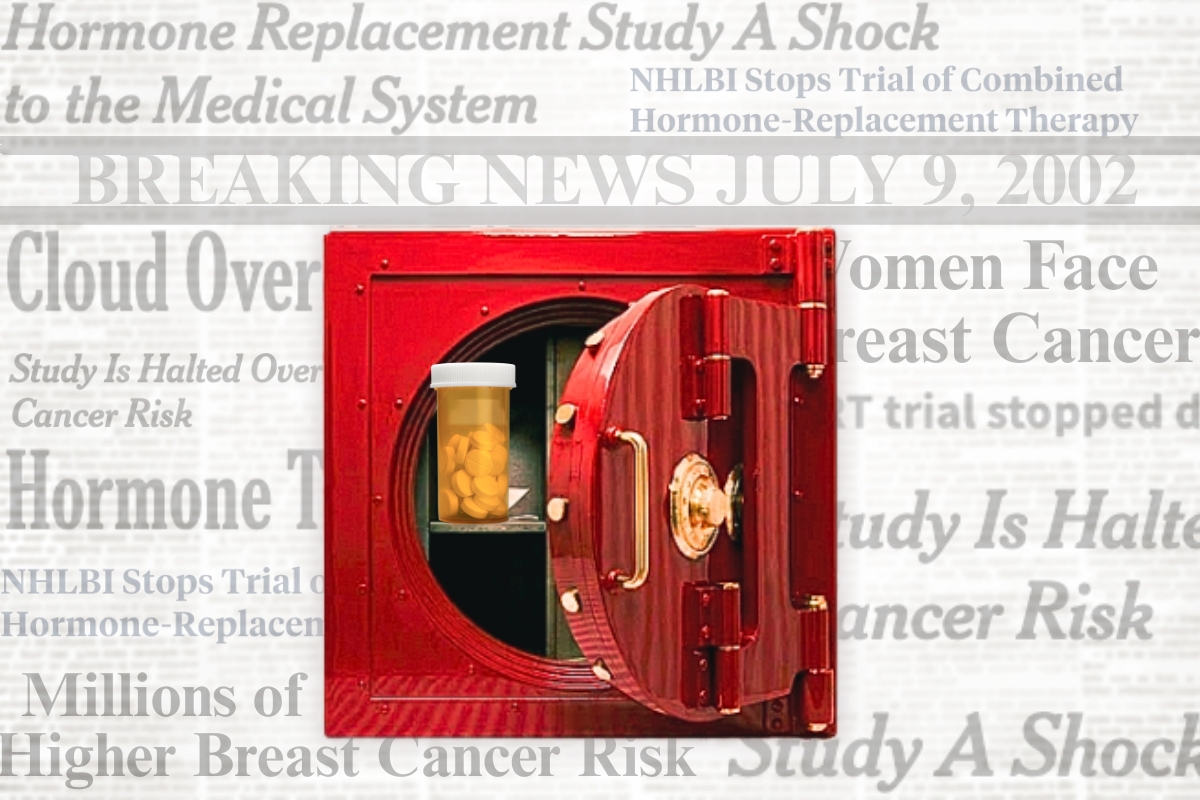
On July 9, 2002, the NIH held a press conference to report that one hormone-therapy trial within the Women’s Health Initiative (WHI), a large federal study of postmenopausal women, was being shut down early, setting off one of the largest medical debacles in history. Even Good Morning America reported on it as the news made front-page headlines across the country. These early headlines caused immediate panic and caught the medical establishment, along with millions of women, by surprise.
Early analysis reported higher rates of breast cancer, heart disease, stroke, and blood clots in women taking one specific drug combination, horse-derived oral estrogen plus a synthetic progestin, given mostly to women well past the menopause transition. Overnight, women were throwing their HRT drugs down the toilet. Within a year, hormone‑therapy prescriptions fell by roughly one‑third, and within a few years, overall use had dropped by as much as 80%. Hormones went from standard care to a suspected killer almost overnight. Groupthink baked into a fear-based medical system got us there and kept us there, causing one of the greatest medical injustices of our lifetime. Those of us in our 40s and 50s were quietly instructed to slog our way through brain fog, bone loss, depression, night sweats, and a disappearance of our own competence.
So how did an entire generation of women end up paying the price?
We now know this panic was caused by a test built on the wrong women, the wrong drugs, asking the wrong questions, then weaponized into a singular verdict against all hormone therapy, for all women, of all ages.
That doctor who treated me was Dr. Raj Syal, and I’ll come back to him because he’s also the expert who helped me understand the magnitude of what happened to everyone who didn’t have a Raj.
Here’s the thing about my good luck. Dr. Syal was one doctor who didn’t panic, surrounded by a medical system full of doctors who did. Most women got served up something else, often a prescription for Zoloft with a side of shrug. Most of us were told to breathe and push through it. Initially, I didn’t march in demanding help either, because this was what “strong women” did: suffer in silence. The only difference is that I had a doctor who was willing to reach for the right solution regardless.
But millions didn’t.
Built on the Wrong Women
To understand the scale of that mistake, we must look at what the study measured and what it didn’t. Dr. Syal is a board-certified OB-GYN in The Woodlands, Texas, who finished his training before the Women’s Health Initiative and kept prescribing hormone therapy through the panic that followed.
The trial, he explained, was built to test whether hormones could prevent chronic disease—including osteoporosis, heart disease, even dementia—and not merely relieve symptoms. In the trial that triggered the headlines, researchers enrolled postmenopausal women aged 50 to 79 on a single oral pill that combined conjugated equine estrogen with a synthetic progestin. Here’s the first crack in the foundation. “The average age of menopause is 52,” Syal told me, “however, the average age in this study was 63.” These weren’t women entering the transition. They were, on average, more than a decade past it, many already carrying cardiovascular risk.
Once an early safety review flagged more breast cancer and some cardiovascular events in the estrogen-plus-progestin group, that part of the trial was stopped ahead of schedule. The findings did deserve attention, but what ensued was panic. “The authors chose to take their findings directly to the media,” Syal said, “without peer review of their study design, results, and conclusions.” Fear hit the front page before the science had a chance to be vetted. This careless reaction flattened the dataset into one blunt result: hormones cause cancer and heart attacks.
Meanwhile, malpractice lawyers were circling, and regulators were slapping black-box warnings on everything. Professional societies overcompensated with “lowest dose, shortest time” guidelines. One of the most dangerous and lasting consequences was residency programs dropping menopause training. Prescribing hormones became a liability risk, so it became a safer move for everyone to stop prescribing.
Eight in Ten Thousand
And here’s the part that should’ve been the headline. The breast cancer risk that stopped the trial and halted prescription orders was tiny. As Syal laid it out: among women not taking hormones, about 30 in 10,000 developed breast cancer, compared with about 38 in 10,000 among those on the estrogen-progestin combination—eight additional cases per 10,000 women. “A 26% increase of a small number,” he said, “is still a small number.”
This is the whole swindle in a single line.
Eight in 10,000 women was reported as a terrifying 26% jump. Obesity, inactivity, and a couple of glasses of wine a night each raise breast cancer risk by more than that, yet nobody talked about shutting down the wine aisle at Costco.
The Story They Didn’t Tell
A second arm to the hormone trial told a different story, one that never got the attention it deserved. The estrogen-plus-progestin group was stopped, but the estrogen‑only group—women who’d had a hysterectomy and took conjugated estrogen alone, sold under the brand name Premarin—were allowed to keep going. “By the time the results of the Premarin-only arm were completed and released,” Syal said, “they were ignored by the media as well as medical professionals, because of the impact of the original arm.”
Those results mattered. In women who’d had a hysterectomy and took estrogen alone, later analyses found no increase in breast cancer risk and in some follow-up, a lower risk than placebo. Long-term tracking of participants showed no rise in all-cause mortality among women in either hormone arm over nearly two decades. Large population studies in countries like Finland, following hundreds of thousands of estrogen users over many years, haven’t found the kind of across‑the‑board mortality spike implied by the 2002 headlines. The same trial used to frighten women off estrogen also showed it could be safe—or even protective—for many.
Syal isn’t alone in his position. JoAnn Manson, a Harvard professor, endocrinologist, and a principal investigator of the Women’s Health Initiative itself, has spent two decades arguing that her own study was misinterpreted. Manson made clear that the WHI was never designed to test hormones for symptom relief. It studied prevention of chronic disease in older women and was never meant to issue a negative verdict against hormone therapy. In 2016 (14 years later) she and a co-author went so far as to publish what came very close to an apology in the New England Journal of Medicine, writing that reluctance to treat menopausal symptoms had “derailed and fragmented the clinical care of midlife women, creating a large and unnecessary burden of suffering.”
Even the government eventually said it out loud. When federal officials stripped the black-box warnings off menopause hormone products in late 2025, FDA Commissioner Makary commented, “Tragically, tens of millions of women have been denied the life-changing and long-term health benefits of hormone replacement therapy because of a medical dogma rooted in distortion risk.”
Bone, Brain, and the Clock
Meanwhile, the losses piled up. Untreated menopause isn’t a benign phase. It accelerates bone loss, and fractures follow. These fractures are a major cause of disability and death in older women. Here the evidence is strong, and Syal is flat-out unequivocal: Preventing osteoporosis is among the best-established benefits of hormone replacement therapy. Millions of women were scared off from using one of the most effective tools for keeping their bones healthy just as they hit their highest-risk years.
Syal was more precise about timing. If you start hormone therapy close to the onset of menopause, before the age of 60, or within about 10 years of the final period, the risk-benefit is better than the 2002 headlines. If you wait longer, it shifts the other way. He framed it as a window and said the reason is our plumbing. Before menopause, women have lower cardiovascular risk than men. Without estrogen, that advantage diminishes and arterial plaque builds. If a woman starts hormones after years of accumulated plaque, she can raise the risk of a blood clot. Start earlier, with healthier vessels, and she doesn’t. The lesson buried in the 2002 panic was never “avoid hormones.” It was “don’t wait too long to decide.”
Syal continued with caution. The brain benefits are murkier and demand precision and transparency. Estrogen receptors sit all through the body including the brain, heart, bones, blood vessels, bladder, and skin. Losing estrogen may speed decline across many of them, but on cognition specifically, the science isn’t settled neatly. Syal was direct about it: Protection against cardiovascular disease and cognitive decline is “thought to be an additional benefit, but difficult to prove, because these diseases have so many causes.”
Some research is promising, and some large reviews find no clear link between hormones and dementia in either direction. Beyond the well-established benefits for bone density and genitourinary health, Syal noted a longer list of possible benefits still under study: better sleep, fewer joint pains, and lower rates of macular degeneration, tooth loss, urinary incontinence, and Type 2 diabetes. “Possible” is the operative word; some of these links are well supported, others still emerging. The point is the breadth. Menopause was never just about hot flashes.
We still don’t know the full cognitive cost. The mental health toll was just as real. Menopause is linked to higher rates of depression and insomnia. Properly timed estradiol can lift mood and quiet hot flashes for many women, though, as clinicians point out, it’s not a magic antidepressant. Instead of a real conversation about risks and benefits, women continue to be told we’re “just getting older.” Hormone therapy isn’t risk-free. There are protocols that do raise breast cancer and clotting risks for women with specific histories. For this reason, Syal called for shared decision-making and individualized plans.
The Career Cost of Hot Flashes
The losses have added up, and not just in terms of health. Women like me who reached menopause in the years after the study were at the height of our careers. Instead of thriving, many of us faced real challenges. According to a Mayo Clinic analysis of U.S. women ages 45 to 60, moderate to severe menopausal symptoms led to an estimated $1.8 billion a year in lost work time and productivity. The timing feels almost unfair. The average American woman reaches menopause at 52, while the average CEO is hired at 54. Symptoms show up just when the stakes are highest. A survey from the Fawcett Society found that one in 10 women who worked through menopause said they left a job because of their symptoms, and many more reported turning down promotions or taking time off.
Timing Is Everything
Too late for my generation, we finally received the correction. In late 2025, federal health officials moved to strip the black-box warnings from estrogen-containing menopause products, admitting that the old labels overstated the risk and discouraged reasonable use. The report made clear that timing matters when women take hormone replacement. Starting before 60 changes the math and improves the outcomes. And treatment should be tailored to each patient. Syal didn’t mince words about what this meant in his own exam room. Removing the warning, he said, “has been a total game changer for women’s health. The discussion has shifted from should I take hormones to what should I take.”
Dr. Rachel Rubin, a board-certified urologist and sexual medicine specialist, summed up the breakdown in our system in an interview worth watching, “We love talking about the risks of medication, but we don’t spend a lot of time talking about the risks of not taking medication.”
The Doctors Left in the Dark
We’re not there yet. Dr. Rubin went on to say that “we’re still practicing fear-based medicine 30 years later … we don’t practice any other medicine like this.” Today the situation remains confusing for women. Many doctors weren’t taught any of this. In a 2023 national survey published in Menopause, the journal of the Menopause Society, 93% of OB-GYN residency directors agreed their residents should have a standardized menopause curriculum, yet only 31% had one. A transition every woman alive will go through was being handled in a handful of lectures a year, if that. Syal, who trained before the panic, has watched what seems to be a slow turn for the better. “Menopause education is improving,” he told me, but “it will take time to educate the providers who trained during the WHI era.” An entire cohort of doctors was taught to fear hormones, or worse, taught nothing about them at all.
Imagine if a generation of men had been talked out of a therapy that protected their hearts and bones because of one misread study. I bet there would be congressional hearings and an uptick in class-action suits. Instead, we’re told to move along because “new data have emerged” and “guidelines have evolved.”
Money Finally Follows the Damage
Some good news. The money is finally following. In June 2026, Melinda French Gates pledged $215 million to women’s health, part of more than $600 million in two years aimed squarely at this failure. Funding goes to a partnership with the Menopause Society to push menopause education, in her words, “into far more OB-GYN residency programs, far more primary-care doctor programs, into nurses’ hands.”
What Accountability Would Look Like
So, what would real accountability look like?
Let’s start with mandatory menopause training; fund it and return it to the curriculum for all medical schools and programs. Hold legacy media accountable and insist that future coverage of new advances gets the same volume that fear got in 2002. Encourage employees to update workplace policies that treat menopause as a real health transition, not a reason to ease women out. Finally, provide funding and resources to measure the fallout of the post-2002 hormone failure, so we can finally name what was taken.
Women of my generation will never get those years back. We can’t rewind our 40s and 50s. But we can refuse to let this be filed away as a footnote in history. The choices that were made after the Women’s Health Initiative were preventable. Fear and liability stole from women their right to educated practitioners who could prescribe treatment plans that might have worked for them.
Those choices came with a high cost. The least we can do is name it and make sure the next generation never has to pay again.
**************
MEDICAL ADVICE DISCLAIMER
DISCLAIMER: This website does not provide medical advice. For health or wellness-related content, SFD Media LLC emphasizes that information about medicines, treatments, and therapeutic goods (including text, graphics, and images) is provided for general information only. No material on this site is intended to substitute for professional medical advice, diagnosis, or treatment. Users are advised to independently evaluate and verify the accuracy, reliability, and suitability of the information before relying on it. You should not rely on the content as a substitute for professional medical advice. Consult with a physician or other health care professional for any health concerns or questions you may have. SFD Media LLC is not responsible for any action taken based on the information provided on this website. The use of any information provided on this website is solely at your own risk.


14 Responses
Thank you for this article! 22 years ago peri turned my life upside down and inside out. After a lot of research (much harder back then) I found a doctor who was going against the norm by not only prescribing bio-identical hormones in cream form she also mandated two 4 hour seminars for us to learn how and why they worked. Hormones fluctuate, we learned how to identify the change and adjust the daily dose.
In two months my life was better than it had been in many years. Two years later she was no longer able to practice in both CA and WA, she choose the later. To my surprise, Kaiser was starting to allow bio-identical patches. No ability to adjust dose anymore and not as effective.
5 years ago I had a radiologist say he “thought he might see micro-calcifications in my dense breasts”. His recommendation was a 45 minute needle biopsy under 40 lbs of pressure. I declined, my now doctor pulled the hormones.
I’ve had 5 miserable years, tried other meds with no help. Last month, with the black box warning pulled, she agreed to starting the patch again. 2 days later, the difference was measurable. One month in and I’m trying hard not to be angry about missing 5 critical years.
Some don’t need the hormones, some need them for a lifetime. We aren’t one size fits all!
I’m 63, hormones have ruled more of my life than not.
My first article (just subscribed) and I’m impressed with the background and research, all super thorough which such good information! I am 51 and grateful that HRT gave me my life back 6 months ago. I work for a calendar company and just pitched a 365 day box calendar for women in menopause, and am really wanting to include good serious information along with the light hearted. I am so glad this is a topic at the forefront, and I am so glad that the MONEY is following, which, at the end of the day, is key.
I’m 59 and am lucky to have found a menopause specialist a few years ago who was open to HRT. It was life-changing for me.
I am 74 and had osteopenia at my last bone density check. I am dreading the next check because I am afraid it might have advanced to osteoporosis. I did not take hormone replacement because of the misinformation. According to this article, now it is too late. Now what? Is there anything that I can do to make up for it now?
Hi Marsha, Thanks for you comment. I’m not a doctor, so I can’t speak to your specific situation, but osteopenia is not osteoporosis, and a diagnosis is a starting point. The person to answer “is there anything I can do now?” is your doctor, hopefully someone who specializes in bone health, ideally an endocrinologist. Please bring them that exact question. You deserve a real answer from someone with your chart in front of them.
You, like so many of us, made a reasonable decision with the information the culture handed us at the time — millions of women did. That was a failure of the people who owed us the truth, not a failure of ours. Thank goodness there are new treatments and Doctors that know the science and are listening more. Appreciate you being here. I know by sharing your story, other women will feel seen as well. Best, Susan
Dear Susan,
Thank you for launching Provoked and for this, my first, article.
I am sixty four years old and a classic case study for post menopause. I’ve been advocating for my health since my early twenties having experienced decades of heavy bleeding, ovarian cysts, and debilitating pain. I had an OBGYN actually tell me that women don’t bleed and “you’re just having a bad one, honey” in a desperate attempt to find relief from monthly pain, clotting, and hormonal imbalance. Incidentally, I fired him in two words, f-you!
Eventually I found an OB who listened and cared about women’s health but not until I was forty two years old.
My experience with women’s health care is one prescription suggestion after another leaving me to feel as though the medical field forgot to study the larger percentage of the population.
My recent battle was advocating for my heart health when once again physicians could not hear my concerns.
Each visit feels as though I’m the educator and in many ways we are. Women are largely unheard by the severely understaffed and overworked medical professionals. As my journey continues, I encourage my daughters, sisters and friends to advocate for the right care not band-aid care. Thank you for the in-depth information, keep it coming!
Hi Tanya, First, WELCOME! I am so glad you found us. I read this and cheered out loud. That two-word firing? He earned every syllable.
You put your finger on the thing PROVOKED exists for: the system was built studying men, then acts surprised when women don’t fit the charts. Walking into every appointment as your own educator is exhausting, and you’re right that we shouldn’t have to. Keep fighting. Keep pushing back. That’s how this actually changes. One unignorable woman at a time.
We’ll keep bringing the information. So glad you’re here.
— Susan
Excellent article – thank you. I’m 66 and it took 4 fractures in 5 years to find a doctor who was knowledgable about hormones, bone loss and to be able to talk intelligently about the research. My hope is that future generations of women will get the information earlier and more accurately
I am 58, 8 years post the menopause “event” and counting my lucky stars that life provided me with a new, younger doctor who was open to me try HRT. My 2 previous female doctors both told me I was not a candidate for HRT, due to this infamous study. I had slowly accepted the slow disintegration of my sense of self, my sense of being female, my peace of mind, my strong and centered body. The morning after I started taking estradiol and progesterone I felt more like my old pre-menopausal self than I had in EIGHT YEARS. For those who did not have this chance in the past, I grieve for you my sisters.
This was an article worth reading. I am 72 and part of that group that was told not to take hormones. I started memopause at around 52. My symptoms were mild. I did have a lot of problems with my period beforehand. My health has always been good because I eat well and exercise. I do have osteoporosis and hypothyroidism. I don’t have severe symptoms right now. Thanks for posting an interesting article.
Love this article and it’s bringing overlooked information into the forefront. What can we do for those of us who did miss the HRT window but still have some symptoms? I am not asking you to answer, but the medical establishment. Perimenopause can really suck for women. Two – three years out from my last period I feel like I am still slowly trying to recover my strength physically and mentally. I am exhausted after a full 12 years of hearing I should just take an antidepressant.
Wonderful article, summing up what so many of us went through!
I’m so angry and frustrated about this study and the havoc it wreaked for an entire generation of women. I was pregnant when it came out, and my mother had just had breast cancer. Little did I know that the next two decades would be shaped by faulty analysis and a long-standing disregard of women’s health. Mind-boggling that medical studies weren’t even conducted on women until around 1993. We were just little men, a willful ignorance of the obvious differences. Three years ago, I interviewed Dr Mary Claire Haver, and still have not gotten over her remark that medical schools spent 15 minutes on menopause.
Wow.., honestly I don’t know what to do with this except have another conversation with my primary. I’m 58, had a hysterectomy four years ago that forced menopause. 60 is right around the corner. I certainly resisted even looking into hormone replacement because of “the risks.” Thanks for this.