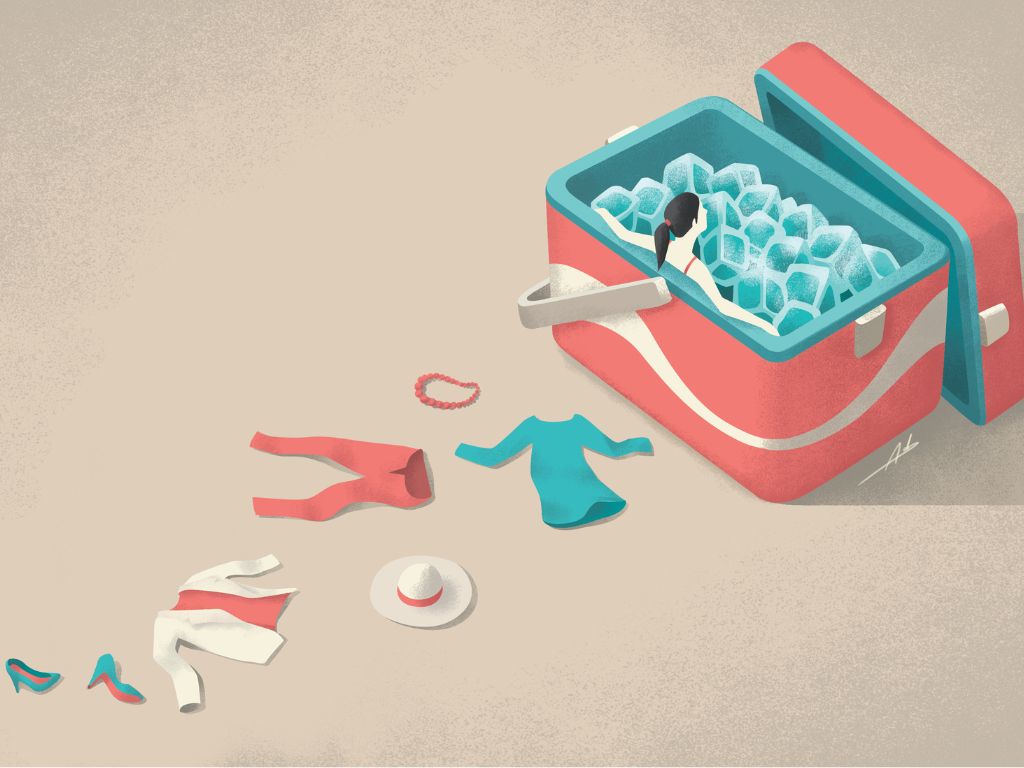
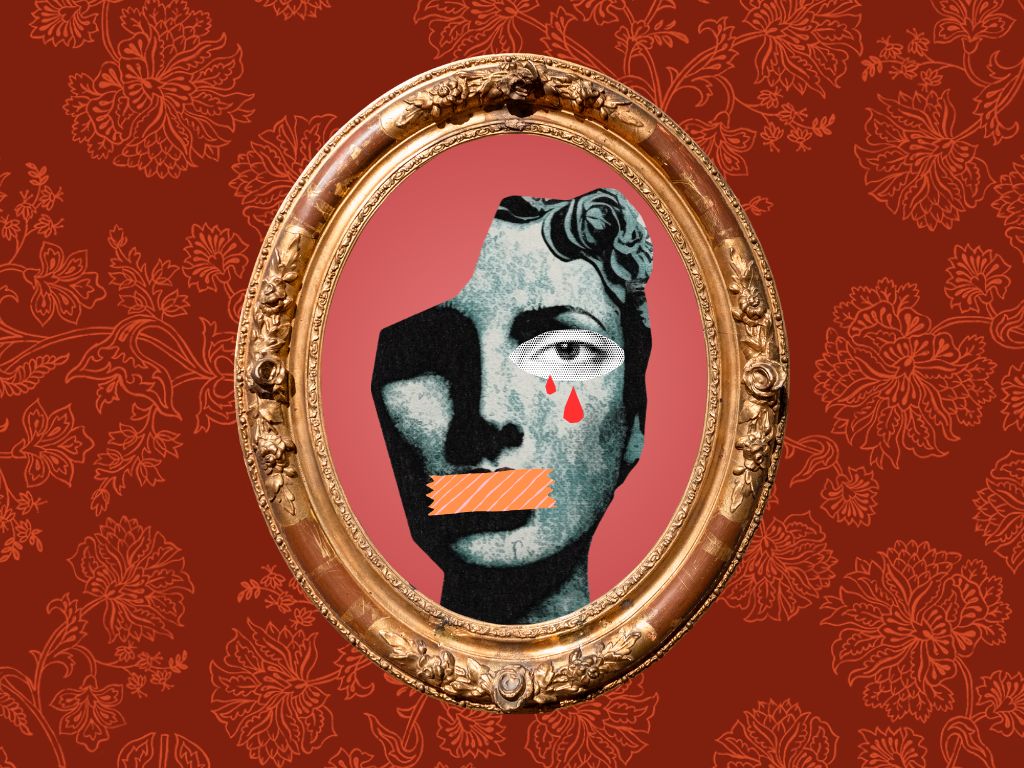
For decades, menopause has been framed as decline—something to fix, control, or endure. Maybe the real problem isn’t menopause at all, but the story we tell about it.
It’s a Tuesday afternoon. I’m mid-work, probably writing about the nutritional benefits of something mundane like lentils, when an email pings into my inbox. As a dietitian who writes for major media outlets, my inbox is a flood of public relations pitches angling for product promotion. This one has a subject line that reads: “Tackle Menopause Mood Swings & Hot Flashes.”
The email opens with a familiar, slightly patronizing tone: “We all know that menopause is a time of hot flashes, mood swings, weight gain, and a steady decline in vitality.”
Do we?
Do we all know that?
These messages don’t just land in our inboxes and stay there, they seep into how we move through our day, coloring our confidence, our creativity, and the ways we show up in both public and personal spaces. Because from where I’m sitting, midlife has been a mixed bag. Sure, I’ve had moments where I felt like a human radiator and my creativity took a break. But I’ve also experienced a surge of professional confidence, a deeper connection with my friends, and a refreshing lack of concern for other people’s opinions.
Yet, the story being sold to me (and millions of other women) is one of pure, unadulterated decline: loss of energy, confidence, strength, and desirability, followed by an inevitable slide into irrelevance.
This isn’t just disempowering; it’s damaging. Menopause doesn’t just have a symptom problem. It has a public relations problem. And it’s time we fired its agent.
The Menopause Brand Is Failing Us
As a writer, I see firsthand how words are weaponized in marketing. The pitches I receive for menopause supplements, creams, and “solutions” almost universally frame this life stage as a PR crisis—a disease to be managed, a fire to be extinguished, a problem to solve. And I get it. This type of messaging sells products. But at what cost?
As Morgan Francis, PsyD, LPC, explained, “Repeated messaging profoundly shapes our beliefs about ourselves. In psychology, this is one of the most well-documented phenomena we have. It works like a formula: Repetition → Familiarity → Believability = Illusory Truth Effect.” In other words, the more we hear something over and over, the more likely we are to believe it’s true.
Think about the narratives we’ve thankfully started to challenge with young girls. We no longer tell them that girls aren’t good at math or that certain sports are “for boys.” We recognize that such language limits their potential.
A similar notion occurs when speaking with older women. “If women hear ‘menopause is the beginning of the end’ and internalize that script, it may lower ambition, confidence, and self-worth,” Francis added.
The Real Damage: What This Messaging Does to Women
This messaging campaign isn’t just a few poorly worded emails. It has a real and damaging impact. As Dr. Francis observed, when women are repeatedly sold this story, they start to: “mistrust their bodies, lower their expectations of their bodies, anticipate the suffering and misery, feel unattractive and less desirable, and assume their power and self importance is fading.”
This is more than feeling a little bit down. It’s about a fundamental shift in how we see ourselves and our place in the world. The constant focus on loss—of fertility, youth, vitality, foreheads that don’t wrinkle without Botox—can create a self-fulfilling prophecy. When we’re told repeatedly that we’re becoming invisible, we might just start to disappear. The irony is that, as Dr. Francis pointed out, “This mental distress can cause more damage than the actual symptoms themselves. Women are not biologically losing value, we are made to believe that we are.”
And frankly, it feels ridiculous to throw in the towel at age 50 or 55, when the average life expectancy for women is over 80. That’s an entire third of our lives left to live and redefine who we are.
Let’s Rewrite the Script
Overhauling this narrative isn’t about pretending menopause is all sunshine and liberating drum circles. It’s about demanding a more complex, honest, and empowering story that reflects the full picture. So where does the PR overhaul begin?
It starts with language. We need a more nuanced story that acknowledges the challenges while also celebrating the opportunities for growth, freedom, and rediscovery. After all, which life stage doesn’t come with its own set of struggles?
My 20s were a time of constant second-guessing as I tried to prove my worth and figure out who I was. Yet, I don’t remember seeing messaging that framed young adulthood as a crisis to be solved. Instead, it was celebrated as a time of possibility and self-discovery. Menopause deserves the same respect. We need a story that empowers rather than diminishes, while still embracing a dose of reality.
As Dr. Francis concluded, “The way we talk to our daughters shapes their self-beliefs. The way society talks to women over 50 shapes our beliefs. Menopause isn’t the problem; what we have been told about it is.”
So let’s reject the bad PR. Menopause isn’t a crisis and we don’t need to be “fixed.” We’re simply changing. And we need to start talking about it that way—for our health, for our sanity, and for the generations of women who will follow us.
No, we’re not “done.”
But we are done accepting the story that we are.
******
MEDICAL ADVICE DISCLAIMER
DISCLAIMER: This website does not provide medical advice. For health or wellness-related content, SFD Media LLC emphasizes that information about medicines, treatments, and therapeutic goods (including text, graphics, and images) is provided for general information only. No material on this site is intended to substitute for professional medical advice, diagnosis, or treatment. Users are advised to independently evaluate and verify the accuracy, reliability, and suitability of the information before relying on it. You should not rely on the content as a substitute for professional medical advice. Consult with a physician or other health care professional for any health concerns or questions you may have. SFD Media LLC is not responsible for any action taken based on the information provided on this website. The use of any information provided on this website is solely at your own risk.




2 Responses
Spot on, Lauren. My mom always told me when I was growing up that women in our family didn’t get that. I never have experienced it & I’m in my 60s. She made me think it was overrated and not the big deal people made it out to be. While some may experience it worse than most, or more often, I think it’s very minimal for most women. I felt the way it was pushed & ‘marketed’ made women look for and treat every little symptom or sign as the dreaded menopause. It was the fall guy no matter what. I told my own daughters we don’t get that. So far the oldest, mid 40s, has had no symptoms. I think overblowing it contributes to making it more of a reality. Thoughts can help create the experience or worsen it, at least. I’m glad my mother said this to me. Rest in peace, Mom.
This is absolutely on target. I never looked for problems (hot flashes, weight gain, loss of confidence, etc.) I believe, because of that, I never experienced these issues. I am beginning my 70’s and for the last two years I have been eating better, exercising increasing as I progress and taken steps medically to do what I can do to be better. I have CHF and have an ICD in my chest. I have never felt better in my life.
I wish a better narrative would be given younger women. You are still you only better as you age. It’s the way medicine is being practiced. Get a pill, don’t fix anything, don’t try to over come anything. Like a cold even menopause has an eventual end.