
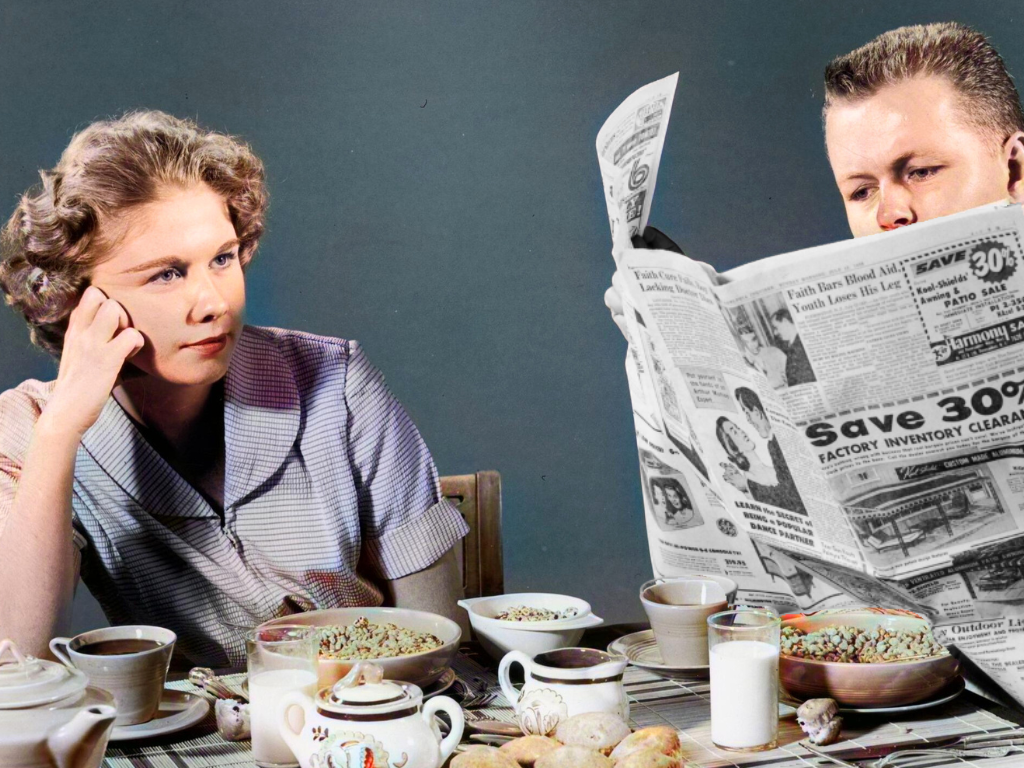
We asked 21 women how much emotional labor they shoulder for their partners. The answers? Frustrated, funny, and sobering.
Your partner has three friends: a college roommate he hasn’t called in a year, his brother, and you. Guess who’s carrying the weight?
If this scenario sounds familiar, you might be “mankeeping.”
When Mankeeping Gets a Name
The term, coined last year by a pair of Stanford researchers, describes the social and emotional imbalances in many male-female relationships today.
“I expected my kids to rely on me, but not so much my husband, for emotional support, encouragement, and counsel,” one woman told me. “If he acted on my suggestions, it would be easier. Instead, it’s draining.”
And nobody’s talking about it.
We’ve had the conversation about women’s unequal, unpaid, often underappreciated roles managing childcare and keeping house. But what about the emotional cost of our role in the “male friendship recession”?
The Loneliness Epidemic
It turns out otherwise potentially healthy heterosexual relationships are one more casualty of the loneliness epidemic, and women are bearing the burden.
“It’s completely untenable and exhausting, and all the cracks in the relationship open that much wider and deeper,” said Marcus Berley, a licensed mental health counselor.
The “male friendship recession” isn’t great for men either. They’re facing “increasing isolation, stunted emotional life, more bypassing of what their needs might be, and just defaulting into either what they think they’re supposed to do or into fantasy of how they’re going to solve it all,” Berley said.
No Laughing Matter
I admit I started this article a little tongue in cheek. The term “mankeeping” made me smirk, kind of like “manscaping” or “manosphere.” Then I began hearing from friends, and I realized just how serious, widespread—and, yes, exhausting—this phenomenon is.
I sent an anonymous five-question survey to almost two dozen female friends, asking about their friend networks, social calendars, and the impact of relationship imbalances on these fronts—versus that of their male partners’.
Email and text reactions came in fast and furious. They’d just been talking about this with a friend! They’re living this! Yes, they want to discuss it! Two women told me that the burdens of mankeeping had led, at least in part, to their divorces.
The Pressure Is On
Not all of the 21 women who responded to my survey felt this imbalance, but the vast majority did—and they’re tired. “Any social gathering is planned by me. Rarely does my husband invite people over and [he] never helps with the planning that’s involved with having a party or people over for dinner.”
The women almost unanimously said it’s up to them to create social activities outside the home. If they don’t plan them, the whole family’s social life suffers, and they “wouldn’t do social things as a couple.” A few women admitted to feeling guilty going out on their own when it so often means leaving their man home alone. “I also encourage him to do social things with others without me. He wouldn’t seek those out on his own.”
“Recently I shared with him that I feel like I carry the social weight for the two of us.”
What Keeps Women Sane
Mankeeping is “emotional labor,” the Stanford study asserts. Unreciprocated, it can have “cascading effects” on women’s time, autonomy, and well-being. “Often that’s when couple’s counseling will get introduced by the female partner,” Berley noted.
One woman described the cycle: “He drains me. I’m it. He began to complain we weren’t spending enough time together, ‘just talking.’ I said, ‘I’m drained, and I have friends. Where are yours?’ So he went to his mom! She began gossiping about me—not a good wife. Ugh!”
According to Berley, men often feel burnt out by the demands of work and family, “so socializing feels like an extra thing” they have to do. In general, “When women are feeling that overwhelmed, they’re turning to their networks. When men are feeling overwhelmed, they’re turning in on themselves.”
The Power of Female Friends
The women in my survey draw sustenance from their friend networks. Their men? Not so much. “I have deep and broad female friendships, some of which are 20 and 30 years in duration. Sometimes I feel like my husband only needs to have a deep and enduring relationship with me.”
“Interacting with my friends is ‘life-giving’ for me. My group of friends frequently check in on each other via text or phone calls. We include each other in our celebrations, hardships, and pain. We seem to expect to need each other. We also prioritize seeing each other.”
Like the women I surveyed, I’m also deeply mindful of how my own female friends keep me sane. But who’s keeping the men sane?
Let’s Talk About the Boys
Berley traces male loneliness to a few things: childhood conditioning to be strong or “self-sufficient,” friendships built around activities rather than emotional depth, and a false sense of connection from online interactions. That mix makes it hard for men to admit they need help—or even know what they need.
Most women I surveyed said their partners have few to no close friends outside family or work, and it only gets worse after retirement. One woman put it bluntly: “Men tend to not talk about those things to each other. He’s tried, and now he feels hurt.” Another described her husband’s friendships as stuck at “the toddler stage of side-by-side play”—fun when it happens, but nothing deeper.
Men: Time to Take Stock
If your partner is your only real emotional outlet (plus maybe your mom), you’re putting strain on the relationship—and yourself. Research shows that men with strong male friendships have better mental health and age more gracefully. One woman summed it up: “He would be a more interesting person if he were involved in more things outside of the house.”
Berley’s advice? Do a “life review.” What mattered to you at different phases? What do you want now? And yes, consider therapy—not because you’re in crisis, but because it’s a rare space to figure out what you need before you burn out.
Taking Back Your Power
Sharing is caring. If “keeping” your man is exhausting you, that’s not good for you, him, or your relationship. Berley recommended women get “explicit” about their needs and start setting boundaries.
“This is not an easy thing to do when there’s a well-established pattern in the relationship, but men often respond better to actions than explanations,” he said. “You have a lot of power in deciding what you want to do and how you want to be, but no one else is going to do that for you.”
As one woman on my survey confided, “Glad you asked me to verbalize this part of my life. I’m 70 years old. It’s taken time for us to feel we can clearly state our own needs and accept the other’s requests.”
Amen.
******
Survey responses were edited for clarity, length, and typos.



7 Responses
So many men are like helpless, mildly brain-damaged children.
“Mankeeping” indeed!
My husband and I are retired. He has no male friends that he spends any time with. I have to make all entertainment plans where we may get together with another couple. I belong to several women’s groups and enjoy the time spent with them. He feels that “it’s just so you can go out for lunch.” He is on the internet from the time he gets up until he goes to bed. I find myself so tense most of the time because it’s ALL ME. I daydream sometimes about being alone, on my own and think of how I would enjoy spending my time with no restrictions and resentment coming from him.
Marilyn, Oh, I hear you. This isn’t just about making lunch plans — it’s the invisible emotional and social labor required, while feeling as if your partner has checked out. That imbalance wears you down over time.
What you’re describing — the daydream about being on your own — is something many women in long marriages quietly admit. It’s less about wanting to leave and more about craving space, ease, and freedom from being the only one making planes and executing.
You’re not alone in this. A lot of women here will nod in recognition at what you’ve shared.Thank you. —susan
I did it. After 45 years, I chose to be on my own. I have to say it is the most fulfilling thing I have ever done–EVER1 Not easy, but so worth it. Coming into my condo and shutting the door makes me smile every time!
Deborah, Thanks for sharing. Love this. That door-shut moment is such a rush, isn’t it? It’s not easy to make that leap after decades, but the freedom—and the smile that comes with it—says it all.Glad you are here. —susan
“Mankeeping” is such a great descriptive! I can relate to the person who describes her husband’s friendships as toddler-stage, side by side play. Trying to verbalize it to him, though, without causing him pain, has been so difficult. If I’m his “best friend and wifey”, why should he talk to someone else? BRO!! I’ve got cancer and I can barely deal with my own shit!!
Thank you for this—what you shared is so raw and honest. That “side-by-side play” analogy nails it, and you’re right: it’s hard to name the gap without hurting someone you love. Sometimes we need our partners to step up and find connection outside of us, especially when we’re already carrying so much. Sending strength your way. Thank you for being here. —susan