
This post contains affiliate links. We may receive compensation when you click through them, which helps support PROVOKED’s independent journalism—at no extra cost to you.
I didn’t expect to trust another gut-health pitch. Then one of them actually made sense.
I have a kitchen cabinet I’m slightly embarrassed by: three half-finished tubs of greens powder that turned to sludge at the bottom of the glass no matter how hard I stirred, a probiotic that gave me a headache for a week straight before I gave up on it, and a magnesium supplement I took faithfully for six months and felt nothing from.
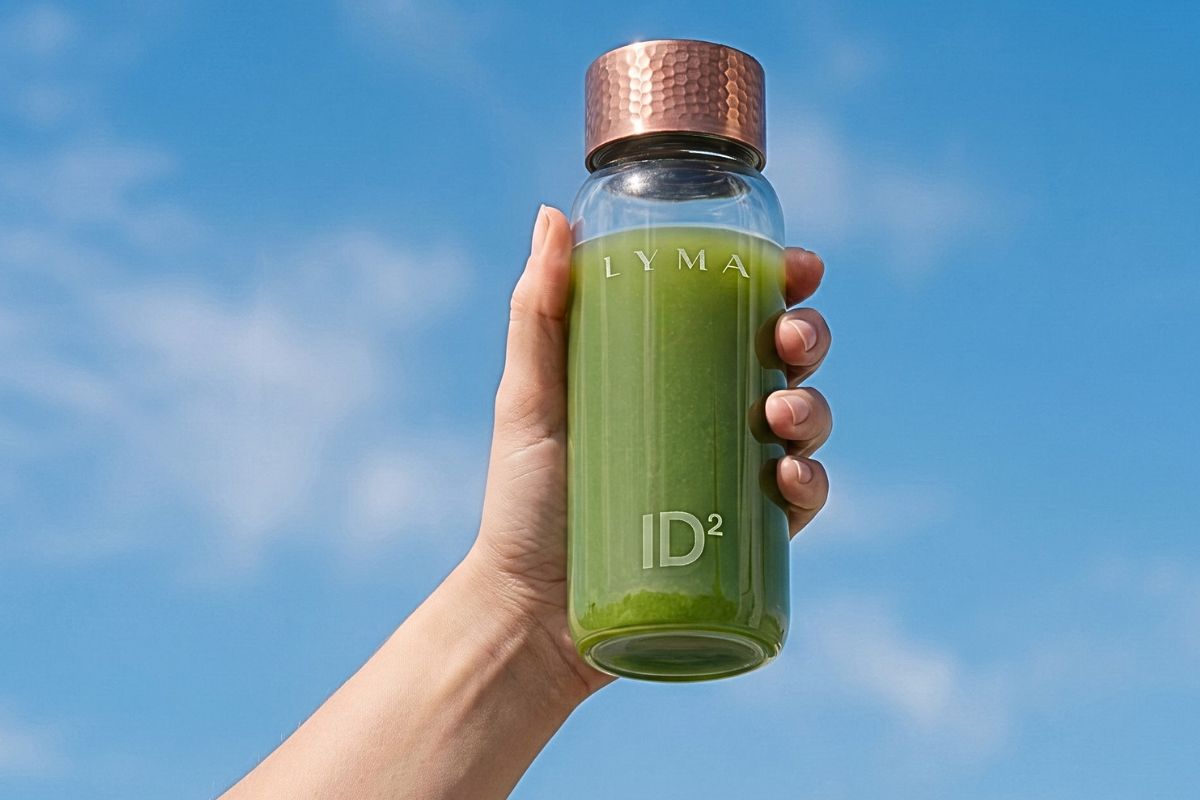
Every one of those products fixed exactly one thing and ignored everything connected to it. The powder wasn’t paired with the kind of support that helps nutrients do their job, the probiotic had no fiber to feed it, and the magnesium was a form that may not have absorbed well. So when I heard about LYMA ID², a new gut formula, what I wanted to know first was whether anyone involved actually understood why the others hadn’t worked.
The Company Behind the Claim
LYMA wasn’t a gut brand until this year. Lucy Goff founded the company in 2018 on a supplement built entirely from peer-reviewed, patented ingredients dosed at clinical strength—a stricter standard than most labels bother with, since a lot of supplements list what’s inside without saying how much of it actually does anything. Her second product was a handheld low-level laser that became the first of its kind clinically proven for at-home use. That track record is why I read the company’s actual reasoning instead of scrolling past another gut-health pitch, even though a good history doesn’t guarantee this particular product works.
The person making that case is Professor Paul Clayton, LYMA’s Director of Science, who has spent five decades studying the diets of long-lived populations. Gut bacteria need fiber to survive, yet most modern diets don’t provide much of it. Clayton claims that people in the late 19th century ate between 40 and 50 grams of prebiotic fiber a day, against about 4 grams now. If you don’t have proper intake, your gut will swiftly—and sometimes painfully—let you know.
That gap lands close to home for most of us at this age. Perimenopause and menopause bring a documented shift in gut bacteria composition, and the relationship runs in both directions: hormonal change disrupts the microbiome, and an underfed microbiome makes it harder for the body to regulate those same hormones in return. It also helps explain why symptoms tend to show up together instead of one at a time. Most of the body’s serotonin is found in the gut, which is part of why the 2 p.m. crash, the bloating, and the low-level fatigue can all hit in the same week instead of as separate things to solve individually. A depleted gut also absorbs less of what you actually eat, so the protein and vitamins you’re already careful about could be doing less than you think, for reasons that have nothing to do with your diet itself.
Where LYMA’s argument gets more specific is in naming why a fiber deficit alone doesn’t explain the whole picture. Swallow a probiotic with nothing for the bacteria to eat and they pass through the system without ever colonizing; that’s the reason a lot of us have taken a probiotic for months and felt no different. Omega-3 has the same weak link, just earlier in the process, since the fat oxidizes before it reaches a cell unless something shields it in transit, and most formulas skip that step because it adds cost. Minerals run into a third, unrelated problem: the cheap oxide forms used in most supplements barely absorb, so you can take the correct nutrient for years and still be deficient in it.
Why the Order Matters
ID²’s answer to that is less about any single ingredient and more about order. It starts with four fiber types—IMOfibe®, PromOat® oat beta-glucan, chicory inulin, and fructo-oligosaccharides—chosen because they ferment at different rates and reach different stretches of the colon, so the gut gets fed end to end instead of in one spot. Only once that groundwork is laid does ActiBio®, the probiotic strain, come in. It’s selected specifically because it survives stomach acid, which means it’s arriving alive into a gut that already has something for it to eat, instead of passing through empty-handed like most probiotics do.
The DHA is paired with Oleacore®, an olive-derived polyphenol that does two jobs at once: it protects the fat from breaking down before it reaches a cell, and separately, it’s linked to activating a cellular-repair pathway tied to how the body ages. The more than 25 vitamins and minerals then arrive last, in absorbable chelated form, into a gut that’s now equipped to actually take them in. It’s the same logic as prepping soil before you plant—the ingredients matter less than whether the ground is ready for them.
What’s Actually Proven—And What Isn’t
The strongest evidence so far comes from the research behind each of those individual ingredients, and what LYMA’s own early customers have reported back. Michele, 60, told LYMA that bloating she’d lived with for years eased around three weeks in. Kinnari, 48, reported feeling lighter and more energetic on a similar timeline. And Jasmin, 67, said she’d be lost without her LYMA ID² now, since she can eat just about anything with no uncomfortable repercussions.
Helpful data points, but what really tipped me from skeptical to willing was that any formulator can put good ingredients on a label. LYMA’s explanation for the product matched the actual problem sitting in my cabinet—one input at a time, nothing built to work together—and that’s a rarer thing to get right.
That’s not proof it’ll work for me. But it’s the first product in a while that’s actually earned the benefit of the doubt, which is more than I can say for anything else currently gathering dust on my shelf. If Clayton’s right that most of us are operating well below what our biology could actually do, that’s less a promise than an open question—and one worth finding out the answer to.
Learn more about LYMA ID² here.
******
MEDICAL ADVICE DISCLAIMER
DISCLAIMER: This website does not provide medical advice. For health or wellness-related content, SFD Media LLC emphasizes that information about medicines, treatments, and therapeutic goods (including text, graphics, and images) is provided for general information only. No material on this site is intended to substitute for professional medical advice, diagnosis, or treatment. Users are advised to independently evaluate and verify the accuracy, reliability, and suitability of the information before relying on it. You should not rely on the content as a substitute for professional medical advice. Consult with a physician or other health care professional for any health concerns or questions you may have. SFD Media LLC is not responsible for any action taken based on the information provided on this website. The use of any information provided on this website is solely at your own risk.