
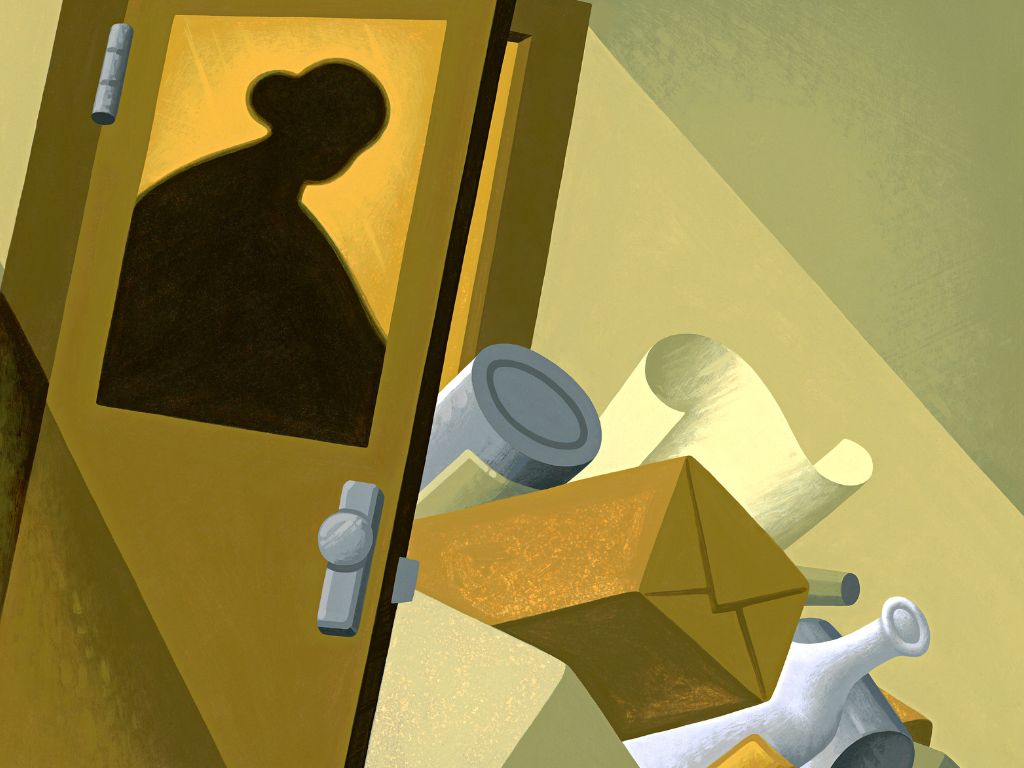
What looks like harmless secrecy around money often signals something deeper—power, fear, and the unspoken rules shaping a relationship.
Show of hands—have you ever lied to your partner about a purchase? As in:
- Passing off new shoes as ones you haven’t worn in ages?
- Pretending you used reward points, free shipping, and a 40-percent discount?
- Intercepting the delivery and destroying the box?
I know I’m not alone. To be clear, I’m talking small indulgences, like a pair of jeans or a luxury skincare product. My secrecy felt harmless … and justified. After all, I earn my own money, I don’t overspend, and I don’t want my choices scrutinized by my husband, who believes less is more.
But recently, he and I completed a rigorous review of our finances and I saw a chance for a clean slate. I committed to full transparency, and that’s when it hit me: This was about much more than money.
F*ck You Money
When I got engaged at the ripe old age of 22, my mom advised me to always keep a bank account and credit card of my own, in order to maintain some autonomy in my marriage.
Melissa Cherry, MA, a licensed marriage and family therapist, explained that girls who came of age in the ‘70s and ‘80s were warned by our mothers to set aside “mad money” (aka “f*ck you money”). We were also taught that talking about money was shameful.
But now we’re grown-ass women with our own desires and spending power. So why are we still sneaking around like Lucy hiding her expensive new hat from Ricky? It’s not only demeaning to women, it’s insulting to our partners—regardless of their gender.
An Unintentional Message
When our daughter still lived at home, I’d ask for her help erasing evidence. “Can you get my package off the porch and put it in the living room?” I’d text her when notified of a delivery.
I regret that now. I was teaching her, unfairly, that her father was unreasonable and that men’s emotions must be managed through deception or by walking on eggshells. I was also modeling for her that women should feel ashamed of spending on ourselves.
There’s a difference between having agency over our money and lying about it. Hiding our purchases isn’t an act of empowerment, but symptomatic of deeper issues within ourselves and our relationships.
“Money is often a metaphor for power in a relationship,” Cherry said, adding that attitudes toward money also reflect personal values, and secrecy undermines trust.
“If you’re lying to me about this, then what else are you not comfortable sharing with me?” she said, by example.
Cherry suggested that couples talk about money before they get married, “because if you’re very misaligned, you might be misaligned in a lot of other ways.”
When working with a couple, she’ll ask what their rules are, such as any expense over $1,000 must be discussed. She also encourages regular conversations, since goals often change over time.
When Life Forces the Conversation
Recently, my husband and I switched financial advisors. As empty nesters on the brink of downsizing, we had to disclose what we own, how we spend, and what we’ll need in the next phase of our lives. It required a level of openness that, frankly, felt uncomfortable to both of us.
I was forced to admit my spending, and my husband had to confront the decisions he’d been wrestling with concerning his business. We argued about money in versus money out and what each of us needed to feel secure—a reckoning that was long overdue.
But instead of retreating to our corners in frustration, we stayed in conversation until something unexpected happened. We began talking less about the day-to-day grind and more about our future—dreaming and planning the way we did in our 20s, when life was filled with possibilities.
A few months ago, I tested my new approach. With my husband on board, I bought a print for the condo we’ll be moving to. It was large, and I knew custom framing would be expensive. The old me would have gotten it framed, hidden the receipt, and hoped he didn’t ask what it cost. The new me invited him to the framer’s.
“I need you to be prepared for what this will cost,” I told him on the way, giving him my best guess.
Together, we selected the mat and frame. He asked questions about the process and materials, and when the total came in just under my estimate, he was focused not on the price, but on the craftsmanship and how the artwork would enhance our new home.
Cherry described shared experiences like this as foundational to a successful relationship.
“When you’re holding secrets, you’re also withholding intimacy,” she said, “and you’re denying an opportunity to connect.”
What I Was Really Avoiding
As I fought my impulse to hide the receipts on food delivery bags and grab packages before my husband could see them, I grew aware of my wider pattern of conflict avoidance. I hadn’t realized how often I adjusted my own behavior—without provocation—to evade an imaginary argument with my husband.
It made no sense. He’s not overly moody or reactive. We treat each other as equals and respect each other’s space. It was only recently that I had an epiphany: I wasn’t tiptoeing around my husband because of anything he’d done. I was projecting residual anxiety from the past, when bickering was the soundtrack of my childhood.
Like I said, this wasn’t about money.
I’m working through my issues in therapy and by communicating more honestly with my husband. My transparency not only demonstrates trust, it reinforces our partnership and signals that it’s safe for him to open up, too. He’s also grown more comfortable with the idea that while minimalism is good, sometimes a splurge is better.
I still believe in autonomy.
But now I own my choices without secrecy or shame.
******
FINANCIAL DISCLAIMER
The information provided on PROVOKED is for general informational purposes only and does not constitute financial, legal, tax, or investment advice. SFD Media LLC and its contributors are not licensed financial advisors, investment advisors, brokers, accountants, or attorneys. You should consult with a qualified professional before making any financial decisions based on this content. While efforts are made to ensure the accuracy and timeliness of the information, SFD Media LLC makes no representations or warranties, express or implied, regarding its completeness, accuracy, or applicability to your individual circumstances. Reliance on any information from this site is solely at your own risk and discretion.






4 Responses
Wow. This is such a hot topic. All my adult life shopping for myself has had an underlying feeling of guilt. So many stories running in my head each time…
In my second marriage at some point I knew it won’t last and started a high interest savings account in my name only. This made it much easier to end that marriage.
After the death of my third husband a few years ago, the realization that I don’t need anyone’s permission was a revelation. BTW, i cannot blame my husbands for my story, they never questioned me about spending. My mother told me early on that it is important for a woman to have her own money.
It definitely makes you wonder if the advice we got from our moms, while good, also planted a seed of distrust.
Thank you for this. I needed it.
Thank you for reading and reaching out! I’m glad it helped.