
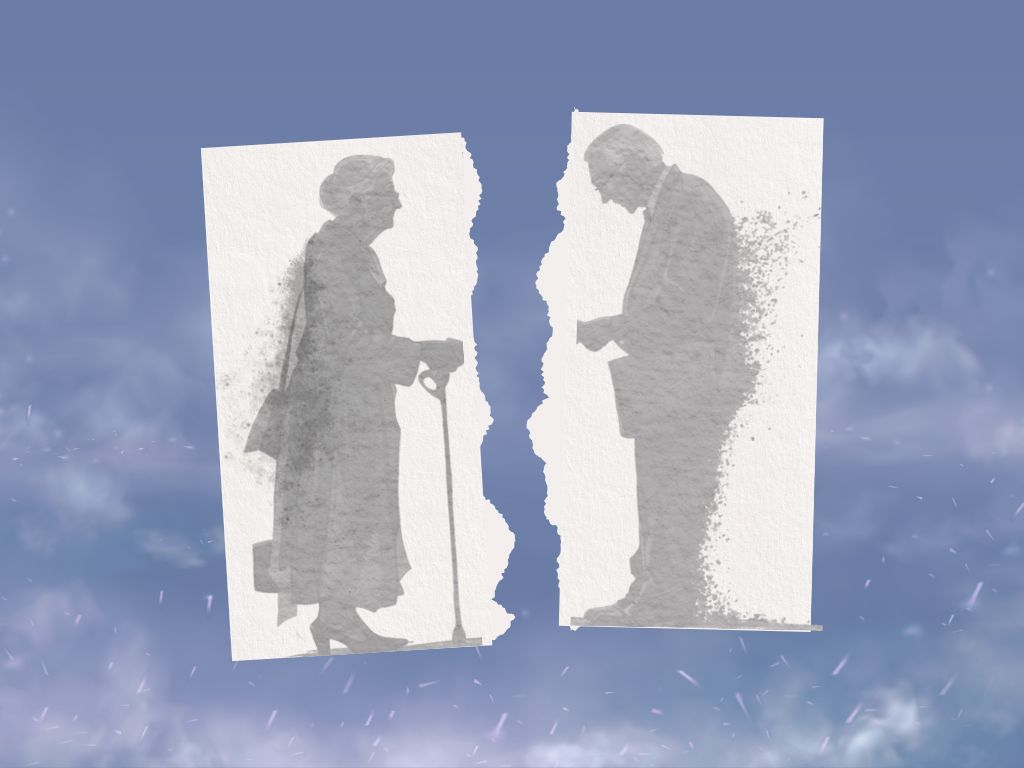
We celebrate endurance in marriage—but rarely ask what’s actually holding it together.
We applaud couples who’ve been married 50 years. We send cards. We throw parties. We call it success. But what if some of those marriages aren’t love stories—they’re endurance tests modeled on Survivor?
I should know. I stayed. Through sickness. Through chemo. Through the pity. All because I thought that’s what was expected of me. The good girl.
Good Girls Stay
When I got divorced at age 40, it surprised me. Not because I didn’t know. I was the one who initiated it. But it surprised the younger version of me who thought only “other” people get divorced.
I married the nice, dependable guy. My biggest complaint was that the score of the Ohio State football game dictated the mood in my home about eight times a year. Not bad as complaints go. I saw us making it. In sickness and in health.
Until there was sickness.
Four years into our marriage, what we thought was lower back pain due to an out-of-state move turned out to be stage 4 testicular cancer.
According to experts, the only solution was what I referred to lovingly as “nuclear” chemo, the kind where they can’t administer it in a doctor’s office. It’s so toxic, you’re in a hospital for four days every three weeks for six rounds.
Date nights take on a different tone when one of you is radioactive.
My husband celebrated his 30th birthday in the hospital with a chorus of nurses’ voices wishing him well. As they were singing “Happy Birthday,” I wondered if they thought it would be his last.
Caregivers know that supporting the physical and emotional needs of a patient is difficult, even when you’re not emotionally invested. But when you’re cleaning up vomit and other bodily fluids while nursing your own heartache of what was, you change.
I grieved. My life was falling further away from what I envisioned when we said, “I do.”
What Was Holding It Together
Turns out the “in sickness” part wasn’t the hardest thing we faced. It was the weight of expectations.
Years later, when we ended things amicably, I confessed to him that while I thought about getting divorced earlier, I didn’t want to be the girl who left the guy with cancer. Comically, he admitted he didn’t want to be the guy who left the girl who took care of him through it all.
Much of what we do or don’t do in our marriages is dictated (at least for those of us who can’t pass up a gold star from strangers) by what other people think. Caregiving creates a kind of emotional glue that can look like love—and sometimes is—but can also be obligation, identity, or a desire for better Facebook posts.
At the time, I was only the second person on my mother’s side to get divorced. It was a four-letter word my family said in hushed tones as if speaking it aloud would cause it to land on their doorstep.
You stayed together.
You adjusted.
You learned to hide the baked goods in the trunk to avoid the calorie comments.
I knew my marriage was broken before he got sick, before we had kids, before we moved away from the state where he was born. But divorce didn’t fit with my idea of a “perfect” life or who I was. I wasn’t codependent on my spouse, but I was codependent on what his presence signified and the social obligations it carried.
Now that I’m older, I’ve moved past expectations. I’ve reached the age where the wedding gifts are fewer and the anniversary tributes are louder.
And I’m seeing relationships in a different light.
Are couples together because they choose to be or because social expectations dictate they stick it out? Or are some of them simply codependent, unable to imagine a life alone? Is the idea of divorce like seeking the type of surgery that separates conjoined twins where one might not make it because the main organs belong to the other?
When Staying Becomes the Only Story
A woman I met recently told me about her husband who has ALS. It’s progressed to the point where she can no longer care for him, but she’s having difficulty imagining who she is because “married caregiver” is the only title she’s had for years.
We discussed help for her or a living situation that could better assist him. “I couldn’t,” she said. “It wouldn’t be right.”
That conversation has been circling like a buzzard over everything I thought I believed. I know her struggle. I lived it—briefly. Caregiving eats at your emotions. It turns your daily sprints into grueling triathlons with no win at the end. I hoped my husband would beat the disease. Hers will not.
She doesn’t want help. She simply wants to be released in the same way that Meat Loaf sang “So now I’m praying for the end of time to hurry up and arrive” in “Paradise by the Dashboard Light.”
We’re not confused about what love looks like when it’s alive. It has warmth. When you see it, you ache with possibilities. When you’re in it, it feels effervescent.
But there’s another kind of staying that gets mistaken for devotion—staying that’s fueled by fear, identity, optics, guilt, habit, or a silent belief that leaving would make you the villain.
We celebrate endurance because it’s easy to measure. Years. Decades. Anniversaries. It looks good on a greeting card. But agency is quieter. It doesn’t come with a cake topper or a shower.
We applaud 50 years together while we’re suspicious of freedom. Sometimes what we’re clinging to isn’t the person—it’s the version of ourselves we are beside them.
It’s easy to fall in love with ourselves when we’re doing the right thing for someone else. There’s always applause for that.
What’s harder is making peace with the choices no greeting card celebrates.
I’m still working on that.


11 Responses
I am a 72YO woman who lived in a loveless marriage for years. Then, suddenly, my only child passed away. He’s been gone for two years, and I’m now divorcing my husband, selling our home and moving on my own. And I will walk away with very little money.
It took my son’s passing to realize I deserve all the happiness life can offer.
Life is stressful as I navigate this process still living with my soon to be ex — but I know the situation is temporary and the happiness I’m starting to feel makes it ALL worth it.
We are trapped financially in retirement without enough to live on individually if we split it 50/50. We have savings but the cost of putting a roof over our heads separately would break the bank. So here I sit. I would be happier on my own.
SAME, AND NO SEX EITHER.
Thank you for sharing your story and I bet there are many people out there feeling the same way.
Yes, the weight of expectations. A never ending life of caregiving changes the dynamics of a marriage. People don’t understand that. The spouse being taken care of doesn’t always understand that. They expect you to dutifully do everything for them while they can barely do anything for you. And if you complain, you are the bad guy. You are the selfish one.
You put words to something so many people live but feel guilty saying. The shift from spouse to caregiver changes everything, and the unfairness of being expected to give endlessly without breaking is something too few people understand.
I survived a marriage & left after 27 years. It was the best decision for me. Looking at different friends and their marriages have made me realize how women especially cope with unrewarding marriages because “they should “ and “ til death do you part”. It is the good girl complex as you say.
Thank you for sharing this. It takes real courage to step away after so many years, and what you said about how women are taught to endure unrewarding marriages is deeply true.
My spouse just passed this month after 10+ years with Dementia. I was his 3rd wife, married only a couple years before his diagnosis. We were co-dependent, alcoholic. I got sober thru AA. He was forced sober when he went to a home. I was that newly-wed 50 year old spouse with an Early-Onset Alzheimers husband. I only survived because of a great therapist, my belief in a Creator, and my eventual belief that I am worthy.
<3
Laura, thank you for sharing your story with this community. Yours is such a powerful reflection. You’ve carried grief, addiction, caregiving, and loss. But through it all you came out realizing you are worthy. That lesson is a powerful one that most of us can learn from. I wish you peace and comfort in the days ahead.