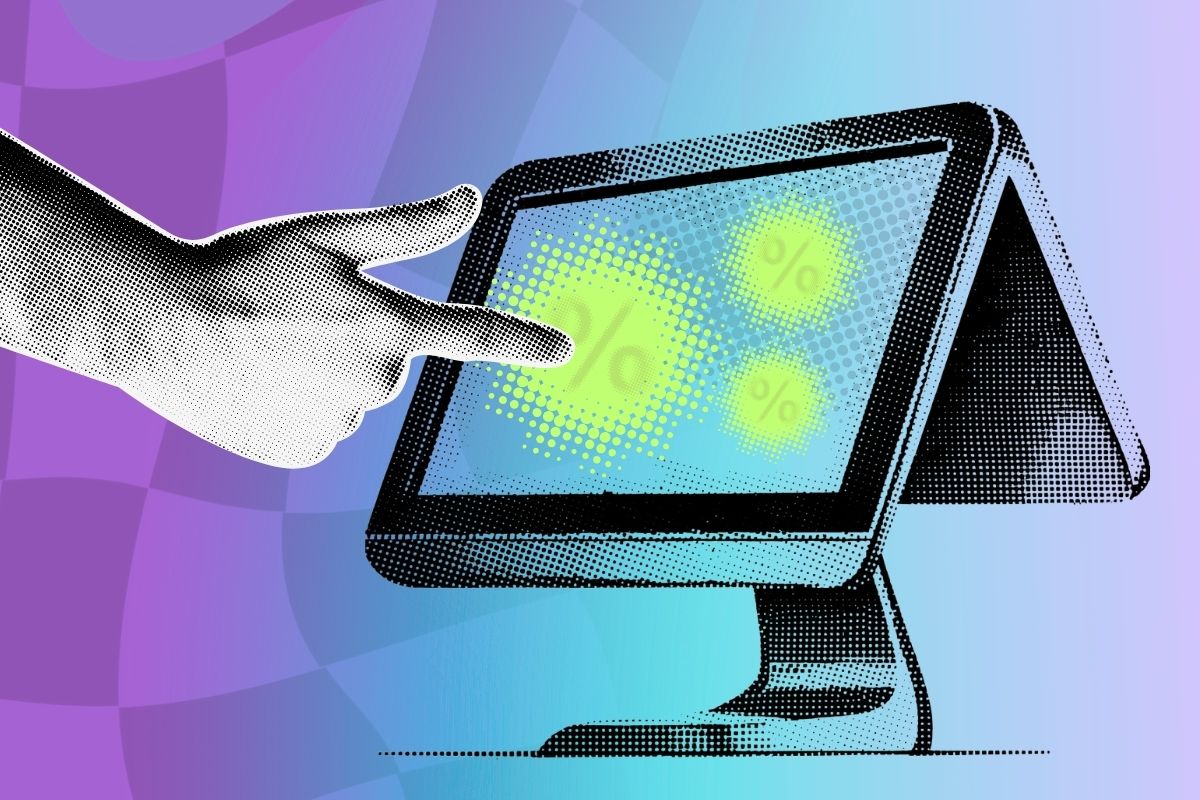
The tip screen follows you everywhere now. A former server asks who turned guilt into a payment strategy.
It’s 3 a.m. on a Saturday, and six of us are sitting on the hallway stairs of a bar, cocktail servers smelling of spilled beer, exhaustion, and the involuntarily absorbed perfumes of 200 complete strangers. We’re recounting the night: the $250 tab that walked without leaving a cent, the woman who whispered “I used to waitress” before pressing an extra $20 into your hand on the way out, and the bachelor party that spilled half your tray, laughed, and then one of them—and not for the first time—slapped your ass like they’d earned it.
The payoff on a good night? Close to $300 cash, a number you kept entirely to yourself. Other nights, barely enough to cover the gas home, offered up with great theatrical frustration in the hope that someone would validate your suffering. Because everyone on those stairs made $3 an hour, and the only reason the math worked at all was that customers understood the tip was the whole point.
All of which is to say: I have some credibility here, and even I don’t know what’s happening anymore.
When “Suggested” Stopped Meaning Suggested
My serving days ended about 20 years ago, long before QR codes, payment apps, and the version of myself that has a probiotic routine and a favorite heating pad. Back then, tipping was a contained social contract. You sat down, someone took care of you, you left something that reflected how that went. Done.
Then somewhere around 2012, a payment hardware company figured out that checkout screens could default to a tip prompt, and the word “suggested” started doing a lot of heavy lifting it was never designed for. What followed is “tip creep,” which sounds almost polite for what it actually is: a methodical expansion of the guilt screen into every transaction where a card reader has been installed and someone decided your moral discomfort was a more reliable revenue stream than a living wage.
Coffee shops made sense; someone made your drink, they’re probably also clearing $3 an hour plus tips, 20% is fine, moving on. But then counter service, then the bakery where you pointed at a muffin through glass, then the spot where you ordered on a kiosk and a different person silently handed you a bag from a shelf.
Then I stood at a self-checkout machine—me, personally scanning every item, complimenting myself on a job well done—and the screen asked if I’d like to leave a gratuity. For whom, exactly, I’m still not sure. I hit “no tip” and spent the drive home feeling like I’d done something wrong, which is either a sign of deep personal issues involving the barcode for bananas or evidence that the interface was working exactly as intended. Probably both.
The scenarios get harder to laugh off from there. I once got a tip prompt from a plumber before he’d even parked in my driveway, which was extra fun since I’d already paid the $95 “we own a truck and drove it near your house” fee before he’d touched a single pipe. I read about a prenatal appointment where the card reader appeared right after the sonogram tech showed them their baby for the first time. First look at your child, immediately followed by a suggested gratuity screen. I don’t know what the right response is to that, except that I’m pretty sure it involves a strongly worded letter to someone.
And if you do hit “no tip” somewhere—because the service was indifferent, or you’re taking a principled stand on a $6 iced coffee—some systems now generate a follow-up screen: No tip was selected. Are you sure you want to proceed? Actually, no, on second thought. Please cancel my whole order.
The Screen Knows What It’s Doing
The worst part isn’t the money. It’s the specific moment when the screen rotates toward you and the cashier is either watching or doing an impressive job of pretending not to while absolutely watching you. If you tip, you both move on with your day. If you hit “no tip,” you haven’t just declined; you’ve communicated something, and now it’s awkward, and the line behind you knows, and you’ll think about it in the car on the way home.
I watched a woman in a pastry shop absorb visibly rude service and then quietly tap 20% anyway just to avoid the interaction of not tipping, while her husband looked at his phone and had no idea any of it had happened. That’s less rewarding a job well done and more a hostage negotiation conducted over a croissant.
This didn’t happen by accident. Restaurants and payment processors engineered the guilt screen deliberately: the “no tip” option placed small and low, the suggested percentages opening at 18 and climbing, the follow-up confirmation for the audacity of using your money the way you intended. Someone in a product meeting approved that interface. Someone got a very good performance review for it. Those people aren’t on any stairs at 3 a.m. splitting a $42 cash-out six ways.
Where I’ve Landed
I haven’t stopped tipping. I’ll probably tip until I die, out of muscle memory, empathy, and the irrational but persistent fear that the barista will somehow know. What I’ve made peace with is that the frustration is the reasonable response to watching a system engineer your guilt into a revenue stream and then present it back to you as a personal moral choice.
What I haven’t made peace with is that the suggested percentages keep climbing, while the base wages that make tips necessary don’t move; that the prompt has migrated into medical waiting rooms and online checkouts where I did all the work alone in my own home; and that somehow servers in many states are still paid $2.13 an hour, a number that hasn’t budged since 1991—a year Thelma & Louise was in theaters and the internet was still something people put in air quotes.
So yes, I hit the custom amount. I type in what I think is actually fair. I do it with slightly more force than the screen requires, which accomplishes nothing except a mild private satisfaction and, over time, a cracked screen protector.
Because I know what the math looks like at 3 a.m. on those stairs, and I’m not going to pretend otherwise. I just wish the machine would stop acting like that makes us even.
Updated October 2026


6 Responses
Guiltless here! I’m an older Southern woman.. U wrote some some pretty fun lines in this piece which I appreciate. I wrote big tip below, as a gratitity! LoL 🤣
Cash is king! You painted a pretty good picture of the card reader evolution and its impact on unsuspecting, trying to do the right thing customers and patrons. Best practice is cash tip. AND… Not to mention…
Not all servers make below minimum wage and some establishments syphon off percentages of the gratitity as process fees., etc. How are we to know? Way more suspicious practices over all than there used to be back in the day.
So tip #1 – at restaurants, I ask B4 I order “do you add a mandatory service or gratitity to the bill?” And I ask “do you pool the tips or do you get to keep the tips you earn?” If yes, I walk out with no shame and encourage others to do the same. Proactive, right?
Tip #2 – Stop being reactive. Reject the guilt. It’s simply the evolution of American Capitalism. Read about the history of tipping in America – it’s fascinating read about the lingering Jim Crow culture we endure. That guilt screen don’t bother me a bit! The more Americans refuse to play along the better the chance capitalists will abandon the practice, albeit in favor of some new fangled capitalistic grift.
Love your values proudly cause it helps others do the same.
Namaste
Barista, Restaurant server, yes definitely . But, I take exception for my hairdresser and other personal maintenance providers. You see, I also work in a service industry. I charge what I charge and if I want to make more, I increase my fees. It would be weird to accept tips. I show my loyalty to these other service providers by my continued patronage and paying them gladly for what they charge (ie. $300. salon appointment). If they want/need extra $ then they should increase their fees too but no tip in addition and I feel really good about that!
I always tip in cash, because as a former waitress (well before the term server was used) non cash tips require the person tipped to pay taxes on said tips. This makes zero sense since tips are supposed to make up the difference between minimum wage and the lower than that pay they receive.
Ughhhhh…. The tip screen drives me crazy. We are habitual 25% tippers to restaurant workers and other service industry people we know rely on tips. We have also been known to tip servers who get stiffed by their own tables. But when a tree company competitively bid on taking down three trees and we hired them with that budget in mind, I was mortified when I went online to pay and I was asked for a tip. Even the ten percent lowest option was several hundred dollars let alone our standard 25%! Yes they did a good job, therefore we will hire them for the next job and will recommend them to others. Other than that, I felt insulted, so I chose to not tip.
That being said, my adult son has an excellent resolution for this. If he is pleased with the service, he buys a gift certificate to a nice restaurant for the owner and his family. Many restaurants also offer additional gift cards when “x” amount of gift cards are purchased. I like this. It’s a nice way of saying thank you without feeling guilted into a higher expense than planned. Now, where would the owner of a tree company and his nice little family like to eat??
I hit “no tip”, tell them, “I’m giving you cash”, and then do so. I asked a server once if it was better to leave cash, and the answer was an enthusiastic “Yes!” That way, they have cash in hand to put gas in their car or whatever.
Absolutely! I always tip cash when I can. When I was serving, the bank always saw me coming with my stack of singles and fives.