
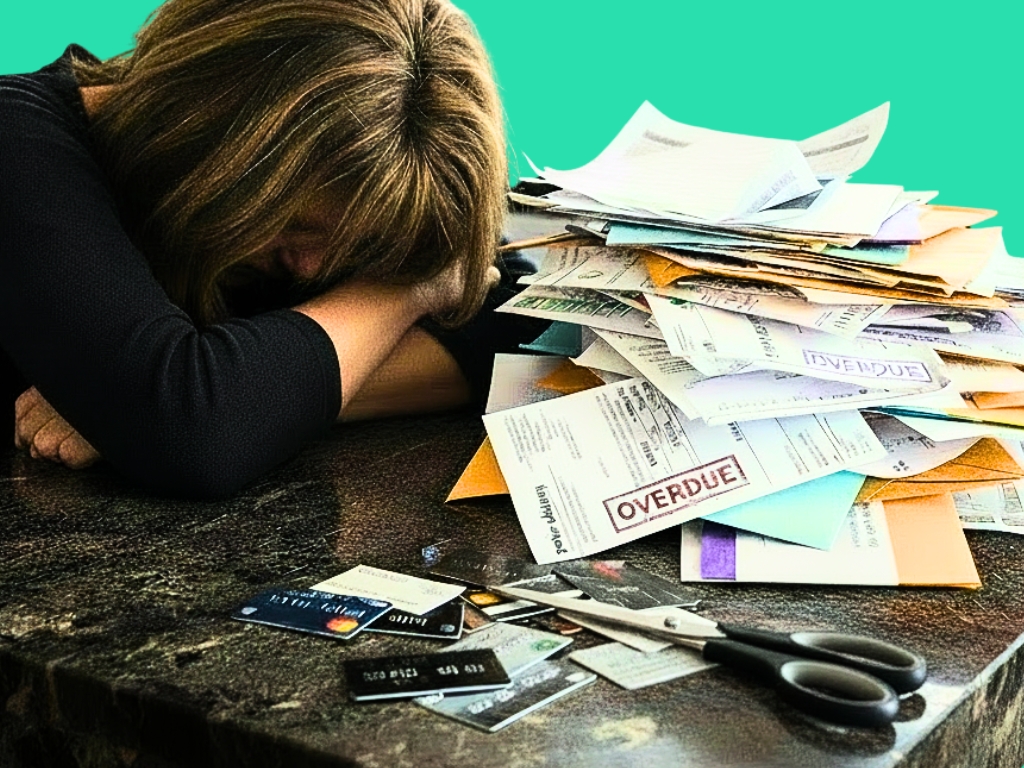
Bankruptcy isn’t failure. It’s the financial reset no one told you you’re allowed to take.
Women over 50 often find themselves deep in debt through no fault of their own. After getting hit with a death, divorce, disability, or a diagnosis, financial chaos ensues. Medical bills pile up. Years lost to unpaid caregiving. Income drops or disappears. As balances climb, shame sets in.
That shame is what keeps many women from getting help. They’re trained to figure it out. Do it on their own. So when facing a debt that won’t go away, women don’t even consider the B word: bankruptcy. For women 50+, raised to take care of everyone and everything else, bankruptcy carries a heavy and deeply gendered stigma that punishes them for surviving illness and loss, while keeping relief out of reach.
But carrying the burden alone hurts women even more, putting retirement and their future at risk. Waiting for a Hail Mary. Enduring more pain instead of getting relief.
The good news is that there are options.
Filing for Bankruptcy: You’re Not Alone. Not Even Close.
Even considering bankruptcy can be a tough pill to swallow. While it can stir up a lot of feelings and feel weighted with shame, it’s happening more than you think.
According to AARP, 47% of bankruptcy filings in 2024 were made by people age 50 and older. Not only that, but the study also notes bankruptcies among those 65 and up more than quadrupled between 2002 and 2022, and this demographic is growing. Women declare bankruptcy at higher rates than men, particularly among single-parent households.
What’s driving the disparity? Women take on unpaid caregiving for children and parents. Earn less. Live longer and have higher rates of illness. So when debt—whether from bad luck or profit-driven health care—becomes too much, it’s not a personal failure to file for bankruptcy. It’s a survival tactic and a way to take back control in an unfair world.
Bankruptcy as a Reset
Despite the stigma around bankruptcy, it can be a lifeline and a way to balance the scales, especially for middle-aged women.
“Bankruptcy is a tool to manage your debts. It’s something that’s set up under federal law to ensure that people are treated fairly, and that creditors understand when people cannot afford to pay their debts back,” said Ashley Morgan, bankruptcy and debt attorney at Ashley F. Morgan Law.
When most people think of bankruptcy, they’re typically thinking of Chapter 7 bankruptcy. Through this process, some assets may be subject to liquidation, though many essential assets are exempt (more on that later). Some debts may also be discharged, which can provide a fresh start. The process can take four to six months, if eligible based on income and debt.
Chapter 13 bankruptcy allows debtors to restructure their debt and pay it off, typically within three to five years. Under this plan, you can usually keep your property while repaying your debts on a court-approved payment plan.
No, bankruptcy isn’t a magic wand. But it provides structure, relief, and a path forward. And when heading into retirement, every dollar counts.
Your Retirement Is Safer Than You Think
Shame can keep women stuck instead of seeking solutions like bankruptcy, but delaying action can put them in an even more vulnerable position. Women who wait risk raiding their retirement accounts to get the monkey off their back—a move that could ultimately backfire and come with taxes and penalties if younger than 59 ½.
“Federal law requires qualified retirement accounts to be either exempt or excluded, which basically means they can’t be touched by the bankruptcy court,” said Morgan.
Retirement accounts like 401(k)s and pension plans? They’re safe and have unlimited bankruptcy protection, according to Nolo. Social Security retirement benefits are typically protected as well. Women don’t need to jeopardize an already precarious future by touching their retirement to pay down debt.
“I have a lot of people who I wish could have come talk to me sooner, because they did do everything to try to get out of bankruptcy. I see plenty of people where they’ve used half their retirement to try to pay down debt, and it would have been virtually protected otherwise,” said Morgan.
Yes, Your Credit Takes a Hit. Here’s the Part Nobody Mentions.
Bankruptcy stays on a credit report for 10 years for Chapter 7, according to credit bureau Experian. That fact alone can deter women from bankruptcy. The shame. The credit hit. It can feel like too much.
But women who are already behind on bills and facing enormous debt may not have the best credit already.
“People think that their credit is going to be worse than where they’re starting. But if you’ve already missed payments or you’re maxed out on your credit cards, bankruptcy may actually improve where your credit is at,” said Morgan.
The credit impact is not forever. Equifax noted that filers could see improvements in their credit score within two years if in good standing with their payment obligations. So while the effect on credit can’t be overlooked, neither can the potential relief waiting on the other side.
Taking Back Control
Women over 50 have enough reasons to feel overwhelmed. Debt doesn’t have to be one of them. For those who feel suffocated by their balances, bankruptcy may provide breathing room.
“Bankruptcy is a legal and financial decision. It’s not a moral and ethical one, so only you can decide if bankruptcy’s right for you,” said Morgan.
It’s not giving up. Businesses use bankruptcy as a tool all the time. It’s taking back agency, control, and rewriting your future. Sometimes the bravest financial move isn’t pushing through—it’s choosing relief.
******
FINANCIAL DISCLAIMER
The information provided on PROVOKED is for general informational purposes only and does not constitute financial, legal, tax, or investment advice. SFD Media LLC and its contributors are not licensed financial advisors, investment advisors, brokers, accountants, or attorneys. You should consult with a qualified professional before making any financial decisions based on this content. While efforts are made to ensure the accuracy and timeliness of the information, SFD Media LLC makes no representations or warranties, express or implied, regarding its completeness, accuracy, or applicability to your individual circumstances. Reliance on any information from this site is solely at your own risk and discretion.



3 Responses
I declared bankruptcy many years ago. I researched the process thoroughly first. Part of my rationale was that I felt we had been somewhat swindled and bankruptcy was the only way out. We were able to keep our house. A huge determining factor in making my decision was comments I read on a money website. I don’t remember which one but it was about people who did and didn’t declare bankruptcy and how they felt about that decision afterward. One man was 80 years old and he had spent most of his life paying off debt working two and three jobs but he managed to pay off every penny. He had missed so much time with his children and grandchildren doing this. He regretted it very much and wished he had declared bankruptcy. It is a legal option. We didn’t tell people, we just did it. Before the bankruptcy laws were tightened, I knew of people who declared bankruptcy every year. I don’t believe in that, legal or not. But sometimes life throws you curves that are so difficult to navigate. There is way more to my story and I don’t take bankruptcy lightly. I was scared when we went to court and stood before the judge. One thing in our favor was that it was a time when many people were suffering and the economy was in the toilet. I do not regret my decision. Only you can decide what is best for you.
Thank you for sharing your story! I’m glad it was a useful tool for you and that you feel you made the right decision.
I guess my brain went in the wrong direction… I was expecting it was going to be the C You Next Tuesday word. 😆 By the way, once you embrace this word, it’s a really awesome word. You think about what it really means? And it fits so many people. It is absolute perfection. Use it. Appreciate it. Learn to love it whenever it’s appropriate and you will find multitudinous situations where it’s very appropriate.