Our grandmothers saved everything because they had to. We were raised in abundance.
Almost every week, I ride my bike across town to pick up a farm box I’ve been ordering since the pandemic. The farmer, Martin Bournonesque, used to supply Bay Area restaurants, including Chez Panisse, before the pandemic forced him to pivot. Now his boxes are loaded with whatever is in season at his Salinas farm and neighbors’ orchards, including vegetables you can’t find at your local grocery: cardoons, spigarello, fennel fronds, pole beans, romanesco. It’s a treasure box, the vegetables so fresh they seem almost alive.
Knowing what it took Martin to grow them, I feel a responsibility to use everything, or find a home for the herbs, spices, and veggies I don’t particularly like: shiso, za’atar, too many carrots. But my obsession with not wasting food predates Martin’s box. I’m the daughter of parents raised during the Depression, and some things are just inherited.
My grandmother saved bacon grease in a coffee can by the stove and used it to fry eggs, and my aunt Marcia makes “refrigerator soup” when she cleans out her crisper, which is always different but delicious. It bothers me that somewhere between their generations and mine, it seems we’ve lost our respect for food. I’m trying to do my bit to revive it, along with my wilted greens.
It’s shocking to learn that one-third of the U.S. food supply goes unsold or uneaten as it moves from farm to table, and about a third of that waste originates in our own kitchens. Meanwhile, more than 33 million adults and more than 7 million children live in food-insecure households. We’re throwing away more than enough to feed people who are hungry. And if the food we waste isn’t composted, it ends up in landfills, where it releases methane, making our climate situation worse. All because people meant to eat those greens or that cantaloupe and didn’t get around to it before they went bad. How did we go from careful purchasing and portioning a generation ago to throwing out quantities of food?
How We Learned to Waste
Grandma didn’t save bacon grease because she was virtuous, but because throwing away fat was like throwing away money, and money wasn’t something her generation of women could trifle with. Aunt Marcia, my mother’s much younger half-sister, could stretch a chicken across three meals because she inherited that same kind of thrift. The previous two generations of women lived through scarcity, war, and a Depression that they never fully recovered from, even decades later, when they had plenty. To them, waste was a kind of forgetting.
We boomers and Gen Xers were raised to forget on purpose. Our parents and grandparents worked hard to give us the abundance they never had, to ensure we never endured their privation. The postwar culture of the 1950s and ’60s measured its success by how much was always available and how little anyone had to think about where it came from. We had bigger fridges to fill. Grocery stores had aisles and aisles of cereals and salad dressings. Women’s “choice” then was which type of cake mix to buy.
When more women began working in the late ‘60s, boxed and canned foods became more of a necessity than a convenience. Women like my mother, who hated to cook and were eager to use their talents in the professional world, were happy to prepare convenience foods because it saved time and freed them from at least some housewifery. And as much as my father supported my mother, there was one rule in the house: dinner had to be ready when he got home. So she plopped blocks of frozen spinach in a skillet with frozen chopped onion and added hamburger. She made cakes from a box for our birthdays, just adding the egg and oil that made it seem “homemade.”
Boxed, canned, and packaged convenience items allowed us to become disconnected from our food, and accustomed to abundance. My parents had recent enough memories of the Depression not to throw much food away, but they didn’t respect it as much as my father’s mother, whose food came from her farm. Food has become something different than vegetables that you enjoy after weeks of watering and tending them until they’re ripe enough to harvest. If you don’t have to weed your potatoes, you don’t realize how precious each one is.
Now, in the superstore age, many of us buy in bulk—pillow-sized bags of kale, pallets of egg whites, mesh bags of avocados that ripen all at once. These foods are inexpensive in those quantities but often hard to eat before they rot (which means maybe they weren’t so cheap after all).
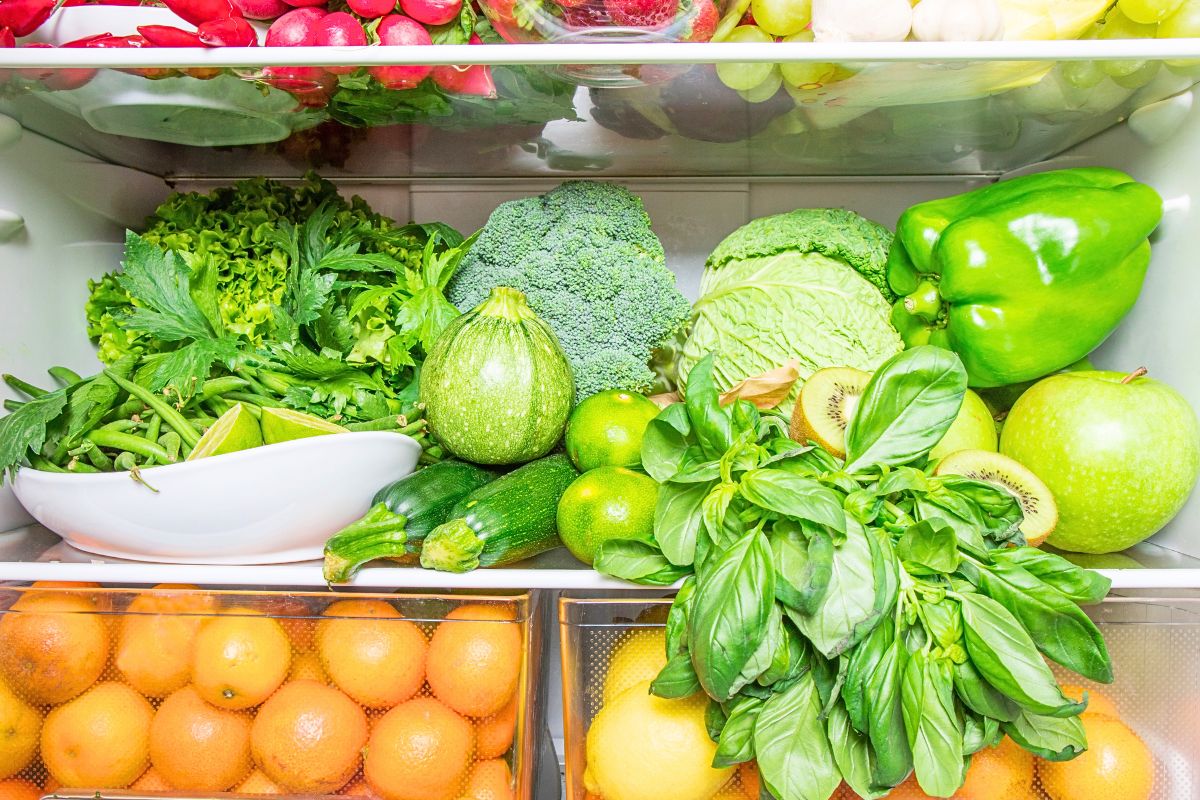
Once home, we’re out of the habit of noticing our food. I tease my husband for having “refrigerator blindness,” because he somehow can’t see leftovers and will go out and buy new vegetables for a meal before scouring the crisper for what we already have on hand. We have so much food available to us that it somehow disappears once it’s in the fridge. Abundance doesn’t merely give us more food; it makes what we have less visible.
What Was Worth Keeping
It’s not that I want to go back to my grandmother’s time or live like a farmwife. I don’t envy her generation’s scarcity, and I’m grateful for our abundance. What I want back is her attentiveness to food, not just out of thrift (though food hasn’t been getting cheaper lately), but respect. When I consider what it took Martin to grow a bunch of carrots—the watering, the weeding, the weather he has no control over, the early mornings—throwing them out feels less like simple waste than a kind of ingratitude. Far better to dice them, along with some celery and onions, and make some mirepoix to keep in the freezer as a base for soups.
So I’ve built small rituals around noticing and saving food, the way my grandmother and aunt did. On Sundays, I do a refrigerator audit, checking to see what needs to be used first. If I can’t use all the greens in my farm box, I’ll blanch and freeze them to use later in soups. My grandmother saved bacon grease; I save Parmesan rinds to give those soups a deep, rich umami flavor.
None of this is hard. It isn’t a burden but a practice, and a pleasurable one. My grandmother’s and my aunt’s attentiveness to food came from scarcity; mine is chosen. I go to lengths to avoid wasting food from something closer to affection: for Martin, for the pole beans, for the whole chain of labor that got those vegetables to my fridge in the first place. And for my grandmother and my inheritance of not only thrift, but of respect.