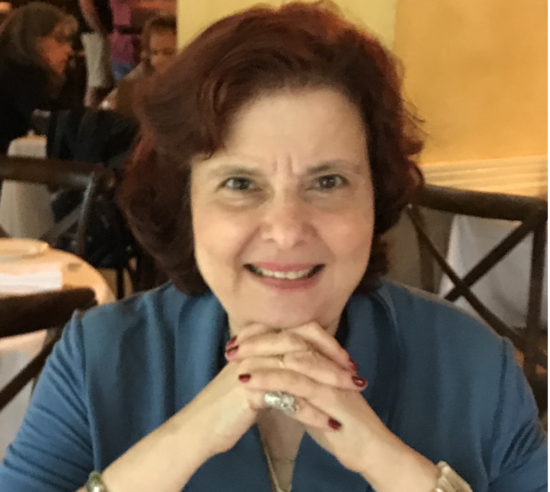
This piece was written by one of our dear readers—a woman with something real to say. Each month, we handpick the best submissions for Dear Reader because we’re after that PROVOKED bite: truth, intelligence, and heart. These stories come from women our age—women who’ve lived enough to know better and still care enough to tell it anyway. Because being seen and heard matters. Because storytelling is how we stitch ourselves to one another. And because when one woman speaks her truth, another finally recognizes her own. — Susan Dabbar, Editor-in-Chief
A stranger’s music carried me back to my regret, my grief, and the peace I almost missed.
One morning I landed with a thud from the Long Island Rail Road into the hell-maze of Penn Station in Midtown.
I became disoriented. Logy. Sweaty. I desperately wanted coffee.
My New York common sense, and the smarts that commuters cultivate to blend into the waves of purposeful people heading to work, failed me. I couldn’t figure out how to stagger out of this busy, confusing pit.
I finally focused my mind and found my stride. Despite many bags weighing me down like a camel, I briskly matched my pace to the countless faceless feet marching toward different departure points.
As I approached the exits to Seventh Avenue, I heard elegant music. Its clarity cut through the din, as if it came from somewhere otherworldly.
A violin.
It wasn’t an aural mirage and it wasn’t a recording. In a dank corner, a tall, slender woman with short gray hair, clad all in black, was playing. I detached myself from the stream of souls to watch. Others stood around her too, a small but enraptured audience eased into a zone of calm. Her muscular arms were hypnotic as she glided her bow across the strings. A regal statue brought to life, she played a familiar classical piece I thought I remembered having heard often as a child, on the turntable. But I couldn’t recall the title of the composition.
Like her, I closed my eyes, immersed in her music and the old memories it evoked. I thought of my late father, Sam, who had studied violin seriously in his youth. In his old age, sometimes he would take his battered violin out of its crumbling case. He still knew how to hold the bow, but the sounds he coaxed from the strident strings were painful, like croaking.
But that’s not what mattered, I now realize. The practice—and perhaps the reminder of a happier youth that it tapped into—brought him comfort.
And I remembered my late mother, Sydell, his endlessly creative and dedicated, but constantly overwhelmed, caregiver. When my dad’s dementia and related delusions threatened to drown them both in darkness and discord, she had engaged a music therapist, a guitarist named Alicia, to help him stay anchored in familiar routine, if only for a short while. Music—and Alicia’s companionship—was my mother’s lifeline to lucidity too, an enriching if transient scrim of normalcy. These sessions I like to believe allayed my dad’s agitation and softened my mom’s suffering.
I regret to this day that I never made an effort to meet Alicia. It would have been easy to do so. My parents lived on the same long and inclined, crescent-shaped street as I did in our Queens neighborhood: “just up the hill,” so to speak.
I might have learned something from observing their interactions together. What, exactly, I’m not sure. Maybe patience. Resilience. Empathy for the frailties of aging. Recognition of the reality of mortality’s unstoppable march. Compassion for care partners and their too-often under-valued, self-sacrificing work, which can exact a deadly toll. Taking time to pay attention … and give it.
But I never did visit their uncomfortable apartment when she was there. I avoided these sessions, in fact. I already spent a good deal of time with my folks. I tried hard to help them navigate the bureaucratic, nightmarish entanglements that come with managing dementia. I suffered from cyclical episodes of sometimes near-disabling depression and anxiety. And my public relations career was anything but a 9-to-5 job. Plus, my parents worried about me … so why inflict my “nervous Nelly” persona during a therapeutic time that centered their dignity? Why disturb that beneficent buffer? They had enough to contend with. My angst was the last disruption they needed.
I had all kinds of excuses. They were valid, if not quite verbalized. Still, I should have walked up there. I wish today that I had attended just once to meet Alicia and to see—to hear—music. To witness, as well as experience for myself, some peace, however brief. Oh, I hope my parents felt some peace. They deserved it. But maybe I felt that I didn’t … then.
I still have that violin, bow, rosin, and case. They’re stored high up on a sagging shelf in a disheveled, musty basement room. That case contains blurred memories, many of them melancholy, even painful. Not all of them. But some might have been less so if I had gone up that hill even one time.
So when I listened to the violinist for a few minutes, a weight lifted from me. The knot in my gut dissolved. I imagined myself in an intimate recital hall, being serenaded. I felt soothed, almost airy—suspended safely above the engulfing swamp.
When she had finished the piece, I thanked her for giving all of us a few moments of joy in the midst of the morning madness. She smiled gently and, with a poise that struck me as noble but humble, said that’s what she had wanted to do. Maybe that’s what Alicia had done too for my mom and dad.
I rejoined the whirlwind hive surging down onto sweaty platforms and up onto clangorous streets, then went on my way in search of coffee. Grounded. Energized. Calmer.
And I deserved it.