
This post contains affiliate links. We may receive compensation when you click through them, which helps support PROVOKED’s independent journalism—at no extra cost to you.
As Americans rethink ultra-processed food, this real-food protein bar has launched its fifth flavor in six months.
There are three protein bars in my kitchen drawer with a couple of bites gone, their wrappers folded back over the rest, that are at least a month old. I pulled all of them out again last week to actually read the backs side by side, and immediately remembered exactly why I’d stopped: a wall of ingredients I couldn’t picture in an actual kitchen, and a dry, powdery aftertaste that outlasted the bite by about an hour.
Usually at this point I’d just close the drawer and order a different bar anyway, out of habit more than hope. This time I went looking for why the whole category kept doing this to me.
Part of the answer turned out to be regulatory. I pulled up the 2025–2030 Dietary Guidelines for Americans, released this past January, and found that the protein recommendation had jumped to 1.2–1.6 grams per kilogram of body weight, with a specific push toward whole, nutrient-dense foods and significantly limiting highly processed foods. Beef tallow is also now listed as a cooking-fat option alongside olive oil and butter, which lines up with a wave of tallow-based “real food” bars I’ve been seeing everywhere lately. But a federal guideline update and a marketing trend are two different things happening at the same time, not one causing the other.
The document also doesn’t say how much tallow fits into a day that still stays under the saturated fat cap, which is set at less than 10% of daily calories. Frank Hu, who chairs the nutrition department at Harvard’s T.H. Chan School of Public Health, flagged that after the guidelines came out, saying: “Mixed messages surrounding saturated-fat-rich foods such as red meat, butter, and beef tallow may lead to confusion and potentially higher intake of saturated fat and increased LDL cholesterol and cardiovascular risk.” Nothing in the guidelines tells you how a bar like this fits into that math for your own day; that’s still something you’d have to work out yourself, based on whatever else you’re eating.
That gap is exactly where I wanted to see a brand show its work before I took its ingredient list at face value. Lineage Provisions is one of the companies building directly into that new protein target, so I decided to do a little digging. Paul Saladino, MD, co-founded it, and his earlier work was built on making the case for meat and animal fat against decades of advice telling people to avoid both. The company told the press its initial bar launch sold out in 2.5 days. I couldn’t find a production number attached to that claim anywhere. A batch of 500 can sell out in a couple of days as easily as a batch of 50,000, so on its own, that number tells me people showed up, but nothing about how many.
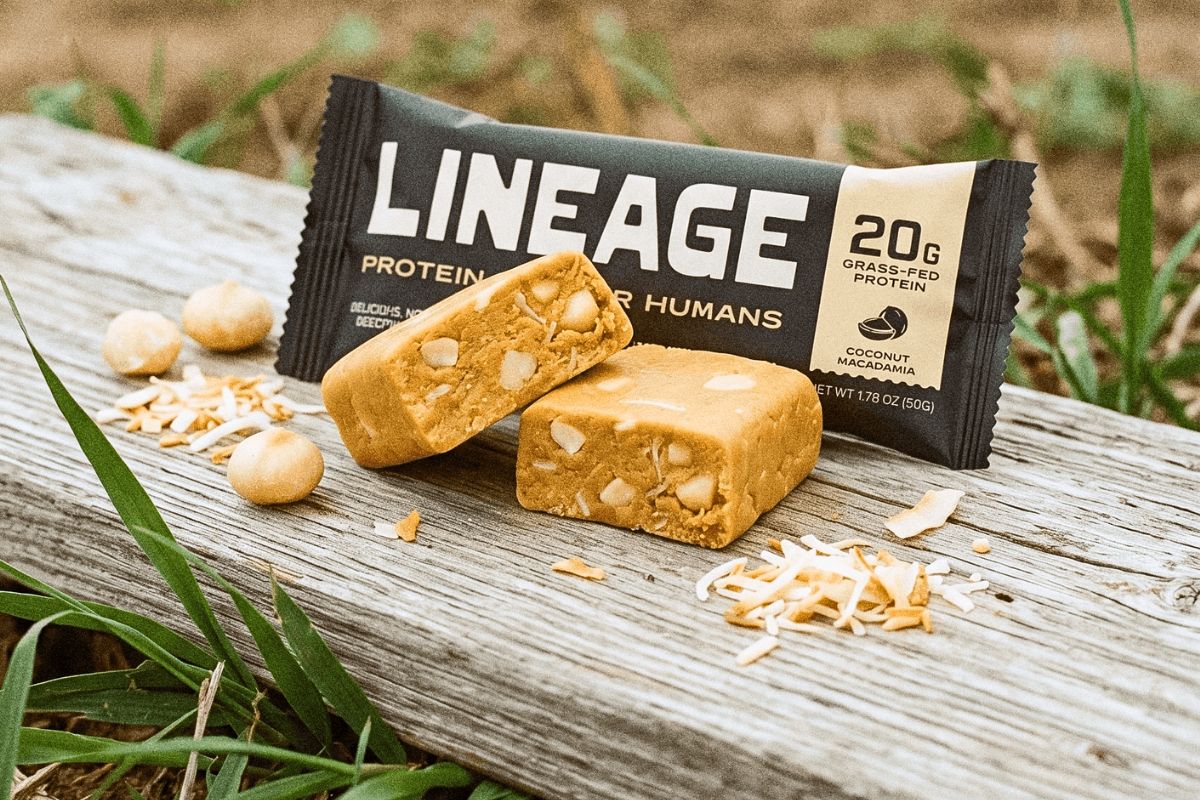
I decided to check the label against what’s sitting in my drawer. Grass-fed whey and collagen provide 20 grams of protein per bar, raw honey and coconut nectar for sweetness, grass-fed tallow for fat. There are no sugar alcohols, which are ingredients that turn up often in complaints about bloating after eating protein bars, though how anyone’s body reacts to them is individual, not universal. According to Lineage, every batch gets tested by an ISO-17025-accredited lab for heavy metals, glyphosate, and microplastics, among other parameters. The company also publishes the results live, so you can actually see what it’s testing.
But a lab report tells me nothing about whether the bar actually tastes good.
The PROVOKED team fought over who was going to try the bars. Susan, our editor-in-chief, got the job, and tried the Chocolate Chip Cookie Dough bar as soon as the box arrived, which was just a couple of days after she placed the order.
The first thing she noticed was the texture, which she described as soft, dense, chewy, and fudge-like. The flavors were better than she expected, and she could taste the rich chocolate in the chips, along with notes of honey. It didn’t have the dry, chalky, powdery finish that most bars have.
And she’s not alone. Several reviewers also singled out the Chocolate Chip Cookie Dough flavor specifically. One customer wrote that finding bars with “clean ingredients” that also taste good is nearly impossible, which is close to the exact complaint sitting in my own drawer. Another called it a “digestible, indulgent treat,” without the aftermath the category usually leaves behind, and the “perfect purse food.” Susan agreed with those comments as well.
A company-conducted post-purchase survey of 609 customers lines up with that feedback: 83% rated the Lineage bar four or five stars, 81% said it beat what they were eating before, and 38% hadn’t been buying protein bars at all before this one. It’s self-reported and doesn’t prove anyone who previously abandoned protein bars came back for this one specifically, because a survey like this can’t show that. But it’s the kind of detail impressive enough to make me want to try it myself instead of writing the bar off from my kitchen table.
The launch of five flavors in six months also tells me that Lineage is still growing, and what got us excited to report on this wasn’t anything dramatic: everything on the label was something I recognized, and none of the reviews I read complained about the dry texture that had put me off the bars in my drawer. That’s a modest reason to order a protein bar, and it’s the honest one.
Learn more about Lineage Provisions here.
******
MEDICAL ADVICE DISCLAIMER
DISCLAIMER: This website does not provide medical advice. For health or wellness-related content, SFD Media LLC emphasizes that information about medicines, treatments, and therapeutic goods (including text, graphics, and images) is provided for general information only. No material on this site is intended to substitute for professional medical advice, diagnosis, or treatment. Users are advised to independently evaluate and verify the accuracy, reliability, and suitability of the information before relying on it. You should not rely on the content as a substitute for professional medical advice. Consult with a physician or other health care professional for any health concerns or questions you may have. SFD Media LLC is not responsible for any action taken based on the information provided on this website. The use of any information provided on this website is solely at your own risk.