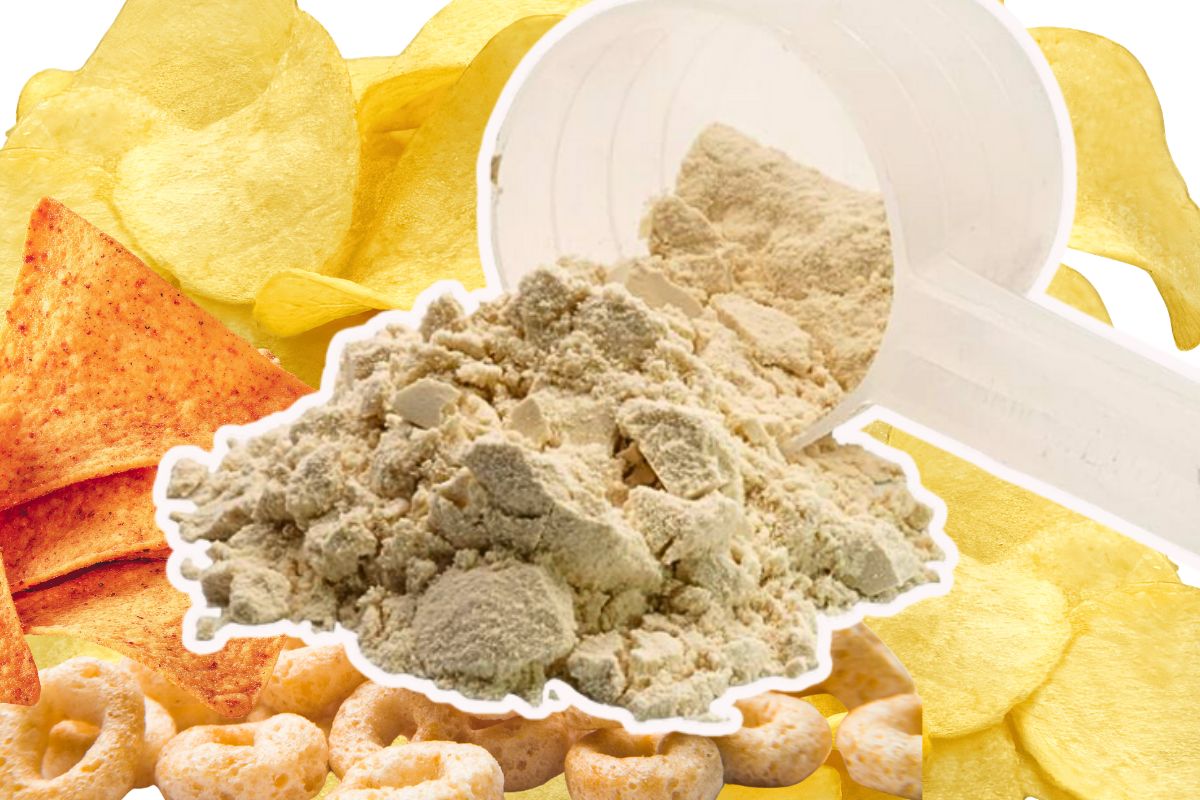
Pop-Tarts, popcorn, lattes, potato chips. But what midlife women actually need is more complicated.
My husband has recently become obsessed with bodybuilding, and while he looks strong and fit (no complaints), suddenly our fridge is stuffed with meat and cartons of eggs, and our pantry is packed with protein powder. I insist that all this protein is too much, but he says that at 6-foot-3 and 225 pounds, he needs 160 to 200 grams of it a day—almost double the recommended daily allowance. Does he? And since I also lift weights three times a week, do I? And how about friends my age who exercise but don’t lift?
Why Protein, Why Now
Protein, like so many food fads before it, is having its day. Remember SnackWell’s? Those were the super-sugary Devil’s Food Cookie Cakes that we ate promiscuously back in the ‘90s, thinking that they’d help us lose weight because they contained no fat. The “SnackWell effect” became shorthand for overindulging in “healthy” foods that are actually loaded with ingredients that, from a nutritionist’s point of view, are quite suspect.
Now, it’s protein that’s wearing the “healthy” halo. The U.S. protein supplement market has reached $10 billion a year, $30 billion globally. Food manufacturers are adding protein to all kinds of foods that have no business having protein: popcorn, Pop-Tarts, and, God help us, potato chips.
“My current favorite is Cookies & Crème Cheerios Protein cereal, but there are a lot of contenders for the most absurd,” said Marion Nestle, Ph.D., M.P.H., professor emerita of nutrition, food studies, and public health at New York University and author of Food Politics. “It’s all about marketing.” As with “natural” granola bars and “fat-free” cookies, food manufacturers are jumping on the latest fad to make processed foods for a profit.
Okay, we’re skeptical. But why is protein suddenly so popular? First, Americans like to overeat while feeling in control, and unlike other sources of calories in foods, eating more protein won’t harm you. “Nobody recommends more carbs, fats, or alcohol,” said Nestle. “That leaves protein.”
Another reason is that protein is essential for muscle maintenance and satiety, so bodybuilders and other fitness influencers tout its benefits with an overly simplistic message: more protein, more muscles. The rise of GLP-1 drugs, which cause people to lose lean muscle mass along with their appetites, has also driven the demand for protein to protect those muscles.
Added to that, we’re living in a cultural moment of hypermasculinity, and protein—especially red meat—has long been considered “manly” (men do, in fact, eat 20% more protein relative to body mass than women). The new food pyramid, created under the auspices of Health and Human Services Secretary Robert F. Kennedy Jr.—who is very publicly into weightlifting and eating red meat—features steaks, tallow, and other food containing saturated fats as the top nutritional picks.
“This is dietary ideology,” said Nestle. “RFK Jr. says this diet makes him feel better. By this logic, if it makes him feel better, it should make everyone else feel better too, never mind decades of evidence that high-meat, high-fat diets raise coronary risks.”
Meanwhile, the HHS released new federal dietary guidelines that bumped up the daily protein recommendations from 0.8 grams per kilogram per day of body weight to 1.2 to 1.6 grams per kilogram.
“The irony is that most people already eat more protein than they need, and there isn’t much evidence that more is beneficial,” said Nestle. “Fortunately, more is unlikely to be harmful. Wasteful? Yes.”
How Much Protein You Actually Need
Some nutritionists say that while the old recommended minimum of 0.8 grams of protein/kilogram of body weight has a lot of data behind it (that’s 62 grams a day for a 170-pound woman, the U.S. average), there’s evidence that the new recommendations (about 92 to 120 grams per day) may make sense for all women over 55, especially if they’re taking GLP-1 drugs or doing strength training.
“As people get older, we lose about 3 to 8% of our muscle mass per decade after 30, and it accelerates after 60,” said Daphene Altema-Johnson, a nutritionist and public health specialist at Johns Hopkins Bloomberg School of Public Health. “As we age, our bodies don’t use protein as efficiently; it takes a bit more to make our bodies function.”
More protein can help protect our muscle mass, she said, which protects against falls and early mortality, and keeps us able to do daily functional activities, like carrying groceries and climbing stairs. “Researchers are recommending slightly more—1.0 to 1.2 grams/kilogram—for most older adults,” she added. That’s regardless of how much exercise you do.
These recommended levels are the same for men and women, and vary by body weight, not gender. As Nestle noted, most women over 55, active or not, and whether or not they’re on GLP-1s, are already eating the revised suggested amounts of protein.
Taking GLP-1s is another reason to eat a bit more protein, because they do cause muscle loss, particularly if not balanced out by strength training. Weight loss is indiscriminate; it doesn’t favor fat over muscle. “Some studies have shown that 20 to 40% of weight loss on GLP-1s may be lean muscle mass,” said Altema-Johnson. “That’s concerning because losing muscle is going to worsen your metabolic health—and it’s a lot harder to regain muscle than fat.”
Protein Comes With Baggage
Protein comes in a package—which, despite the new food pyramid—does not (and should not) have to be a lot of steak. Nor should it be protein-enriched processed foods.
“It’s not about hitting a protein number, it’s about what comes with the protein,” said Altema-Johnson. A lot of protein-added products, like protein bars, also have a lot of sugar, and many protein powders have long lists of unpronounceable ingredients.
Instead of red meat, she recommends fatty fish, lean protein, turkey or chicken breasts, yogurt, cottage cheese, nuts, and whole grains as nutritional powerhouses. “Our gut, heart, and bone health are important, too—there’s a lot to think about outside of protein.”
For optimal nutrition as you age, consider when you’re eating protein. “Older people need to take advantage of the time of day when we have good protein synthesis ability,” said Teresa Fung, a nutritionist and professor at Simmons University and Harvard University’s School of Public Health. That means switching our big protein load from the centerpiece at dinner—when we aren’t physically active later on and have no need for fuel—to earlier in the day.
Fung recommends balancing protein throughout the day, to about the same amount for each meal. Even at the slightly higher levels, the goal is fairly easy to attain. Have some eggs or yogurt with breakfast, some legumes or a palm-sized piece of meat with lunch and dinner, and a few almonds as a snack, for instance, and you’ve hit it.
It’s important to note that while protein may maintain muscles, you still have to do the work. “You build muscles with resistance training, not with protein,” said Marily Oppezzo, a nutritionist and head of Lifestyle Medicine Nutrition and Behavioral Change at the Stanford Prevention Research Center. She said that doesn’t mean you have to become obsessed with lifting weights—a few bursts of activity a day can maintain and even build muscle mass.
Oppezzo recommends up to 1.6 grams/kilogram of protein for women over 55 who are actively building muscle with weight training, as opposed to just maintaining muscle. “I do think we need to eat more, but we don’t need to mainline it and put it into our Pop-Tarts or water,” she said. For women who aren’t actively building muscle, it’s likely what they’re already eating—about 1 to 1.2 grams/kilogram of body weight.
Eat too much protein, and what happens? Nothing dramatic. “It’s just excess calories,” Oppezzo said. The body can’t store protein, so once its needs are met, any extra protein is used for energy or stored as fat.
Just like SnackWell’s.
******
MEDICAL ADVICE DISCLAIMER
DISCLAIMER: This website does not provide medical advice. For health or wellness-related content, SFD Media LLC emphasizes that information about medicines, treatments, and therapeutic goods (including text, graphics, and images) is provided for general information only. No material on this site is intended to substitute for professional medical advice, diagnosis, or treatment. Users are advised to independently evaluate and verify the accuracy, reliability, and suitability of the information before relying on it. You should not rely on the content as a substitute for professional medical advice. Consult with a physician or other health care professional for any health concerns or questions you may have. SFD Media LLC is not responsible for any action taken based on the information provided on this website. The use of any information provided on this website is solely at your own risk.


One Response
Helpful information, especially since we can no longer trust the recommendations from HHS.