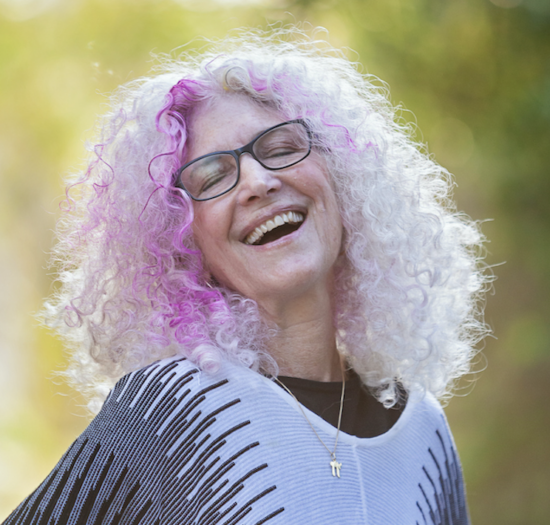
This piece was written by one of our dear readers—a woman with something real to say. Each month, we handpick the best submissions for Dear Reader because we’re after that PROVOKED bite: truth, intelligence, and heart. These stories come from women our age—women who’ve lived enough to know better and still care enough to tell it anyway. Because being seen and heard matters. Because storytelling is how we stitch ourselves to one another. And because when one woman speaks her truth, another finally recognizes her own. — Susan Dabbar, Editor-in-Chief
In seven weeks, I lost my husband, my mother, and the only version of myself I’d known for years.
After a particularly stressful day of caregiving, I went to bed thinking about how nice it would be if my disabled husband and elderly mother no longer needed my help. I wished I could greet the morning with a cup of coffee, play my word games and listen to the birds chirping. Instead, as usual, I woke up with anxiety pinging my chest, as I crept into each bedroom to check whether my beloved family members were still breathing.
It’s an awful feeling to wake up wondering if today is the last one for those in your care.
And then my wish was granted. In the span of seven weeks, both my husband and my mother passed away.
The relief I expected didn’t come. I ached for those structured days. While running errands, I still checked the time. While swimming laps, I pictured my husband sitting in his wheelchair in front of the TV. Tears collected in the corners of my goggles.
Every time I entered the house, the quiet made it difficult to breathe.
I tossed out dozens of bottles of pills, bed pads, and urinals, my hands wavering above the garbage bags. With the help of friends, I moved the Hoyer lift, wheelchairs, and hospital beds into the garage.
I thought I would feel relief in doing so.
I didn’t.
Who knew emptiness could weigh so much?
Without having to administer pills, check urine and oxygen levels, I questioned my identity. Who was I now if not a caregiver, wife, and daughter?
As Steven Froehlich, Ph.D., MFT, explained, “The caregiver has not just lost their loved one, but they have lost the life they had been living for quite some time. This entire process of becoming reacquainted with oneself occurs while going through the grieving process over the loss of their loved one.”
That statement helped me recognize my emotions and solidified my decision to travel.
Leaving the memory of my husband and mother side by side on my bookshelf, where they continued to bicker as they awaited their “celebrations of life,” I left for a month-long trip to Thailand and Bali. On the morning of my departure, I cut my husband’s favorite rose and left it on our dresser, a tradition I’d been following for the past 40 years.
In Palau, I visited many temples, hoping the gods I didn’t believe in would believe in me. In Bangkok, I had massages, facials, and spa days. I was free and could do anything I wanted with no time restrictions. Other times, the treatments pulled my sadness to the surface. My insides would tighten, making it hard to breathe.
Behind closed eyes, I saw my hands cleaning my husband’s soiled sheets, a task I hated. And yet, I now longed to wipe his ailing body one more time. I counted the opened Splenda packets. Three meant it was time to switch his coffee to decaf. I heard the run-on sentences of a TV sports announcer, the soundtrack of my husband’s last years.
The days ticked off the calendar, widening the gap between who I was as a caregiver and who I was becoming.
Ultimately, I ended up back at home, a place that’s no longer the same. I’ve rearranged the furniture in my husband’s office, our bedroom, and the living room, but there’s still a great deal of rearranging left to be done in my way of thinking.
I’ve always had trouble saying no, but caregiving gave me a guilt-free reason to back out of events I didn’t want to attend. It was easy to use my responsibilities as a reason for not having dinner with a friend, going to a movie, or even having time to shave my legs. Without that wall to lean on, I have to make decisions based on my preferences.
But I’m slowly discovering what I want for the rest of my life.
After 77 years of being a daughter and 47 years of marriage, it’s strange to call myself a widow without a mother. I think of my husband and mother every day—the healthy, happy versions of them, not the ones who made me a specialist in urine samples or the consistency of bed pads.
I may never take off my wedding ring. But I have entertained the thought of dating, if the right person should cross my path, although the thought of exposing my hidden wrinkles to a man other than my husband could be grounds for insanity. On both our parts.
I’m careful what I wish for now. Rationally, I know I didn’t cause their deaths. But tell that to the negative thoughts that invade my mind in the middle of the night. I didn’t do enough. I should have watched the last Dodger game with him. Why did I forget the Splenda in that last cup of coffee?
I know better than to believe those thoughts. I also know they come back every night. I breathe until they soften. Some nights, that’s the best I can do.