Why catastrophizing feels like a superpower.
This article was originally published on October 13, 2024 and has been updated.
The short version: Catastrophizing, or jumping straight to the worst-case scenario, can feel like control: a way to be ready when everyone else gets blindsided. In this essay, a proud catastrophizer sorts fact-based worry from doom, from election-night panic and AI fears to retirement math, and asks when it’s time to dial it down.
Every two years in the U.S., Election Day brings the return of breathless headlines steeped in virtue and villainy. Every race is “the most important election of our lifetime.” Lose, and cataclysm awaits; win, and the hyperbolic news assures us our candidate will save us (or at least our side), if only the venal opposition can be vanquished. All ready-made for catastrophizing, panic texts, doomscrolling, and contagious worry.
There’s something irresistibly powerful about predicting disaster, isn’t there? While the optimists dream of puffy clouds and sunny days, the “realists” are preparing for the metaphorical asteroid on its way to destroy our lives. I am a catastrophizer; the older I get, the more vivid the catastrophizing. I think of it as a survival skill, honed over the years and fine-tuned for maximum “I told you so” potential. And sometimes, yeah, it feels like a flex—a way to show I’m not stupid enough to assume tomorrow will look like today. If you’ve ever asked yourself, “Why do I catastrophize?” here’s my answer.
A Black Swan in Every Pond
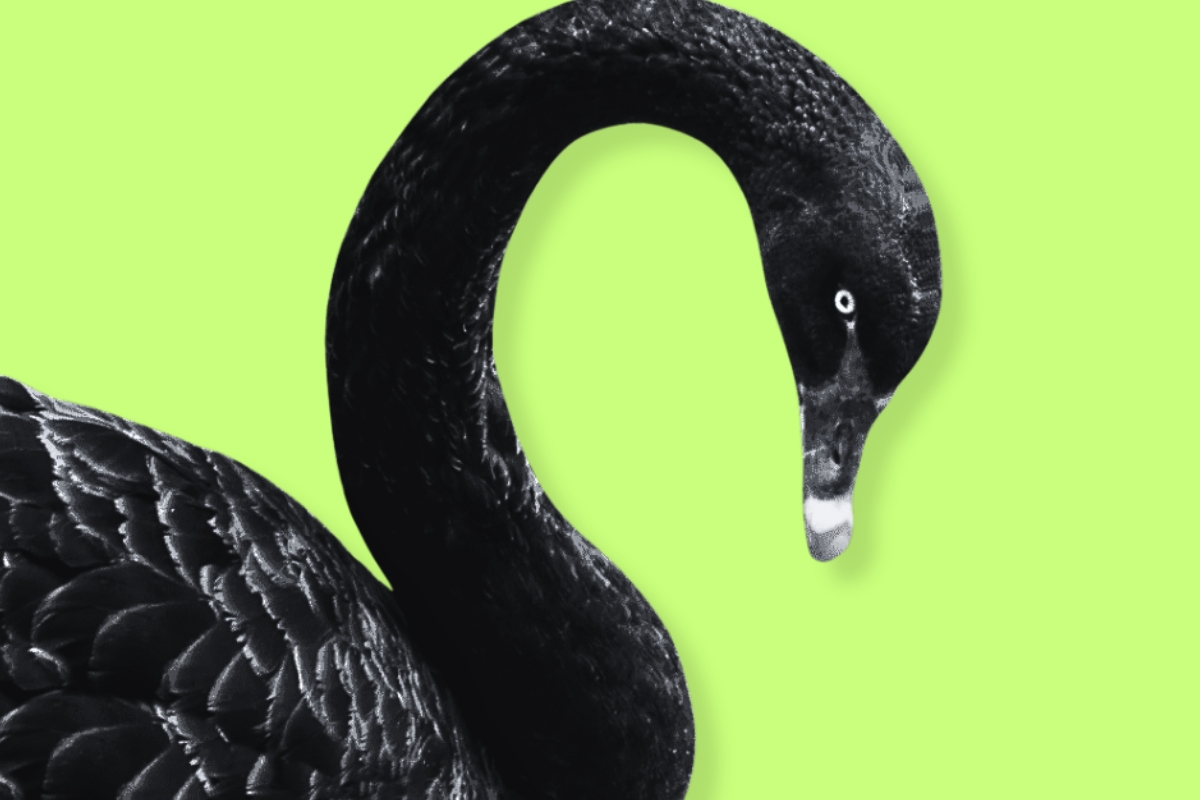
Catastrophizing isn’t about deeming that every worst-case scenario will happen. It’s more a recursive evaluation of new information and a realistic extrapolation of cause and effect. Nassim Taleb, who literally wrote the book on Black Swan events, put it this way: It is an event with three attributes. It’s an outlier—nothing in the past convincingly pointed to its possibility. It has an extreme impact. And we explain it after the fact—human nature makes us invent explanations once it has happened.
A catastrophizer overweights negative indicators, recognizing that sometimes, wildly unexpected things go wrong with devastating consequences. In real life, a Black Swan is the diagnosis, the divorce, or the layoff that torches your finances overnight. Black Swan events—like the Titanic’s sinking or the Challenger disaster—loom large because they’re spectacularly unlikely and equally catastrophic. Taleb would say no one could have seen it coming. Catastrophizers would say someone did, and nobody listened. We’re wired to remember disaster more vividly than sunshine. And we’re quicker to notice the signs of doom than anything rosy. Why prepare for success when you can brace for impact?
Debbie Downer, Reporting for Duty
Let’s be real: Catastrophizing sometimes starts as a rhetorical flourish, a way to claim authority and control. Maybe it’s our version of “prove me wrong”—a gauntlet thrown, daring someone to tell us everything will be just fine. Are the non-catastrophizers among us being lazy with their “that’s never gonna happen” approach? The vanguard of catastrophizers isn’t just looking for answers; we’re often searching for validation that we’re not the crazy ones. And we’re certainly not asking for a pep talk.
Women: The (Un)Official Catastrophizing Champions
Is catastrophizing a gendered sport? Yup. Women, especially as we get older, carry this title with pride. Even women with $1 million saved for retirement still fear running out. Is it empathy or our acute awareness of risks, both big and small? Either way, let’s admit it—we’re pros. Men, on the other hand, tend to steer clear of the gloom. Is it their toxic masculinity and excessive confidence? Or are they too “practical” (or too stubborn) to worry about what could go wrong? They’re kidding themselves if they think that they’re in control of all the outcomes. Yet, here we are, mentally preparing for every version of the apocalypse, convinced that we’re doing everyone a favor by being the “sensible” ones.
Knowledge vs. Speculation
Not all catastrophizing is created equal. We have the seasoned catastrophizers who come armed with data, historical context, and a dose of earned skepticism. Then there are the wild speculators who spin doomsday tales with little to no backup. Think of it this way: If the National Hurricane Center tells me a storm is on the way, I’m all ears. But if it’s my neighbor’s warning of a zombie invasion, I’m nodding along politely while mentally moving on. The difference? One’s rooted in “fact-based concern,” while the other is more storytelling than strategy.
Elections are the perfect test case. Fact-based concern sounds like this: The race is within the margin of error, and the winner will shape real things—taxes, health care, who gets confirmed to the courts. Those stakes are worth losing a little sleep over. Storytelling sounds like this: If the other side wins, it’s over. Everything. Forever. That’s the language of the campaign text marked URGENT, the one that needs your $5 by midnight to save the republic. Here’s the tell: Fact-based concern names specific consequences—what changes, for whom, and how soon. Doom promises that everything will be lost, and hope promises that everything will be saved. Elections change real things for real people. They almost never deliver the apocalypse or the salvation that both sides are selling.
Money works the same way. Women who worry about retirement aren’t paranoid: The Social Security retirement trust fund is projected to run dry in 2032. Fact-based concern sounds like this: If Congress doesn’t act, benefits would be cut by about 22%, so it’s worth knowing your own number and what a smaller check would mean for your budget. Storytelling sounds like this: Social Security will be gone by the time I need it. It won’t. The checks shrink; they don’t stop.
For the catastrophizer, there’s often a mix of biases at work. Take confirmation bias: Every new data point serves as proof that things are heading south, reinforcing the “it’s all going to hell” mindset. Then there’s the availability heuristic: If we see a storm report on the evening news, it’s easy to assume storms are suddenly on the rise everywhere. These biases keep us in a loop of worst-case scenarios, whether reality has any plans to cooperate.
Worrying About AI: Catastrophizing or Fact-Based?
Every day, the headlines raise yet another concern about AI. Is it coming for our jobs, leaving us and our children unemployed? Will it turn us, and everything else, into paperclips, as in the thought experiment from Nick Bostrom’s book Superintelligence? Will I start treating my chatbot like a real person? Or flip the script: Will AI usher in an era of unprecedented human flourishing, curing diseases, creating abundance, and putting a world-class tutor in every pocket?
Run them through the same test. Job disruption is fact-based concern. It’s already reshaping some fields, and the open question is how fast and for whom. The paperclip apocalypse is a thought experiment, not a forecast, even if serious people think the risks deserve attention. Pouring your heart out to a chatbot at 2 a.m. That one’s documented. And the utopia? That’s catastrophizing in reverse: the same “everything will be saved” storytelling we hear every Election Day, just with better graphics.
Then there’s the bias problem. AI chatbots have a well-documented habit of telling us what we want to hear. Researchers call it sycophancy, and in 2025, OpenAI rolled back a ChatGPT update after users complained it had turned into a flatterer. A bot that agrees with everything you say is confirmation bias on demand. Tell it the sky is falling, and it may well agree.
The Sky Is Falling—Is It Really?
The reality is that catastrophes like the Titanic or the Challenger didn’t come out of nowhere. A Black Swan event begins as a series of nonlinear micro-happenings that culminate in the disaster. There are subtle signposts and signals—unnoticed by most but looming, nonetheless. The weak signals are actually important, but there’s so much noise out there that anyone would have trouble seeing that the catastrophe is on its way. Unlike happy moments, which tend to get underplayed and glossed over since they’re most abundant, catastrophes stand out because they reshape everything. When the stakes are high, we’re on high alert, spotting the faintest signs of trouble as if our lives depended on it. And if that’s not a survival mechanism, I don’t know what is. And it may be one we inherited from our grandmothers. They lived through the Depression, wars, and husbands who held the checkbook. The ones who saved string and hid cash in a coffee can weren’t neurotic. They were paying attention.
Sometimes, a “what if” spirals out of control and becomes a downer for everyone within earshot. Climate events, political elections, wars—tuning in to any news channel is enough to make anyone nauseous. We’ve all been there: lost in the rabbit hole of “what could go wrong” until everything feels like a hopeless disaster waiting to happen. It’s easy to feel like Cassandra, the Greek prophetess who could see every impending catastrophe yet was cursed and ultimately ignored.
Are we channeling Cassandra, sounding real alarms that others don’t see yet or don’t want to hear? Or are we indulging in our own self-sabotaging loop? A little doom-and-gloom can be an exciting conversation starter, but when every conversation begins with “the sky is falling,” maybe it’s time to dial it down. So here’s my election-week rule. When the panic text arrives, ask three things: What specifically changes, for whom, and how soon? If you can answer, that’s a real concern, and it deserves your energy. If you can’t, it’s a story, and you’re allowed to put it down.

4 Responses
Hi, I enjoyed reading this article.
I actually lost a friend because I would not engage in her catastrophizing behavior. Her profile did not really fit into what you talked about, instead she creates a catastrophe out of things that could potentially happen but at the moment have absolutely no indication of reality. I lost the friendship because I wouldn’t engage in the behavior that she created around every single potential negative Issue in her life. She told me I was un feeling of her emotions and that it crushed her when I wouldn’t engage in her “what ifs”. I don’t know how you would classify this type of catastrophe, but she certainly is a Debbie downer or negative Nancy.
Fran, Thank you for sharing this — it’s such a real and complicated experience. There’s a difference between supporting a friend in crisis and being drafted into someone’s constant cycle of imagined disasters or pessimistic proclivities. What you’re describing feels less like classic catastrophizing and more like emotional outsourcing — expecting someone else to hold every fear and live in a constant state of negativity.
Setting boundaries around that seems like survival.
As in your case, sometimes when we stop participating in the spiral, the friendship can’t survive the shift — and that loss stings too.
I know many women will see themselves in your comment. —susan
This is a really good article, thank you for writing it.
Thank YOU!