

Sponsored by Embark
A note before you read:
PROVOKED is an independent publication for women who aren’t going anywhere—and building it requires real support. This article was created in paid partnership with Embark. We were compensated for this content, and the reporting and opinions are entirely our own.
A DNA test for the dog. A reckoning for me.
Rex follows me into the bathroom in the morning and waits while I brush my teeth.
He’s there when something catches me off guard and I’m suddenly crying about my mother in the middle of the kitchen. He’s there when I get good news from my publisher and don’t know where to put the excitement—when there’s no one to call first, no one to share it with. He’s there when I’m staring at a sentence that won’t come together and questioning whether I ever knew how to write at all.
He watches, those brown eyes steady, without trying to fix anything—even if the rest of him never quite settles. He doesn’t ask anything of me in those moments. Everyone else has somewhere to be.
He doesn’t.
What Happens When No One Needs You the Way They Used To
The house is quieter now. My daughter’s grown and moved hours away into her own apartment, with her own routines and friends to come home to. Her life doesn’t run through mine in the small, constant ways it once did. For years, my days were shaped by anticipating, adjusting, following through. There was always something to manage, even if it was small, and I kept track of what might go wrong before it did. That gave the day its structure.
It was a role I knew for decades.
Now there’s no one to coordinate for, no one whose schedule depends on mine. I thought it would mean more time and fewer things to keep track of. Instead, there are long stretches of the day where nothing gets asked of me—no one to check on, no one waiting for me. Some days, that’s okay. Other days, it’s just too quiet.
Getting a dog for a companion seemed like a good idea at the time, so we rescued Rex.
The Problem I Assumed Was Mine To Fix
He’s the ultimate Velcro dog. He plants himself in front of me when he wants a rub and follows me from room to room. Rex is also a big dog, with a presence that fills the room. He barks when he sees a bird outside the window, when a delivery person walks up to the door, even when something catches his attention that only he seems to see. And all 78 pounds of him pull hard enough on the leash that every walk takes my full attention.
His needs are front and center—constantly.
At first, I assumed this was something we could train our way out of. We started with group training at Petco. We showed up, practiced, and did what we were supposed to do. He graduated with a cute picture and everything, but the behavior didn’t stick.
So I found a one-on-one trainer.
Before anything else, he asked what breed Rex was. I told him I thought he was an Aussiedoodle. He said he could work with him, help channel some of that energy. Then he added, “Rex isn’t doing anything wrong. He’s doing what he’s built to do.”
I heard him, but that wasn’t the answer I wanted. I was looking for a solution that would tell me what to do next, the way I’m used to doing things: Figure out the problem, fix it, move on.
A test gave me that—something concrete I could act on, and something I could actually do.
The Information I Thought Would Give Me Control
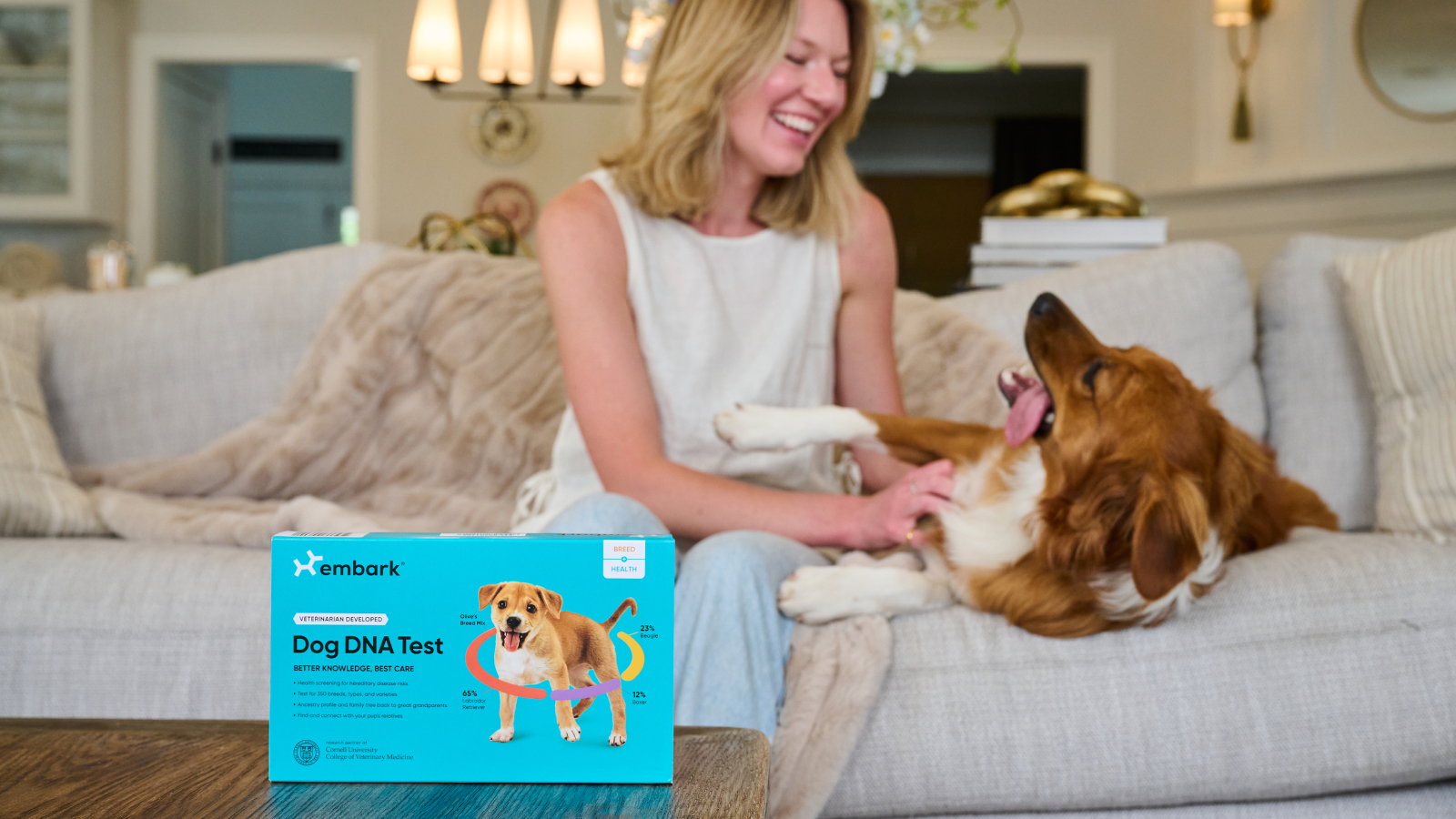
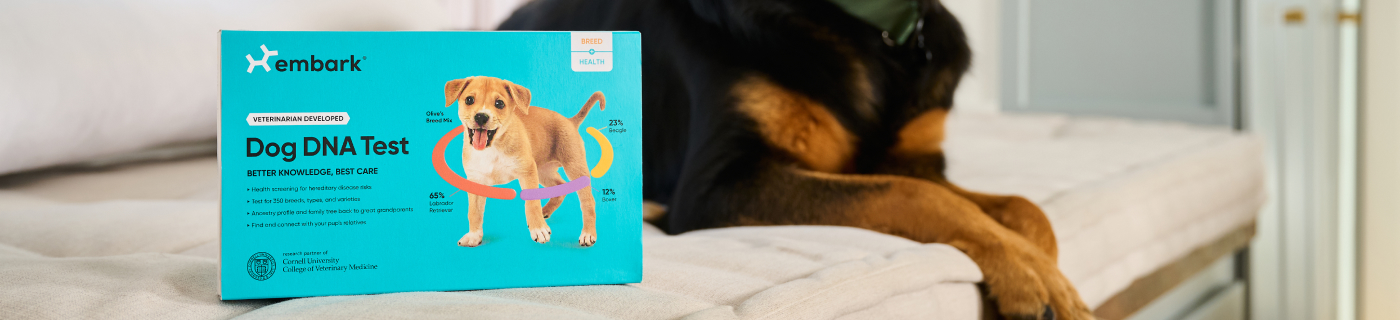
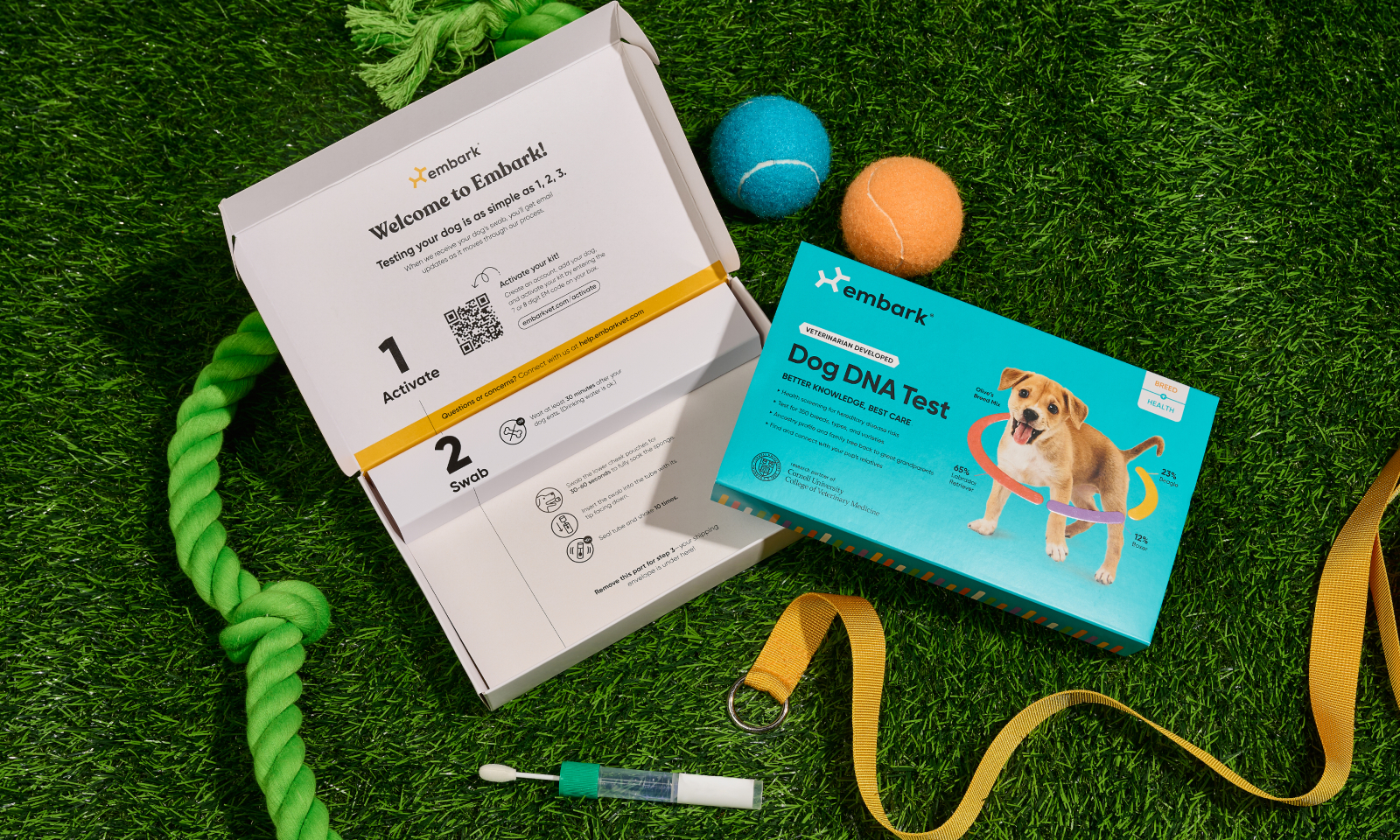
So I ordered the Embark Breed + Health Dog DNA Test. When it arrived, I swabbed his cheek, registered the kit online, and sent it back in the prepaid envelope. A few weeks later, the results showed up in my inbox.
They confirmed Rex is an Aussiedoodle—a mix of Australian Shepherd and Poodle, both built for intelligence and constant motion. It’s what I expected, but seeing it laid out—what those breeds need, how their instincts show up, what happens when they don’t have an outlet—made it clearer. The behavior I’d been trying to correct finally had context. It was the instruction manual I never thought to ask for.
As I read more, I realized he wasn’t unpredictable or excessive. He made sense. He was a working dog without a job, an intelligent animal with instincts that had nowhere to go.
There was nothing to correct in him, and nothing in that report changed what could happen.
The report didn’t stop at his breed. It kept going—a clean health panel, nothing flagged as a risk, one marker worth keeping an eye on, and an above-average score for allergies. A care tab told me what to watch for as he gets older. None of it was a verdict. It was just more of him, laid out: a fuller picture of the dog I was actually living with.
There were ways to work with him, to give that energy somewhere to go—but not in the way I meant when I said “manage.” Not in a way that made it easier for me. I’d expected the test to identify a solution. Instead, it shifted the terms, and showed me exactly where I didn’t have control.
The Role I Know Best
With parenting, if I could name a problem, I knew what to do—a difficult assignment, a bad grade, a friend situation that needed talking through. This wasn’t something I could solve. Rex didn’t need to change. I did. I had to work within what he was built for, not push him into something easier for me.
That wasn’t the kind of answer I was used to, but it wasn’t really about Rex. The real question was what I do when there’s nothing left to manage.
What the Test Actually Changed
I wanted information that would tell me what was wrong with him, but instead, it told me what was right. There were things I could do, but none of them gave me what I came for. It didn’t give me control. It just showed me that I never had it.
So I stopped trying to work against his DNA using what I discovered from the test. We walk earlier now, before the street fills up with the things that set him off—something I adjusted after reading about how Australian Shepherds process overstimulation. I let the walk be his instead of a battle I’m trying to win. I gave him a job—fetch the ball in the backyard, sit and stay, a few minutes that ask something for him to focus on. The Embark Breed + Health Dog DNA Test flagged that he’d need that: A working dog without a task is a working dog looking for one. The barking didn’t vanish. He’s still 78 pounds of opinion. But he seems happier and better behaved. There’s now someone to plan around again, built back into my day.
And somehow that was the relief I didn’t know I’d been waiting for.



5 Responses
I’ve been thinking of doing the same with my dog. I have no idea what breed she is. I’ve been saying when asked, boarder colie. She came to me from my boyfriend who stopped to pick up his mail one day and there was a box. He decided to look inside. There was 2 puppies that someone dumped in 90+ weather. He said he’d take one and I’d take one. I had just been to the shelter that day. Looking for a match. I had just got home when he called. Of coarse, he had no clue what to do. I ended up with both until they were potty trained. They’re both females. Mine is mainly black with some white. His is mostly white with some black. Mine turned out bigger and longer hair. We’ve been wondering what breed they are for awhile now. She wasn’t the match I was looking for. I set out that morning to find a mid-older dog, small and short hair. I didn’t want to do the puppy stage at my age, but God had a different plan for me. She’s huge and I can’t walk her, because she’ll pull me over. I have a half acre of land, but I can’t let her run free. The fence in the front is 4ft, but she flies over that with no troubles. My fence over the rest of the property is 6ft, but she gets out somehow anyway. No holes under the fence, no missing parts of the fence. I’ll have to get a camera to see how she’s doing this. She’s high energy and I’m not, but she really is a great dog. Any suggestions on how to let her run without letting her near the fence? I’m fostering a dog currently, who my neighbor calls spider. He took a picture for me. She was standing on top of the fence and not sure what to do next. The only thing I could think is in the corner of the yard is a tree. I think they’re using that to get off the ground then able to get to the top of the fence. I’ve got her on a run now. Although, I worry about her being tied. She can run back and forth and get to anything she needs, but I’m still not sold on tying the dog up at all. Help!!!
I’ve rescued four dogs, each a completely different personality. It always saddens me when people get designer dogs from breeders and don’t know enough about the breeds to give the dogs what they need. Some dogs’ instincts are so strong they become a problem: collies trying to herd children, for example. I hope more people read up on the characteristics of each breed before they get a dog. It’ll make for a much happier match for both ow we and best friend.
Thanks Joanne, you are right about designer breeds. I have been guilty of that myself. We love our french bulldog Pippin. And we knew when we got her, that there would be vet bills. And there have been some big ones. We do love the breed, but will most likely not purchase another one due to their chronic health conditions. Will go for a rescue do next time. But she is the sweetest. —susan
I had to work within what he was built for! Sums it up beautifully- great insight. Thank you
Thanks, Kim!