
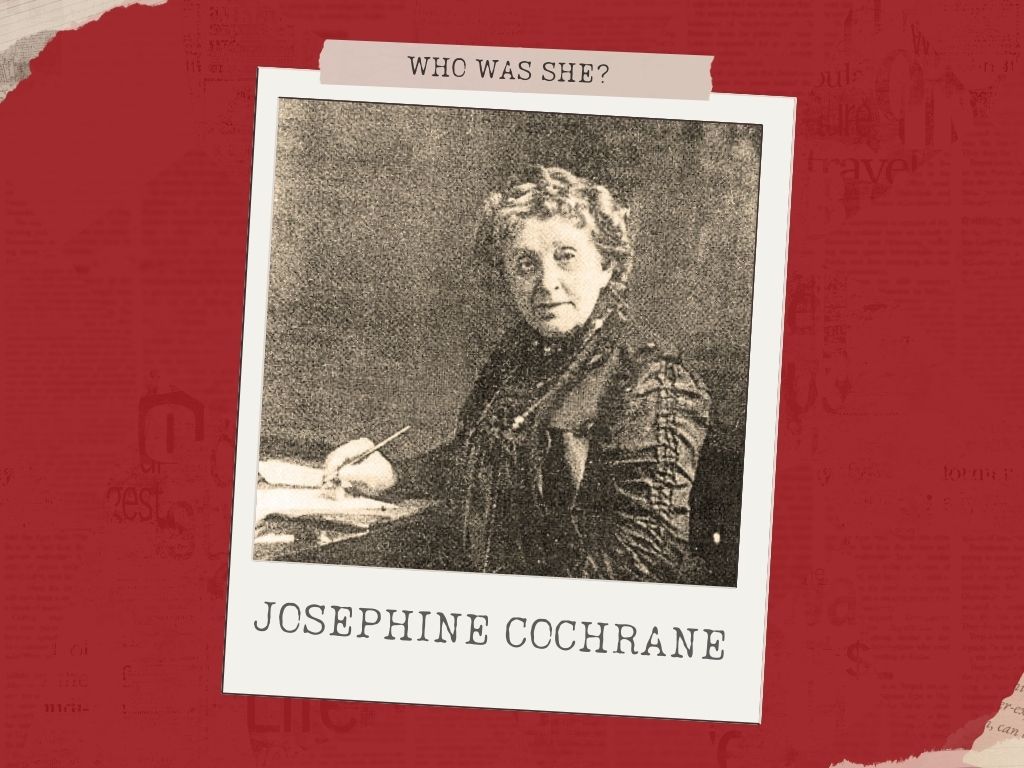
Who Was She? Reclaiming the women history tried to bury.
Josephine Cochrane c.1839-1913
She was broke, so she built a manufacturing empire.
The investors were interested, but they had terms. She could have the capital—if she stepped aside and let men run the company she built.
Josephine Cochrane said no, and kept control.
This was in the early 1890s.
Before women could vote.
Before we could open a credit card without a husband.
She didn’t “lean in.” She locked the door and kept the keys. She didn’t invent because she was bored. She invented because she was a broke widow who needed revenue, not applause.
The invention was a dishwasher. The ambition was ownership. She wasn’t trying to improve a chore; she was building a manufacturing company in a world that trusted men with factories and women with dishes. Today, dishwashers hum in millions of homes, restaurants, and hotels—essential infrastructure, quietly profitable.
Cochrane’s story isn’t about clean dishes. It’s about who gets to own what they build, and who gets pushed out once it’s working.
She Was Supposed to Host. She Chose to Build.
Josephine Garis was born in Ashtabula County, Ohio, into a family fluent in mechanics—men who built things, patented them, and collected the credit. At 19, she married William A. Cochran—no “e.” She decided to spell her name Cochrane, a choice that reportedly annoyed his family. Even that small choice drew resistance.
After her husband prospered in the dry goods business, the family moved into a mansion in Shelbyville, Illinois, where Cochrane performed the role assigned to her. She hosted elaborate dinners and displayed heirloom china, but her servants kept chipping the plates while washing them. She tried washing them herself, but quickly grew tired of it. She realized the real problem wasn’t clumsy servants. It was inefficient labor that had been tinkered with, but never fully engineered.
In 1883, her husband died, leaving her with $1,500 and growing debt, as well as a child to support. The dishwasher shifted from an interesting idea to economic necessity. “If nobody else is going to invent a dishwashing machine, I’ll do it myself,” she said. But the marketplace didn’t automatically trust a woman to engineer or sell it.
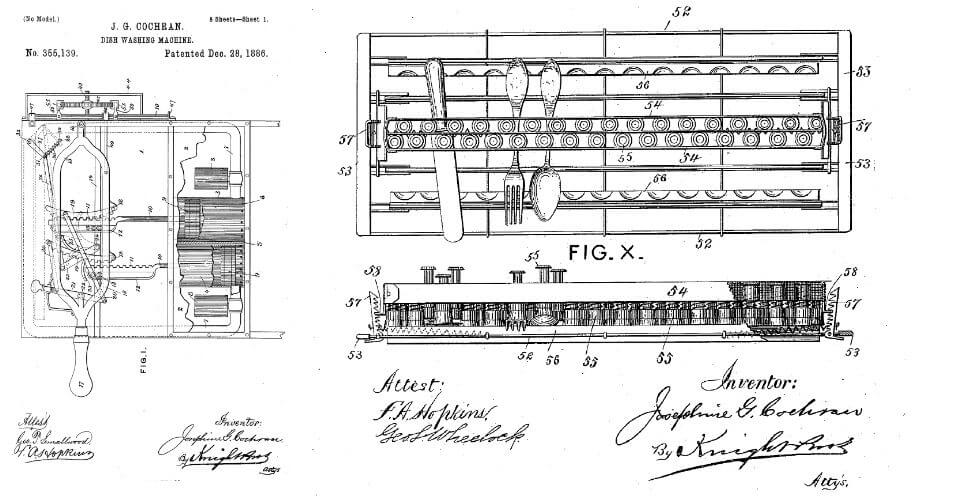
A man had patented a hand-cranked version of the dishwasher in 1850, but it didn’t reduce the amount of time and effort involved. Cochrane created one with wire racks inside a copper boiler, using pressurized water to clean the dishes. On December 31, 1885, she filed her patent application under “J.G. Cochran.” Initials, not Josephine. This was camouflage. A female signature could scare off investors faster than a faulty motor.
Her patent was granted the next year.
She Didn’t Sell to Housewives. She Sold to Power.
Once the dishwashers were built, she first tried selling them to housewives. That strategy failed. Women hated dishwashing, but they didn’t control the money. So she skipped the kitchen table and walked straight into hotel lobbies. In 1887, she received her first order from Chicago’s Palmer House hotel. Later, she crossed the lobby of the Sherman House alone to pitch her machine—and left with an $800 order. But progress was slow. To manufacture machines, she needed capital.
“When it comes to buying something for the kitchen that costs $75 or $100, a woman begins at once to figure out all the other things she could do with the money. She hates dishwashing—what woman does not?—but she has not learned to think of her time and comfort as worth money.” -Josephine Cochrane
Cochrane didn’t have the generational wealth or financial network that male industrialists relied on. She had orders, a design that worked, and debt. When investors finally appeared, they made clear who they believed should control the company. She refused, and kept running it herself.
The company’s turning point came in 1893, when the World’s Columbian Exposition put Cochrane’s machine on display. It was the only woman-invented device in Machinery Hall. Imagine walking into that room. Steam engines. Steel. Noise. Men everywhere. And one machine designed by a widow from Ohio.
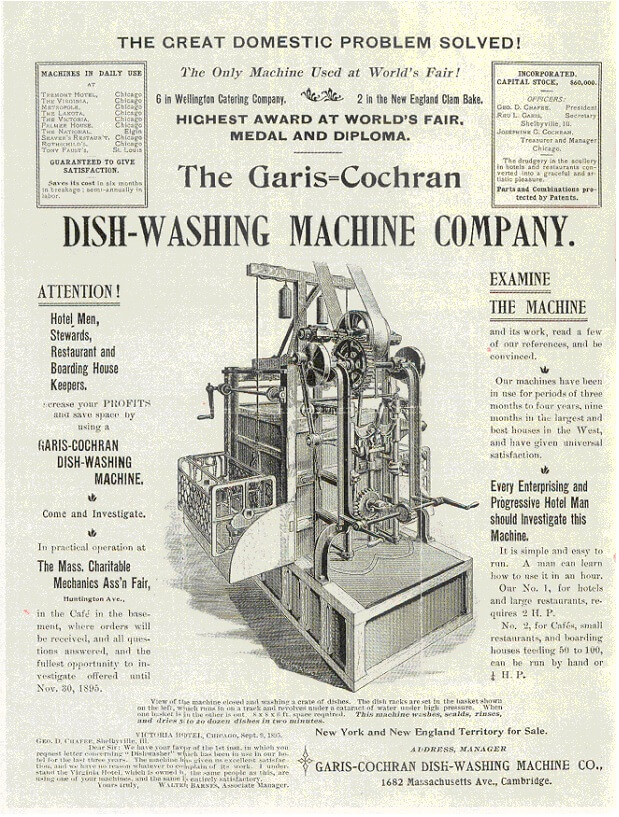
Judges gave it top honors, and orders followed—enough to move the company forward without surrendering ownership. The orders came from hotels and restaurants as far as Alaska and Mexico. By about 1898, she had launched her own factory and established Cochran’s Crescent Washing Machine Company.
She received a second patent posthumously in 1917. Her company was later absorbed into what became KitchenAid and, eventually, Whirlpool. Cochrane’s dream was finally realized in the 1960s, when dishwashers became common in American homes.
Different Century. Same Price.
More than a century later, women founders are still told to “bring in experienced leadership” the moment their companies start making money.
Translation: Thank you for building this. Now move.
How many women have built something—an idea, a business, a family infrastructure—only to be nudged aside once it’s stable?
If that question hits a little too close to home, it’s because it is.
Before a woman could vote, she was expected to hand her company over to men.
She didn’t. She scaled instead.
When Cochrane died in 1913 at age 74, obituaries praised her “untiring efforts” in building a profitable manufacturing enterprise.
Profitable.
Not charming. Not plucky. Profitable.



One Response
Love this!! I grew up about 1.5 hours from Ashtabula, OH. My grandmas was Josephine also. I have added The Cabernet Club to my TBR and told my book club about it.