
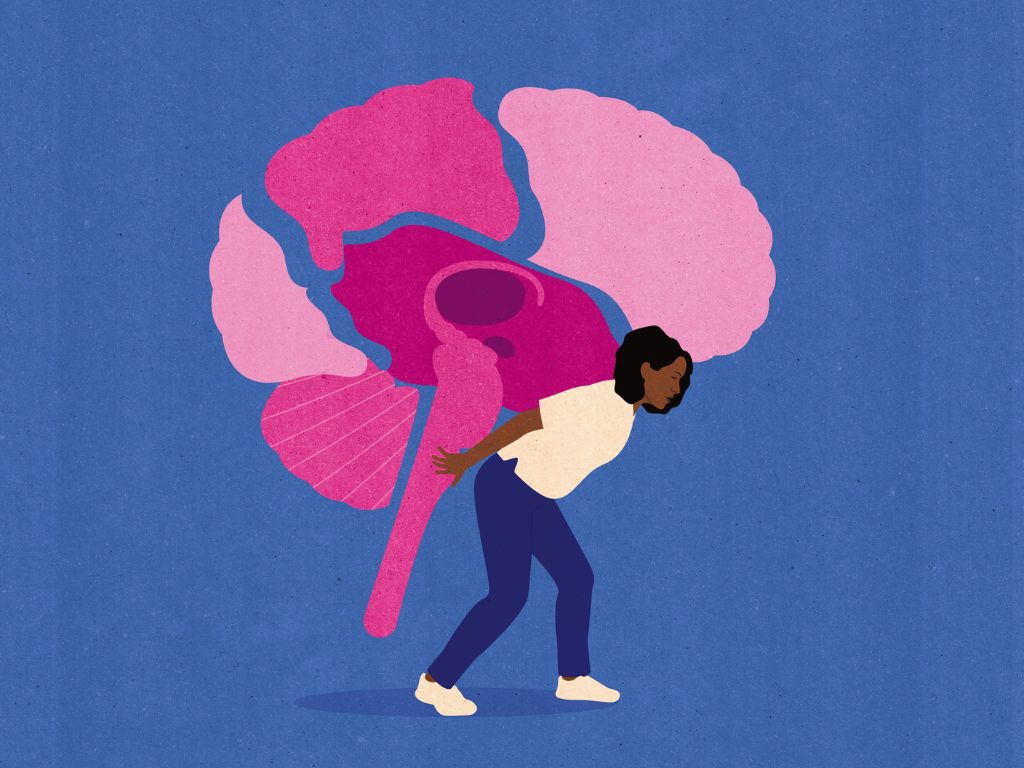
Menopause-related brain fog is common, frightening, and usually temporary. Here’s what’s actually happening—and what helps.
Hot flashes, mood swings, and weight gain tend to dominate the conversation about menopause, while more worrisome symptoms like cognitive changes (aka brain fog) are overlooked or minimized. Losing a word here and there is one thing, but what truly unnerves me is when the fog settles in deeper—when a simple sentence suddenly requires two or three passes before it sticks. More and more, it feels as if my mind is buffering in real time. As scary as this has been, here’s what I know now.
Brain fog is common—and it’s temporary.
Dirty Little Secret: Why No One Talks About Brain Fog
Research suggests that 44 to 62 percent of women in perimenopause report cognitive changes—including memory lapses, slowed processing, and difficulty concentrating.
So why the secrecy? Because breathing life into these concerns feels like an admission of incompetence, decline, and failure. Give something a name, and it becomes real, right? And the cultural hush is loud; no one wants to hear about our journey from capable to compromised. Women learn early that being sharp, organized, and “on top of things” is an inherent part of our value. When that sharpness is blunted, even temporarily, the instinct to hide it (or quietly panic) kicks in hard.
While we’re busy hiding lapses at work, stewarding shame in social settings, or internalizing the idea that struggling equals failure, we don’t see that all of the above increases anxiety, ultimately, amplifying the very problems (worse sleep, greater stress) that make brain fog worse.
Brain Fog or Red Flag? Here’s How to Tell the Difference
The menopausal brain is far less chaotic and mysterious than you think. “Estrogen has powerful effects on the hippocampus and prefrontal cortex—the areas of the brain directly involved in learning, memory, and other cognitive functions,” explained Christine Estes, a board-certified OB-GYN and expert in robotic gynecologic surgery.
As estrogen levels fluctuate and eventually decline during perimenopause and menopause, the brain enters an adjustment period. That transition can temporarily disrupt how efficiently information is processed, which many women experience as brain fog.
Research from SWAN suggests that cognitive dips may worsen during perimenopause when hormone levels begin to fluctuate; however, cognitive performance tends to rebound or stabilize as hormone levels settle into a new baseline once women reach early post-menopause.
“The onset of what many refer to as ‘brain fog’ is somewhat acute in nature, and it’s not uncommon for women to feel like they’re suddenly thrust further into the menopausal transition,” Estes said. “This can be scary, and it’s only natural to worry about the risk of progression and dementia evolving with age.”
However, in terms of sounding the alarms, she added, “Only more significant changes in cognition (alterations in mental functions by which knowledge is acquired and used) need to be investigated to rule out medical or neurologic problems.”
Sexism, Stigma, and the Cost of Silence
Andrea Caamano, MD, director of medical affairs at The HRT Club, said much of the fear around menopausal cognitive changes is rooted in sexism in medicine, ageism, and a lack of research. “Historically, medicine has minimized or dismissed women’s experiences of menopause. Those who were brave enough to even discuss these issues were either considered ‘weak’ and ‘complainers’ or blown off altogether and told it was a part of aging, and there was nothing to be done.”
And let’s not forget the broader cultural stigma on aging that profoundly compounds the problem. We live in a society where a woman’s value often lies in her youth and fertility; one that frames menopause as a “shameful decline” instead of a normal life stage. Within that narrative, even minor cognitive slip-ups are used as fodder to reinforce negative stereotypes about aging women. It’s no wonder so many women hesitate to speak up—they’re worried they won’t be taken seriously, or worse, that they’ll be quietly written off.
What Supports a Foggy Brain
Menopausal brain fog turns once effortless thinking into constant second-guessing and steals confidence. But it doesn’t have to mean resignation. Once you understand what’s happening biologically, there are realistic ways to support cognition during the menopausal transition—without turning your life into a full-time wellness project.
Start With Sleep
Poor sleep worsens brain fog, and improved sleep often helps it. Experts point to consistency—regular sleep and wake times, and cutting screens before bed—as the highest-yield changes for cognitive clarity.
Small, Doable Supports for Your Brain
Estes added that observational studies suggest there are realistic, doable levers midlife women can pull to support memory and long-term brain health. Staying socially connected, moving your body regularly, following a Mediterranean diet, and consuming alcohol in moderation (or not at all) may all yield cognitive benefits.
What About Hormone Replacement Therapy (HRT)?
“For some women, hormone therapy improves sleep, which can indirectly support memory and concentration. Better sleep often leads to better energy, movement, and social engagement—all of which benefit cognitive function,” said Estes. However, decisions about HRT are highly individualized and best discussed with a clinician.
Breaking the Silence
Brain fog in midlife isn’t a personal failure, a flaw, or a sign you’re fading—and none of us are alone in experiencing it. It’s common, it’s frightening, and it’s often temporary. Talking about it—with friends, partners, and doctors—helps replace isolation with clarity. Understanding what’s happening is how women stop quietly blaming themselves and start reclaiming agency.
******
MEDICAL ADVICE DISCLAIMER
DISCLAIMER: This website does not provide medical advice. For health or wellness-related content, SFD Media LLC emphasizes that information about medicines, treatments, and therapeutic goods (including text, graphics, and images) is provided for general information only. No material on this site is intended to substitute for professional medical advice, diagnosis, or treatment. Users are advised to independently evaluate and verify the accuracy, reliability, and suitability of the information before relying on it. You should not rely on the content as a substitute for professional medical advice. Consult with a physician or other health care professional for any health concerns or questions you may have. SFD Media LLC is not responsible for any action taken based on the information provided on this website. The use of any information provided on this website is solely at your own risk.