
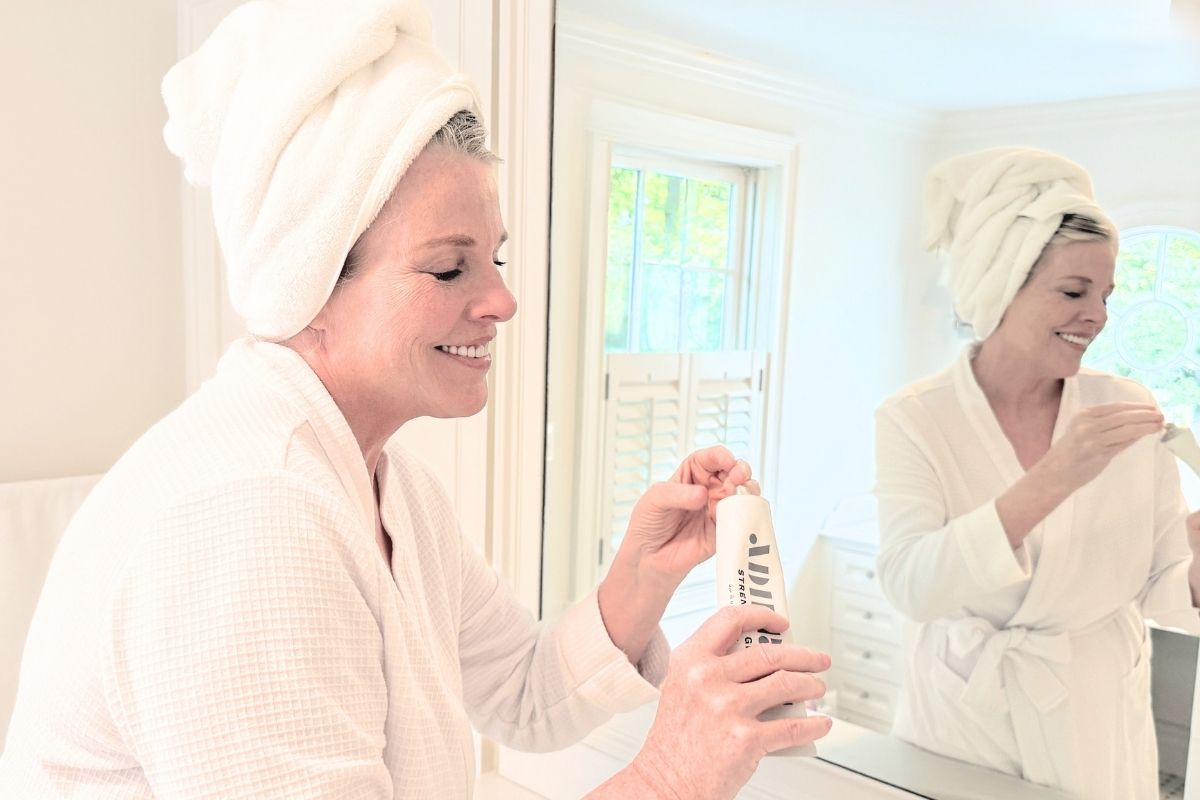
Adipeau says its approach to aging skin starts somewhere most skincare doesn’t. We wanted to know what would happen when real women tried it.
Sponsored by Adipeau
A note before you read:
PROVOKED is an independent publication for women who are not going anywhere, and building it requires real support. Adipeau paid PROVOKED to conduct this three-month project and report on what we found. The products were provided to participants at no cost. The reporting and opinions are entirely our own.
When Adipeau approached PROVOKED earlier this year about a partnership, I gave them the warning I give every brand that wants access to our readers: You don’t get to control what they say.
If we’re going to put a product in the hands of our community, we have to be able to tell the truth about what happens. If they love it, we’ll say so. If they don’t see a difference, we’ll say that too.
Adipeau’s answer was essentially: Good.
So we put together a group of women from the PROVOKED community to use two Adipeau products over three months. Twelve women ages 45 to 72 completed the process and make up the group we’re reporting on here. I was one of them.
We met regularly and posted before-and-after pictures. We talked about what we liked and what drove us crazy. We compared notes about faces, necks, jowls, upper arms, and legs. And because Adipeau was part of those conversations, they heard the good, the bad, and the occasionally underwhelming right along with us.
Three months later, I have a lot to tell you.
Wait. We’re Supposed to Care About Fat?
This was the part that got my attention.
Most of us have spent decades being taught that fat is the enemy. Then somewhere around age 50 or 60, we’re suddenly paying people to inject things into our faces to replace the volume we’ve lost.
But researchers studying skin and aging have been discovering something more complicated. The fatty tissue associated with our skin isn’t simply sitting underneath it like stuffing in a sofa. It’s biologically active tissue, and it talks to the skin above it.
Dermal fat cells interact with fibroblasts, the cells involved in producing collagen and elastin. They secrete signaling molecules that can affect skin structure and inflammation and participate in processes including wound healing and skin-barrier function. In other words, fat is part of the ecosystem of our skin, not merely something underneath it.
And aging appears to change that ecosystem.
A 2020 paper proposed the term “facial fat fitness.” Who knew that was a thing? The premise is that when it comes to facial aging, how much fat we have may be only part of the story. The health, size, location, and behavior of the fat cells may matter too.
Healthy adipose tissue can generate new fat cells from precursor cells, a process called adipogenesis. With age, the pool of those precursor cells can decline, and their ability to mature into functioning adipocytes can diminish. Sun exposure may interfere with the process too. The paper describes UV-related inflammation as suppressing signaling involved in adipogenesis and reducing adipocyte numbers.
Here’s where it gets weird.
We can lose some of the fat associated with youthful skin while other fat cells become larger, and fat can accumulate or shift in parts of the midface and lower face. The aging face isn’t simply a balloon slowly losing air. Researchers are looking at a much more complicated process involving fat-cell size, number, location, inflammation, and the structural relationship between fat, skin, and the tissues that hold everything in place.
Which brings me to my jowls.
I didn’t choose my jawline for this experiment because I knew any of this. I chose it because I’m 66 and I have a mirror.
But the lower face happens to be one of the places where this research gets interesting. The jowl itself contains a superficial fat compartment. With age, it can descend. The authors of the paper on facial fat fitness propose that changes in the fat tissue, along with changes in the ligaments and skin surrounding it, may contribute to the sagging we see in the mirror.
And no, the idea isn’t simply to grow more fat in your face.
The theory distinguishes between having healthy populations of functioning fat cells and having fewer, oversized fat cells, which can behave differently and promote inflammation. Think fat fitness, not fat volume.
There is even research showing that adult skin has more regenerative plasticity than scientists once thought. In a study on wound healing, researchers found that under certain conditions, cells in wounded mouse skin could be reprogrammed into new fat cells. They also induced adipogenic changes in human keloid cells in the laboratory.
This is fascinating biology. It is not proof that putting Adipeau on your face regenerates facial fat.
That’s an important distinction.
One of the authors of the paper on facial fat fitness is Adipeau founder Ivan Galanin, and Galanin and another author disclosed equity in the company. The paper reported no funding for the manuscript.
The body of research makes the premise behind Adipeau biologically interesting. It doesn’t prove that Adipeau’s creams produce those biological changes in human facial fat. And our experiment didn’t measure fat cells, collagen, elastin, or any biological mechanism.
We measured something much simpler.
What happened when 12 women put the products on their skin for three months?
Skepticism Was Part of the Deal
Skincare has given women plenty of reasons to be skeptical about claims like these. Interestingly, Adipeau’s founder doesn’t disagree.
“As an industry, skincare has created a lot of angst and distrust,” Galanin told us. “There’s a tremendous amount of lying and cheating.”
His response has been to ask some questions most brands would probably prefer not to ask publicly: Why don’t the products work for some people? Do customers really need to use them every day to get results?
Adipeau also publishes mixed reviews in its own FAQ, something I don’t remember seeing many skincare brands volunteer to do. That attitude was one reason I was willing to hand the products to our readers in the first place.
I didn’t want a sponsor that needed 12 glowing testimonials at the end of three months. I wanted one willing to hear whatever came back.
What Were We Actually Testing?
We tested two products: Adipeau’s Volume Cream and Strength Gel.
The premise behind the two products is different. Volume Cream is intended for areas that appear hollow or depleted, while the Strength Gel targets skin that appears saggy, weak, or crepey. Women in our group used them in different combinations and on different parts of the face and body.
This wasn’t a clinical trial. We weren’t blinded. There was no placebo group, and the women followed different protocols. Adipeau itself describes our cohort as exploratory.
It was a real-world test among women in the demographic PROVOKED actually serves, with instructions to tell us what happened, dramatic or unremarkable.
And once you start testing skincare in the real world, you discover something clinical studies don’t always tell you.
Is It a Pain to Use?
Mostly, no.
This came up again and again in our conversations. The women liked the tubes. They liked their size and design and the fact that they were easy to throw into a travel bag.
More importantly, they liked that we weren’t dealing with a neck cream, eye cream, arm cream, leg cream, and another tiny $150 vial for some half-inch space between the nose and upper lip. We had two products, and we slathered and spread them on everything from our faces and necks to upper arms and legs.
The texture got good marks. So did the way the products felt on the skin. Several women commented that makeup layered easily over them once they were dry.
Once they were dry being the operative phrase.
Drying time was probably our most consistent annoyance. Two or three minutes doesn’t sound like much until you’re standing in the bathroom waiting to put on makeup or clothes. One woman also wished one of the products contained SPF so she didn’t have to add another step.
These are small complaints. But this is the stuff I want to know before I buy skincare.
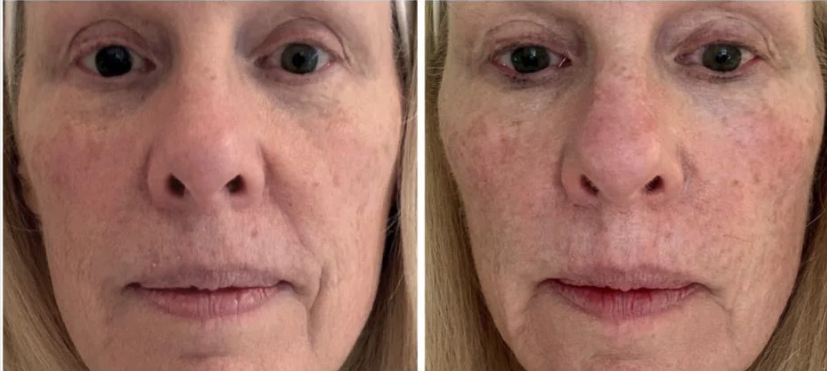
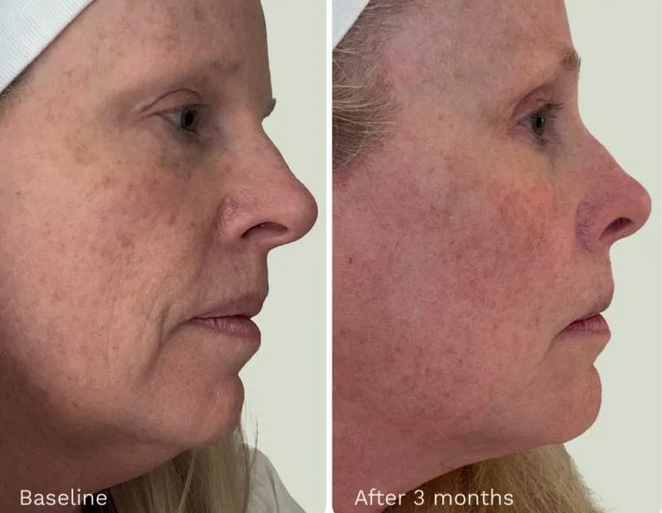
I used both products primarily on my face and neck, concentrating on my cheeks, jawline, and the sagging around my jowls. And I have a confession: I used them once a day most of the time rather than the twice-daily protocol.
I’m apparently a less-than-perfect lab rat.
Still, after three months, I think I see a difference. Particularly around my lower face and jawline. It’s not a facelift. I didn’t wake up looking 42. But when I compare my photographs, I can see enough change that I’m continuing to use it.
Then we started hearing from the other women.
Some of the Results Were Hard to Ignore
Cindy Y. didn’t notice much during her first month using the Strength Gel alone. In the second month, she added Volume Cream.
That’s when she said things changed.
Her upper lip and neck had been her two problem areas, and she’d already tried plenty of products. She described the improvement in both as dramatic and said the small lines around her lip began smoothing in a way her previous products hadn’t managed.
Her verdict on the experience: “11 out of 10.”
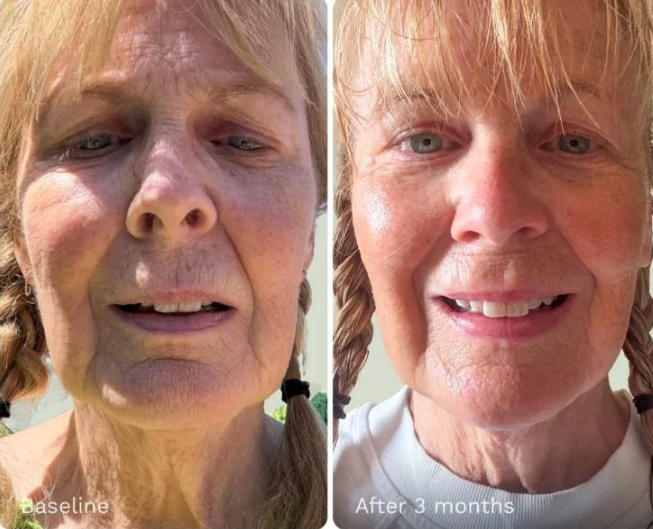
Cyndi T. began noticing smoother, firmer skin after about a month. Then something happened that’s probably more persuasive than staring at yourself in a magnifying mirror: friends at a party complimented her skin and asked what she was using.
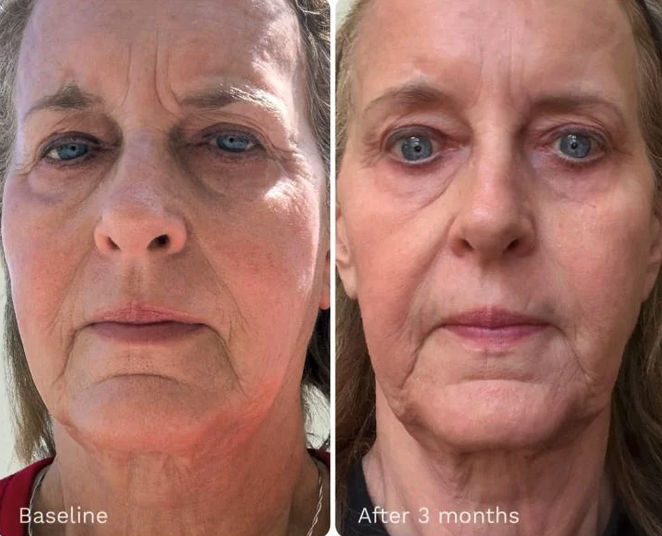
Christina D. went into the experiment skeptical after trying product after product for crepey skin. She reported that her skin looked tighter and that the crepey texture visibly improved.
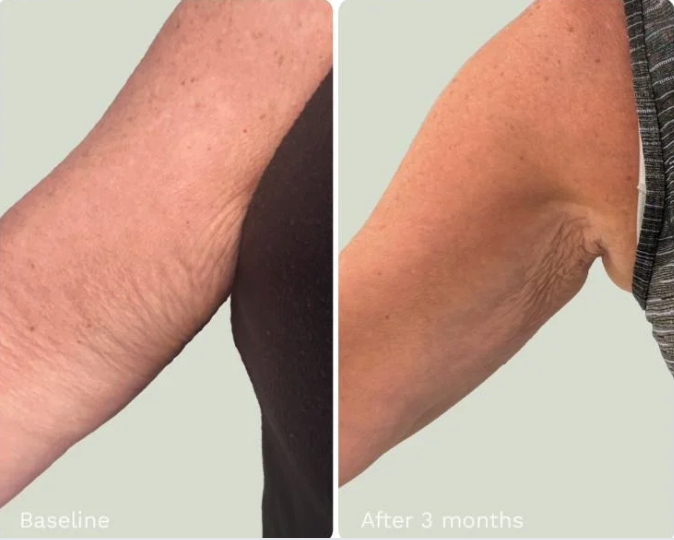
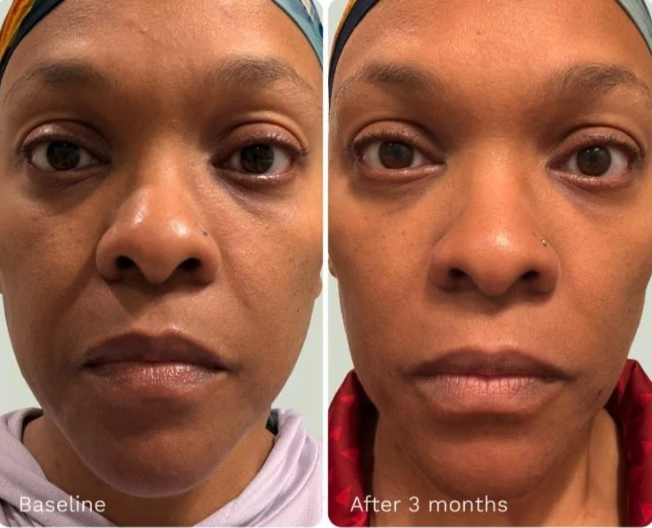
Some of the before-and-after photographs are striking. Others show smaller changes. And because these were photographs taken by real women living real lives, rather than standardized clinical photography, lighting, angle, expression, and distance aren’t identical in every image.
We’re showing them to you rather than telling you what you’re supposed to see.
Photographs were submitted by participants and were not captured under standardized clinical conditions.
And Some Women Didn’t See Much
This may be my favorite part of the experiment, because this is where I knew we had chosen the right partner.
Not everyone came back thrilled.
Gayle M. loved the way the products felt and noticed that her skin stayed hydrated throughout the day. She especially liked how her makeup went on over them.
But when she compared her photographs?
“I didn’t notice any major changes in my skin,” she told us. “When I looked back at the photos I think I looked much the same.”
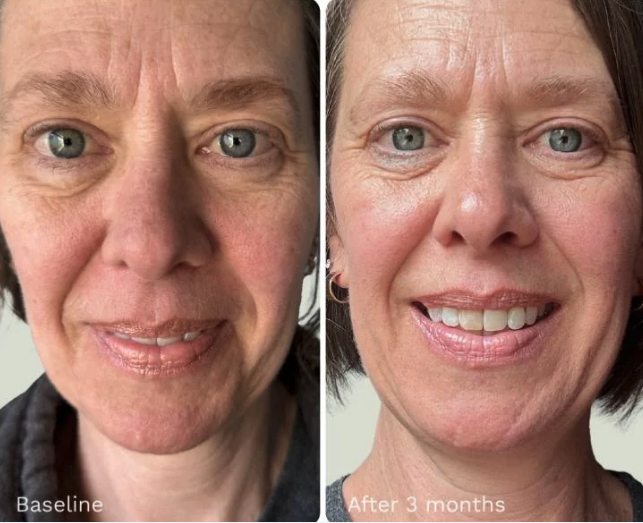
Chantrise H. had a similar experience. At one point she thought she saw a change. Then a later photograph looked much like the original, and the improvement she hoped for never really materialized.
Galanin said the company is still trying to understand why some people see more significant results than others. “We want the products to work for everyone,” he said. “My hypothesis is that the baseline nutrient supply to the fat cells matters a lot. This is principally a function of blood flow and diet.”
He believes protein intake may matter because protein supports tissue regeneration. He also said that tension can compromise blood flow and that Adipeau is testing its products in combination with fascia release and gua sha. Those are hypotheses and ongoing tests—not findings from this PROVOKED focus group.
Adipeau heard the participants’ comments too.
They didn’t ask us to remove those women from the story. They didn’t ask us to find a nicer quote.
That matters to me.
Cindy Y. probably summed up our three months better than anyone:
“There is no one universal ‘silver bullet’ for skincare.”
Some women saw results relatively quickly. Others needed longer. Some didn’t see much at all.
That isn’t nearly as sexy as ERASE 20 YEARS IN TWO WEEKS.
It’s considerably more believable.
Something Else Happened in the Room
Dilan Yuksel leads community engagement at Adipeau, but her interest in the subject is personal. After a radiofrequency treatment in 2022 left her with facial fat loss, she said she felt disconnected from her own reflection.
She sat in on our conversations over the three months and noticed that they didn’t stay focused on tubes and skin texture for very long.
“What struck me most about this group was how the conversations moved beyond skincare almost immediately,” she told us. “Women spoke openly about confidence, relationships with aging, and how they wanted to feel, not just how they wanted to look.”
She’s right.
We were ostensibly there to test skincare. But when you put a dozen women between 45 and 72 in a room and ask them to look closely at photographs of themselves, you’re going to end up talking about more than jowls.
So, Does It Work?
After three months with 12 women, I’m not going to answer that question with a sweeping yes.
That’s not what our experiment can establish.
What I can tell you is this: more than half of our group reported seeing a difference themselves or having someone else notice one. Some changes were subtle. A few women described theirs as dramatic. Others primarily liked the hydration, texture, and feel of the products. And some didn’t see the changes they’d hoped for.
We also learned that the routine was easy enough that women actually stuck with it. That’s not insignificant. A product can contain every promising ingredient on earth, but if it requires a 14-step ceremony twice a day, I’m not going to be around to see what happens at month six.
Three months was long enough for some of us to see a signal.
It wasn’t long enough to answer every question.
And the biology behind Adipeau is interesting enough that I want to keep watching.
Why We’re Doing This Again
Adipeau paid PROVOKED for this partnership and supplied the products our participants used. They didn’t get to dictate what our women said or what I’m telling you here.
And we’ve agreed to work with them again.
That decision isn’t because every woman got a dramatic before-and-after. They didn’t.
It’s because this is exactly what I think a PROVOKED partnership should look like.
I don’t want to tell you that a product is fabulous because someone mailed it to our office in a pretty box. I want to put it into the hands of women who will use it, forget to use it, complain about it, scrutinize themselves in bathroom mirrors, take pictures, and tell us exactly what they think.
That’s what happened here.
And Adipeau stayed in the room and listened.
That’s a brand relationship I’m interested in.
And we’re not finished yet.
Learn more about Adipeau here.
**************
MEDICAL ADVICE DISCLAIMER
DISCLAIMER: This website does not provide medical advice. For health or wellness-related content, SFD Media LLC emphasizes that information about medicines, treatments, and therapeutic goods (including text, graphics, and images) is provided for general information only. No material on this site is intended to substitute for professional medical advice, diagnosis, or treatment. Users are advised to independently evaluate and verify the accuracy, reliability, and suitability of the information before relying on it. You should not rely on the content as a substitute for professional medical advice. Consult with a physician or other healthcare professional for any health concerns or questions you may have. SFD Media LLC is not responsible for any action taken based on the information provided on this website. The use of any information provided on this website is solely at your own risk.



4 Responses
Overall, it did seem like the product(s) were somewhat effective. However, it appeared as though many of the women incurred redness that was not evident in their before photos.
Worth trying, I imagine, though.
Very interesting article and product trial evaluation, as someone with smokers lines (and never smoked) I’ve been so self conscious of them most of my life. I’ve tried many products to see no difference. I don’t care to do boxtox, but would like to be a candidate for the trial of this product. Thank you Provoked for providing such a great magazine with interesting and informative articles.
I’m 73 and have tried any number of creams and syrums over the years. My skin is pretty good, but I too have the “hollows” and sags. I have also found changing up one’s facial routine is helpful, my skin responds, even if only for a moment, whenever I try a new product.
I am very interested in how important fat is to the process of aging. I am also a good example of crepy skin and flab on my arms and legs, so I feel like I’m a good candidate to try these products. No matter how much I exercise or apply creams, my skin texture does not improve. I’ll be happy to report my results once I’ve used them for three months.
Very interesting and informative. If nothing else, I’m happy to learn how this whole “fat” process works in the skin. And I appreciate the complete honesty which is apparent throughout, particularly the photographs. One thing I did notice in all of them is that everyone’s skin looks a tad more dewy and smoother than in the beginning. And yes, I agree this Adipeau sounds like a brand worth listening to.