
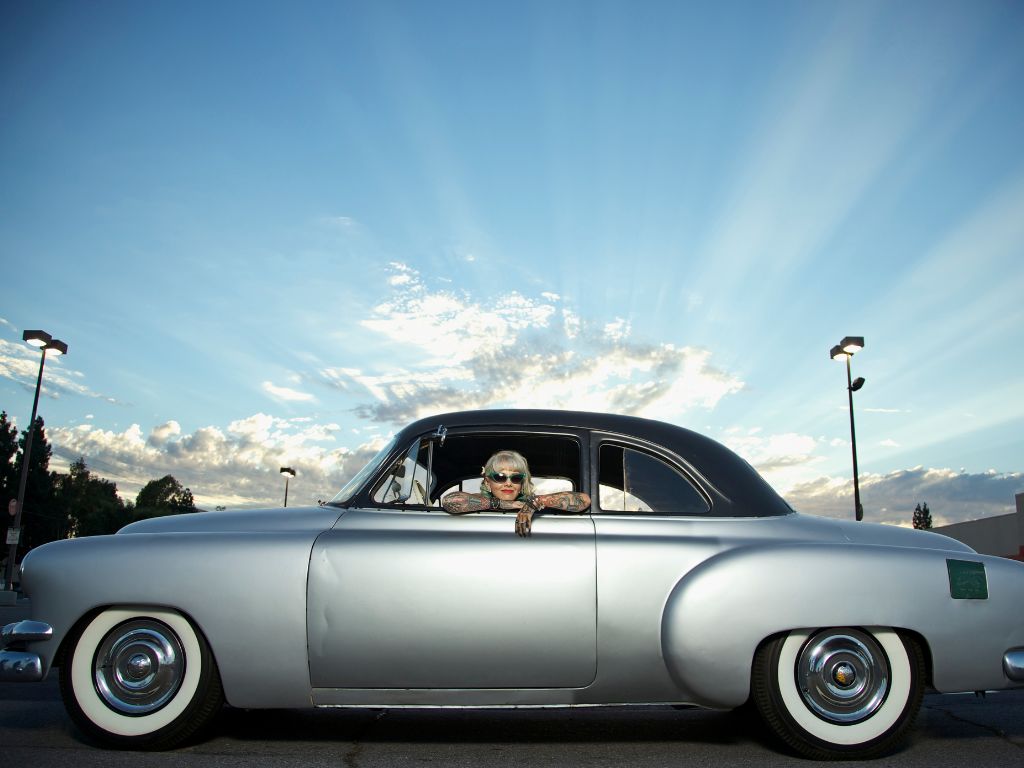
Here’s to the women who thrive on their own terms—and their own time.
Smoking 15 cigarettes a day. That’s the mortality impact of social disconnection, according to the 2023 Surgeon General’s report. Social isolation is particularly problematic among older adults, with a new study finding that midlife Americans are among the loneliest people on the planet.
So loneliness kills, but you know what else can?
Too much forced togetherness.
Whether from the medical community, the media, or well-meaning loved ones, the pressure on women 50+ to socialize is enough to make you pull a Greta Garbo and wail, “I want to be alone!” It’s as if choosing solitude makes a midlife woman some kind of weirdo. Unless the choice is deemed a lie: We couldn’t possibly prefer to be alone, ever; surely we crave constant companionship, ideally with a romantic partner but also buffeted by gal pals, and for any moments in between scrolling a device to stay connected.
The Stigma of the Solo Woman
Western culture in general values sociability and mistrusts those who seek their own company. “But the stigma is particularly pronounced against midlife women,” Robert J. Coplan, Ph.D., Carleton University psychology professor and author of The Joy of Sollitude, told me.
Men may admiringly be dubbed “lone wolf” or “maverick,” while we get “spinster,” “hag,” “old maid,” and—one I’ve proudly reclaimed—“cat lady.” Men are cinematically celebrated with heroes from Shane to Rambo to John Wick. Yet for every Thelma (June Squibb as an independent senior who extracts justice from creepy conmen), we’re bombarded with Book Club, 80 for Brady, Summer Camp, and And Just Like That….
Innocently amusing on the surface, these midlife chick flicks foster the misnomer that women our age can’t go it alone. We can, of course—we just need fewer friends to prove it. Sure, Thelma was a hoot—and a hit—with Squibb and her character both in their 90s. But where are our loner heroines? Frances McDormand may have on lock the few empowering films produced for our cohort, but the talent on this list deserves leading roles, too.
Yo, Hollywood, if no one’s writing these movies, let me take a crack at it. Crone Alone, anyone?
My Love Affair with Alone Time
For me, solitude is precious. It’s not that I’m antisocial. Really, I can hang. But I’m the live-in caregiver to my nonagenarian mother, and every now and then (okay, often) I gotta get away. Luckily, my husband and I recently took back possession of a small apartment we had sublet for decades.
The first night I spent by myself in the pied-à-terre, I took a bath—my first in three years. Warm water, flickering candlelight, utter silence—it felt so good. The next morning, rather than desperately grab my phone to check accounts and contacts, I leisurely did qi gong, read for a while, and composed a pitch to PROVOKED for this piece. Virginia Woolf hit the nail on the head with A Room of One’s Own, her 1929 feminist essay on the necessity of personal space for women’s creative productivity
Am I Alone in This?
Not by a long shot. Coplan believes we all require some solitude; without it, we could become “alonely,” his coinage for the stress, anger, and depression symptoms that can arise from inadequate alone time.
Solitude isn’t selfish. It’s sanity.
With solitude, we get autonomy—the ability to make and act on our own decisions—as well as headspace for self-reflection and self-discovery. When you’re by yourself you can truly be yourself, without paying heed to the social cues of others or monitoring your speech, facial expressions, and posture to please them.
While research shows we each need to find our own solitude sweet spot, you needn’t escape to a deserted island to reap the benefits. “As little as 15 minutes of solitude daily can take the edge off high-intensity moods, making us feel calmer,” Coplan said. “Plus, spending chosen time alone may improve the quality of our subsequent interactions with others, bolstering our relationships.”
I’m usually the first to awake at home, so I get an hour of “me time” daily. If I sleep late, though, I’d better take my damn self for a walk by afternoon, or I risk being a bit bitchy toward my mom—never a good thing, for either of us.
Claiming My Right to Be Alone
This makes solitude sound like a win-win. So you may wonder who’s being served by keeping women constantly accompanied. Hmmm, might it be the type of man who’s comforted upon confirming that we can’t screw in a lightbulb by ourselves? True, embracing solitude can be challenging for midlife women who suddenly find themselves alone, due to the loss of a partner or a job. In such cases, while avoiding isolation is key, we can try to see newfound time alone as a reward, not a punishment.
For the most part, I’m by myself, for myself. But I also believe that choice to be a quiet act of feminist resistance. The more society sees us happily flying solo, the less strange it will seem. So next time you’re invited to join a knitting circle or a canasta club or, I don’t know, a competitive yodeling chorus, say yes if it truly intrigues you.
Just remember: Saying no to others may very well mean saying yes to yourself.


18 Responses
My life after retirement involved lots of travel, photography, and discovery of my creative side. I’ve written nature books for children’s and embarked on an acting career. It’s been an amazing and fulfilling time. I will be ever grateful for the time to expand my horizons and live life fully.
I am eighty-three old now and continue to visit my daughter’s K through 2 classrooms for reading sessions and craft sharing. I stopped working as an actor last year because of health issues, and I find my walking unsteady. Most of my days are spent home along, and I relish every moment. I look forward to each day of reading, crafting, spending inordinate time reading the NYT, Provoked, etc. I have four children and thirteen grandchildren, all of whom I’m in touch with regularly. I must admit that this is the most stress-free and fulfilling time of my life.
“When you pray do it in in a state of solitude. Do not pray like The Hypocrites do – those who put on a big show to be seen and heard by everyone.” (Jesus in Matthew 6:6)
Last year, I married my high school boyfriend after 49 years apart. I had been single, living alone and loving it, for 15 years. I kept my little condo and love escaping “the big house”. When he recently went to Japan to visit his daughter, I stayed in my perfect little hug home and got back to “me”. It’s so important!
I often tell him I adore him so much, it’s exhausting! For me, being alone is renewing. I’m not on stage, nor am I constantly deferring to someone else—all hard coded behavior that falls away when I’m just me.
Me too, Theresa. In fact, I often feel most alive in solitude, absorbed in activities of my own choosing.
What a beautiful second-chance love story — and such a wise reminder that partnership doesn’t mean disappearing. I love how “hug home” sounds— like the perfect way to recharge and stay you. Thank you for sharing this. —susan
I enjoy picking and choosing who I spend time with and when I do it. I have never married, I have no human children. I have two dogs. I enjoy my time alone, as well as with friends and family. I dont have any regrets.
Thank you for saying this out loud. Our culture loves to act as if there’s one “correct” version of a full life—marriage, kids, constant socializing—and it’s just not true. Choosing your own company is its own kind of richness. A life built by intention—not by default—is something to be proud of. No regret required. Thanks for being here. susan
I was just getting ready to say “THANK YOU FOR WRITING THIS!!!!!!!!!!!!!!”
I have to be alone to rejuvenate.
And I am not miserable at all.
Especially for many women – we’ve spent our lives doing and being everything for everyone – YES many of us want to be ALONE now! lol!!!! They have no idea.
I have been a ‘lone wolf’ for most of my life. TBH this is in part because of the claustrophobic way I was raised, never permitted to socialize until late high school, so by the time I hit college I was literally a social misfit, with anxiety whenever I was forced to mingle without a desk between us or a ‘role’ which put a clear social distance between me and other people.
Sadly, even college wasn’t able to ‘fix’ me, as I found I had so little in common with most of the people I was forced into proximity with.
In due course I spent 30 years craving ‘me time’, because – as often happens to trauma survivors – I married a man with many of the controlling aspects I grew up with.
Now in my 70s, and in long overdue therapy, I have begun to find myself. Widowed a decade+ and finally understanding what makes me tick and what doesn’t.
I finally have a platonic partner (separate residences), and a largish extended chosen family with whom I am comfortable, and who I see when I choose. I still treasure my alone time – never been lonely in my own company – but finally learning the quiet joys of voluntary socializing with like-minded and accepting people.
Thank you for sharing this. What you’ve done isn’t “late”—it’s self-rescue. Many of us were raised to fit inside someone else’s comfort, then spend decades unwinding that. Choosing your own company, your own pace, your own people is sovereignty. A partner on your terms, a chosen family, and no fear of solitude? That’s the freedom most women don’t reach until their 60s or 70s. Your story is liberating. I’m sure many of our readers will resonant with your journey. Thank you for being here and part of our community. I am so glad you found us. —susan
Thanks for this counterbalance to the crazy oversocializing advice, and the encouragement to go one’s own way. It seems to me, common sense would be to check your own heart: are you painfully lonely? Seek out activities with other people. Are you peacefully solo? Enjoy it without guilt or worry. I think women are better at this than men, especially older men who don’t have the friendship experiences we have had.
Exactly. The goal isn’t to prescribe more socializing or less — it’s to pay attention to what actually feels good. Painful lonely and peaceful alone are not the same state, and women tend to know the difference intuitively. We’ve had to build emotional community our whole lives. Men often haven’t. Your metric is the only one that matters: If it nourishes you, keep it. If it drains you, release it.Thanks for sharing your thoughts. —susan
Agree with Karen, I am living a solitary life. Completely alone. Being married disrupts and completely exchanges the idea of ‘solitude’ for the concept of ‘me time.’ I do have a few close friends and a small semblance of a social life (family, a few friends – most far away). I do enjoy living alone, but often do not hear my own voice for hours, if not a couple of days, on end (I throw the random dance party and sing to ensure my vocal chords still work). That said, I do not enjoy not having someone to share the trivialities of the day. The beautiful part is we get to decide the price we are willing to pay for our solitude or me-time choices. That said, likely the crux come from having or not having a choice to live in solitude.
Your article implies celebrating your choice to live a solitary life but later in the article you reveal that you are married. That seems tone deaf and dismissive of the challenges real single women experience with loneliness, or how they overcome it, because you don’t live in their world. You are not a loner, nor do you live alone. What you really are describing is “me time”, and that’s fine, but not the same as living a solitary life. Social connections are really important to a lot of women who truly are going it alone voluntarily or not.
I hear you, Karen, and appreciate your point of view. I have several friends who live alone—fortunately for them, they do not identify as lonely, but you’re right, they do work to maintain strong connections IRL and with social media.
I agree. When I saw “husband” it changed the tone of the whole article. I’ve been “alone” for 17 years after divorce, continue working at 73.(self-employed) 4 grandkids I see often. I’ve been a lone wolf for most of my life.
Loved this acknowledgment! Now in my late 60s after decades solo, I carve out and revel solo time. In my early 40s after uncoupling from numerous relationships, I learned to creat a life that thrilled me. Over two decades solo, I’m deeply in love and still crave and carve out solo time. I encourage my women of all ages to solo for their souls.
Thanks, Keri, for the inspiring, affirming note. There is room for all kinds of love in our lives, and self-love has never been more important!